The Short Version
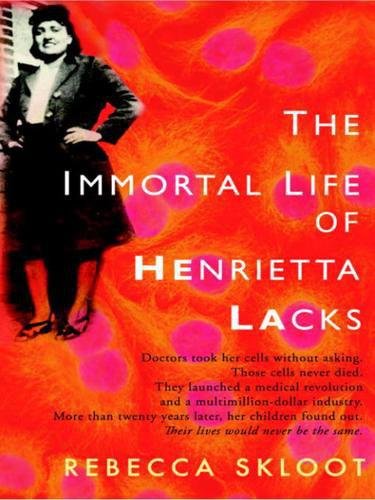
The Immortal Life of Henrietta Lacks, Rebecca Skloot’s 2010 narrative nonfiction, suits a book club because it asks a question every reader can answer from their own life: who owns your tissue once it leaves your body? In 1951 Henrietta Lacks, a young Black mother from Virginia, went to Johns Hopkins Hospital with cervical cancer. Samples of her tumor were taken without her knowledge, and her cells became HeLa, the first immortal human cells.
Skloot tells three stories at once: Henrietta’s life, the science of her cells and her daughter Deborah’s search for answers. The book has three parts and thirty-eight chapters, and it scores four and a half out of five in our review. It deals with racism, illness and institutional neglect, so tell your group before you pick it.
Discussion Questions
- The book is told in three parts: Life, Death and Immortality. How does that structure shape the way you understand Henrietta, her cells and her family?
- Skloot jumps between 1951, 1999 and 2001. Did the time jumps help you follow the story, or did they make it harder, as our review found they can?
- Before her treatment Henrietta signed a general permission form for operations. What did that form cover, and what did it leave out?
- Scientists had tried for decades to keep human cells alive in a lab, and they always died. Why do you think Henrietta’s cells were different, and what does the book say about the people who put them to use?
- HeLa cells helped with the polio vaccine, chemotherapy, cloning, gene mapping and in vitro fertilization, and were even sent into space. How should that history be weighed against how the cells were obtained?
- Henrietta’s children grew up without their mother, in poverty, and were not told her cells were alive in laboratories. What did you think the family was owed, and by whom?
- In the 1970s researchers contacted the Lacks family, but the family did not really understand what had been done. What went wrong in that communication?
- Skloot spent years building trust with the family, and the family are shown with humor, anger and grief. How did that shape your reading of Deborah?
- Our review notes that Henrietta herself is hard to find, because few records of her voice survive. How does Skloot handle that limit, and did it work for you?
- Walter Nelson-Rees showed that many cell lines thought to come from other people were really HeLa. What does contamination say about how science checks its own work?
- In the afterword Skloot explains that using discarded tissue without consent was not illegal in 1951, or in 2009, when the book went to press. Does it change your view that it was legal?
- The book lays out the facts and lets you decide rather than lecturing. Did you want Skloot to take a clearer position?
- Some chapters on cell biology and lab history are dense. Which science passages clicked, and which did you skim?
Applying It
- A 1999 report estimated that more than 307 million tissue samples, from more than 178 million people, were stored in the United States. Has this book changed how you think about samples you have given?
- Next time you give a tissue or blood sample, ask how it may be used and stored. Would your group feel comfortable asking, and what would you want the answer to be?
- What should researchers owe to the people whose tissue they use? Try to agree on one concrete obligation.
- Which parts of the book’s history of Black patients being treated unfairly did you already know, and which surprised you?
What Is Real
This is a true story. Henrietta Lacks was born Loretta Pleasant in Roanoke, Virginia, on August 1, 1920, and grew up around the town of Clover. She was a wife and the mother of five. A surgeon took samples of her tumor and a researcher named George Gey received them. Henrietta died at 12:15 in the morning on October 4, 1951. HeLa takes its name from the first two letters of her first and last names, and for many years the world did not know who she was.
What To Read Next
Our books-like-it list covers six picks, including Medical Apartheid, The Emperor of All Maladies and The Spirit Catches You and You Fall Down. Read our review first if you want to know what to expect, and use the summary page for a recap of the three parts before your meeting.