Intro
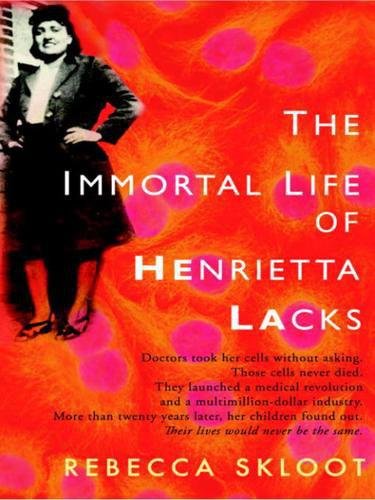
Today I’m summarizing The Immortal Life of Henrietta Lacks, by Rebecca Skloot, in its three parts: Life, Death, and Immortality.
A quick note: this is a true story that deals with racism, illness, and medical mistreatment. Take care of yourself as you watch.
Part One: Life
Part one starts in nineteen fifty one. Henrietta Lacks, a young mother of five, goes to Johns Hopkins Hospital and learns that she has cervical cancer. Before she was treated, she signed a general permission form for operations.
Skloot also goes back to Henrietta’s childhood in Virginia, where she was born in nineteen twenty, and grew up in the town of Clover. During her treatment, a surgeon took samples of her tumor and passed them to a researcher named George Gey.
Gey had been trying for years to grow human cells that would survive in the lab, and they always died. Henrietta’s cells did not. They doubled again and again. Scientists named them HeLa.
Part Two: Death
Part two begins with Henrietta’s death on October fourth, nineteen fifty one. Gey’s lab heard about it quickly, and asked for an autopsy.
Meanwhile, her cells were becoming a worldwide tool. A scientific factory grew them in huge quantities and shipped them to labs. They were used in research on the polio vaccine, and later in many other fields.
But Henrietta’s family was left behind. Her children grew up without their mother, in poverty, and without being told that her cells were alive in laboratories.
Part Three: Immortality
Part three follows the cells into the world, and the family into the story. In the nineteen seventies, researchers contacted the Lacks family, but the family did not really understand what had been done.
Skloot also tells about contamination. A researcher found that many cell lines supposedly from other people were actually HeLa, which cast doubt on years of research.
The last chapters follow Skloot and Henrietta’s daughter Deborah as they search for answers, and meet the people who tried to understand what had happened to Henrietta.
The Big Questions
The book raises questions that are still open. Who owns your tissue after it leaves your body? What should researchers owe the people their work depends on? And how should science deal with the long history of Black patients being treated unfairly?
In the afterword, Skloot points out that taking tissue without consent was not illegal then, and it was not illegal when the book was published.
Where To Go Next
If one idea stuck with you, try this. The next time you give a tissue or blood sample, ask how it may be used and stored.
Links to the book are in the description below. Tell me in the comments what stayed with you most, and thanks for watching.