📝 Summary · Summary
The Immortal Life of Henrietta Lacks Summary: Life, Death, Immortality
A summary of The Immortal Life of Henrietta Lacks by Rebecca Skloot in its three parts: Life, Death and Immortality, and the big questions it raises.
A young Black mother's cells, taken without her knowledge in 1951, became the first immortal human cell line and changed medicine, while her family was never told.
Gripping, humane and important, with a clear grasp of the science, held back by a jumpy structure and a few dense stretches. Four and a half out of five. It deals with racism, illness and institutional neglect.
Every guide comes as a video and a full written article. Pick the one you need: the review is spoiler-free, the ending explained is not.
A summary of The Immortal Life of Henrietta Lacks by Rebecca Skloot in its three parts: Life, Death and Immortality, and the big questions it raises.

Is The Immortal Life of Henrietta Lacks by Rebecca Skloot worth reading? An honest, spoiler-free review: the science, the family, what works and my score. Contains discussion of racism and medical mistreatment.

Who was Henrietta Lacks, what happened in 1951, why HeLa cells mattered and why her family was not told. The facts from Rebecca Skloot's book.

Moved by Henrietta Lacks? Six books about medicine, ethics and real lives: Medical Apartheid, The Emperor of All Maladies, Being Mortal and more.
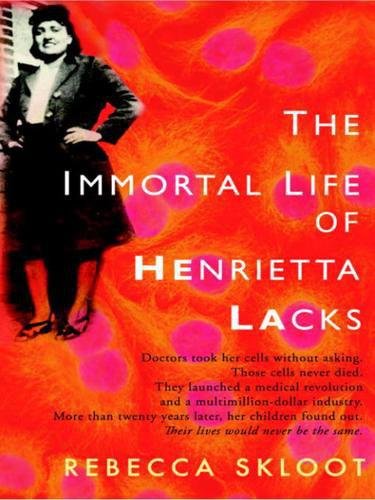
The Immortal Life of Henrietta Lacks is a work of narrative nonfiction by Rebecca Skloot, published in 2010. It tells the story of Henrietta Lacks, whose cancer cells were taken in 1951 and became HeLa, the first immortal human cells, and of the family that learned about it decades later.
Below you’ll find a spoiler-free review, a summary of the three parts, the real story behind HeLa, and six books to read next.
In nineteen fifty one, Henrietta Lacks, a young Black mother from Virginia, went to Johns Hopkins Hospital with cervical cancer. During her treatment, doctors took samples of her tumor, without her knowledge, and gave them to a researcher.
Her cells did something no human cells had done before. They kept growing in the lab. They became known as HeLa, and they have been used in research on the polio vaccine, chemotherapy, cloning, gene mapping, and more. Henrietta died the same year. Her family only learned about the cells decades later.
Skloot tells three stories at once: Henrietta's life, the science of her cells, and her daughter Deborah's search for answers. It has three parts, thirty eight chapters, and about one hundred and fifteen thousand words.
In nineteen fifty one, Henrietta Lacks, a young Black mother from Virginia, went to Johns Hopkins Hospital with cervical cancer. During her treatment, doctors took samples of her tumor, without her knowledge, and gave them to a researcher.
Gripping, humane and important, with a clear grasp of the science, held back by a jumpy structure and a few dense stretches. Four and a half out of five. It deals with racism, illness and institutional neglect. Read it if: you like narrative nonfiction, medicine or books about ethics and race in america; you want a true story that reads like a thriller; you are curious about where your own tissue goes. Skip it if: you want a light read; stories of medical mistreatment are too heavy right now; you dislike books that jump between time periods. Review: The Immortal Life of Henrietta Lacks →
A summary of The Immortal Life of Henrietta Lacks by Rebecca Skloot in its three parts: Life, Death and Immortality, and the big questions it raises. Summary: The Immortal Life of Henrietta Lacks →
Medical Apartheid by Harriet A. Washington, The Emperor of All Maladies by Siddhartha Mukherjee, The Spirit Catches You and You Fall Down by Anne Fadiman, Being Mortal by Atul Gawande, Bad Blood by John Carreyrou, When Breath Becomes Air by Paul Kalanithi. Books like it: The Immortal Life of Henrietta Lacks →
Henrietta Lacks was a young Black mother of five from Virginia who was treated for cervical cancer at Johns Hopkins Hospital in 1951. Samples of her tumor were taken, and her cells became the HeLa line, the first immortal human cells. She died on October 4, 1951.
According to the author's afterword, it was not illegal in 1951, and it was still not illegal when the book went to press in 2009.
The book lists the polio vaccine, chemotherapy, cloning, gene mapping and in vitro fertilization among the advances HeLa cells helped with. They were also sent on early space missions.
Deborah. Her search for answers about her mother runs through the book, and the last chapters follow Rebecca Skloot and Deborah as they meet the people who tried to understand what happened to Henrietta.
It has three parts and 38 chapters, and about 115,000 words. It tells three stories at once: Henrietta's life, the science of her cells, and her daughter Deborah's search for answers.
Amazon links. We may earn a commission if you buy through them.