The Verdict
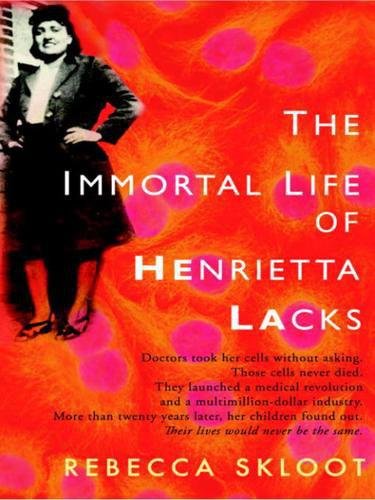
Today I’m reviewing The Immortal Life of Henrietta Lacks, by Rebecca Skloot, a true story about a woman whose cells changed medicine, and a family that was never told.
Is it worth reading? Yes, very much. It is gripping, humane, and important, with a few dense science stretches. I give it four and a half out of five. A heads up: it deals with racism, illness, and institutional neglect.
What It’s About
In nineteen fifty one, Henrietta Lacks, a young Black mother from Virginia, went to Johns Hopkins Hospital with cervical cancer. During her treatment, doctors took samples of her tumor, without her knowledge, and gave them to a researcher.
Her cells did something no human cells had done before. They kept growing in the lab. They became known as HeLa, and they have been used in research on the polio vaccine, chemotherapy, cloning, gene mapping, and more. Henrietta died the same year. Her family only learned about the cells decades later.
Skloot tells three stories at once: Henrietta’s life, the science of her cells, and her daughter Deborah’s search for answers. It has three parts, thirty eight chapters, and about one hundred and fifteen thousand words.
What Works
My first favorite thing is how human it is. Skloot spent years building trust with Henrietta’s family, and it shows. They are not case studies. They are people, with humor, anger, and grief.
My second favorite thing is how clearly it explains the science. Cell culture sounds dry, but Skloot makes it a story with real stakes, from lab breakthroughs to the problem of cells contaminating each other.
My third favorite thing is the way it asks questions, instead of lecturing. Who owns your body, and your tissue? The book lays out the facts, and lets you decide.
The Ideas That Stick
The idea that will stay with me longest is that this was not illegal. In the afterword, Skloot explains that doctors did not need consent to use discarded tissue in nineteen fifty one, or when the book went to press. It forces you to think about your own samples.
The second idea is the gap between what science gained and what Henrietta’s family received. The cells helped build a huge industry, while the family struggled to afford health care.
Writing And Style
The writing is clear, vivid, and paced like a thriller, with real quotes in the family’s own dialect. It alternates between time periods, which adds depth, though it can be a lot to keep track of.
What Doesn’t
My first criticism is the structure. Jumping between nineteen fifty one, nineteen ninety nine, and two thousand one can be confusing, especially at the start.
My second criticism is the science. A few chapters on cell biology and lab history get dense, and some readers will want to skim.
My third criticism is that Henrietta herself is hard to find. There are few records of her voice, so a lot of the book is about other people, and Skloot is open about that limit.
The Scorecard
Ideas: five out of five. Writing: four and a half. Evidence: four and a half. Pacing: three and a half. Impact: five. That gives an average of four point five out of five.
Who It’s For
Read The Immortal Life of Henrietta Lacks if you like narrative nonfiction, medicine, or books about ethics and race in America.
Skip it if you want a light read, or if stories of medical mistreatment are too heavy right now.
If you enjoyed it, try The Emperor of All Maladies by Siddhartha Mukherjee, Medical Apartheid by Harriet Washington, or Being Mortal by Atul Gawande.
Where To Get It
Links to the book are in the description below. Tell me in the comments: did you know about Henrietta before this? Thanks for watching, and I’ll see you next time.