The Verdict
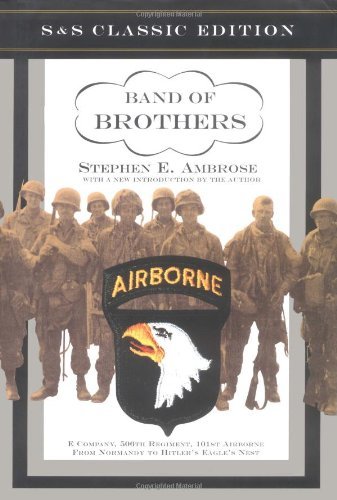
Today’s book is a little different for us. It’s Band of Brothers, by Stephen E. Ambrose, the true story of one company of American paratroopers in World War Two.
My verdict: read it, especially if you loved the HBO series. It’s gripping, human, and full of detail you won’t get anywhere else. But it’s written more like a long magazine story than a history book, and it sometimes takes the men’s memories on trust. I give it four out of five.
What It Is
The book came out in nineteen ninety two. It follows Easy Company, of the five hundred and sixth Parachute Infantry Regiment, in the hundred and first Airborne Division.
It starts with training in Georgia in nineteen forty two, and it ends in the Alps in nineteen forty five, at Hitler’s mountain retreat. In between are Normandy, Holland, Bastogne, and Germany.
How It Was Written
Ambrose built the book mostly from interviews and letters, recorded around nineteen ninety, when the men were in their late sixties.
Then he did something unusual. He sent the manuscript to the veterans themselves, and Dick Winters and Carwood Lipton went through it line by line. So it’s very much their story, told the way they remembered it.
The Men
The book is crowded with names, but a few stand out. Dick Winters, the quiet officer who becomes the heart of the company. Herbert Sobel, the harsh first commander everyone hated.
Carwood Lipton, the sergeant who holds things together. Ronald Speirs, the officer with the frightening rumors. And dozens of privates, whose jokes and fears make the book feel real.
What Works
First, the closeness. You’re down in the foxhole, with the cold, the boredom, the bad food, and the sudden terror. It never feels like a map with arrows.
Second, the honesty. Ambrose writes about looting, drinking, breakdowns, and officers who froze, alongside the heroics.
Third, the shape. Training, then combat, then the slow wearing down, then the strange peace at the end. It reads like a novel with a real ending.
What Doesn’t
Now the honest part. First, it’s one sided. It’s almost entirely the veterans’ memories, and old soldiers’ stories can drift. Other units still dispute some claims, like who reached Berchtesgaden first.
Second, the cast. There are so many names that the replacements blur together, and some men vanish without much explanation.
Third, the style. Ambrose loves a big statement about these fine young men, and his admiration sometimes gets in the way of the analysis.
Content Notes
This is a war book. There’s graphic combat, death, the killing of prisoners, a concentration camp, and a lot of soldiers’ language.
The Scorecard
My scores. Storytelling, five out of five. The men, four and a half. Historical depth, three and a half. Readability, four. Balance, three. That averages to four.
Who It’s For
Read it if you loved the HBO series, if you want to understand what ordinary soldiers lived through, or if you usually find history books dry.
Skip it if you want the big picture of the war, with generals and strategy, or if you need a critical, scholarly account.
Where To Go Next
I’ve also made a full summary of Easy Company’s war, a book versus series comparison, and a list of books to read next. They’re linked below. Tell me in the comments: did you watch the show first, or read the book?