The Verdict
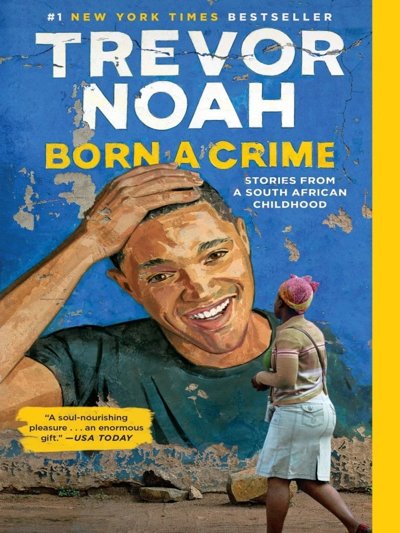
Today I’m reviewing a memoir that lands on almost every “best books of the decade” list: Born a Crime by Trevor Noah.
My verdict: read it. It’s one of the funniest and most moving memoirs I know, and it teaches more about apartheid than many history books. If you only know Trevor Noah from The Daily Show, this will surprise you. The structure jumps around and a few chapters drag, but I give it four and a half out of five.
What It’s About
Trevor Noah was born in Johannesburg in nineteen eighty four, to a black Xhosa mother and a white Swiss German father. Under apartheid, a relationship between a black person and a white person was illegal. So his very existence was a crime. That’s the title.
The book follows his childhood and teenage years, from hiding indoors as a mixed-race toddler in Soweto, to life after apartheid ended, to his early twenties. But really, it’s about his mother.
The Book At A Glance
Born a Crime came out in twenty sixteen. It’s about three hundred pages, in eighteen chapters, grouped into three parts. Between the chapters are short essays that explain a piece of South African history, like the pass laws, the homelands, or why South Africa has eleven official languages.
There’s also a young readers’ edition, and the audiobook is narrated by Noah himself, which is a real treat, because he does all the languages and voices.
The Opening
The first chapter is a perfect hook. Trevor is nine. He, his mother and his baby brother are coming home from church in a minibus taxi. The driver and his friends turn threatening, and his mother throws Trevor out of the moving vehicle, jumps out with the baby, and they run for their lives.
It’s terrifying and somehow hilarious, because of how Noah tells it, and how his mother reacts afterwards. That mix of danger and comedy is the book in miniature.
Patricia Noah
The heart of this book is Trevor’s mother, Patricia. She is fearless, deeply religious, stubborn, funny, and fiercely independent. She chose to have a child with a white man when it was illegal. She drove a rusty old car to save money. She took Trevor to three different churches every Sunday.
She also disciplined him hard, and the book is honest about that. But above all, she refused to let apartheid define what her son could become. Many readers finish this book thinking about their own mothers.
What Works
First, the humor. Noah is a comedian, and his timing works on the page. Even stories about poverty, violence and racism have punchlines, and the jokes make the hard parts land harder.
Second, the history. The short essays explain apartheid in a clear, personal way. You learn about the Immorality Act, the townships, and how the system divided people, through the eyes of a kid who didn’t fit any of its categories.
Third, language as identity. Trevor learned to switch between English, Xhosa, Zulu, Afrikaans and more, and he uses language to survive. His chapter on being a chameleon is one of the smartest things written about race and belonging.
And fourth, the ending. I won’t spoil it here, but the final chapter is one of the most powerful in any memoir I’ve read.
The Stories You’ll Remember
A few stories stick with everyone. Fufi, his deaf dog, who wanders off to another family. Selling pirated CDs and DJing at parties in the township of Alexandra, with a dancer friend whose name was, unfortunately, Hitler. And a teenage stint in a jail cell after driving a car he shouldn’t have.
Each one is funny on the surface and sharp underneath. The Hitler chapter, especially, is about how little many South Africans were taught about world history.
Writing And Structure
The writing is conversational. It reads like Noah talking to you across a table. That makes it fast and easy, with very little literary decoration.
The structure is thematic, not chronological. Chapters jump around in time, and you sometimes have to re-orient yourself. I liked it, because each chapter is a complete story, but some readers find it disorienting.
What Doesn’t Work
Now the honest part. First, the jumps in time. If you want a straight life story, the order can be confusing, and you’ll sometimes meet people before you’ve been properly introduced.
Second, a few middle chapters, especially some of the stories about teenage romance, are lighter and less essential than the rest.
Third, it stops in his early twenties. You won’t learn how he became a comedian or got The Daily Show. That’s a choice, but some fans expect a celebrity memoir and get a childhood memoir instead.
And fourth, there’s domestic violence in the last part, and it is described directly. It’s handled with care, but it’s hard to read.
Who It’s For
Read it if you like funny memoirs, if you want to understand apartheid, or if you’re looking for a book club pick that everyone will actually finish. It’s also widely taught in high schools.
Skip it if strong language bothers you, or if you’re not ready to read about family violence right now.
The Scorecard
My scores. Humor, five out of five. Heart, five. History and insight, five. Structure, three and a half. Prose, four. That’s an average of four point five.
Where To Go Next
I’ve also made a video explaining the final chapter, with spoilers, a fact check on the apartheid history in the book, and a list of memoirs like it. Tell me in the comments: which story from Born a Crime do you remember most?