The Short Version
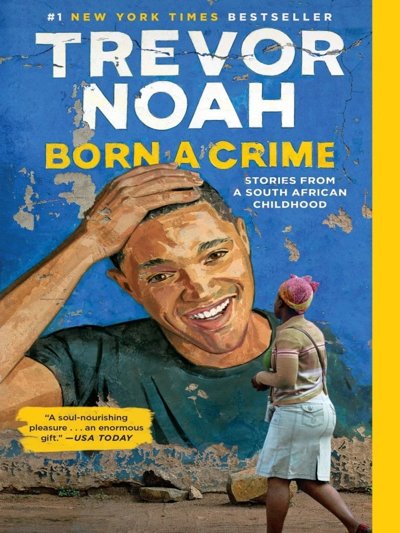
Born a Crime is a memoir, but it’s also one of the most popular introductions to apartheid ever written. So today, I’m fact checking the history in Trevor Noah’s book, and adding the context it leaves out.
The short answer: Noah’s history is accurate, and often sharper than a textbook. In a few places he simplifies things for a joke, and one fact has changed since the book came out. Let’s go through it.
Was He Really Born A Crime?
The book opens with an old law: the Immorality Act of nineteen twenty seven, which banned sex between white people and black Africans. In nineteen fifty, the law was widened to ban sex between white people and anyone who wasn’t white. Marriage across those lines was already banned in nineteen forty nine.
Trevor was born in February nineteen eighty four, to a black Xhosa mother and a white Swiss German father. Those laws weren’t repealed until nineteen eighty five. So yes, the title is literal. His parents’ relationship broke the law, and he was the evidence.
What Apartheid Was
Apartheid means “apartness” in Afrikaans. Noah’s version is “apart hate.” It was the system of racial segregation the National Party government built after it won power in nineteen forty eight, and it lasted until the first democratic elections in nineteen ninety four.
Noah traces the roots further back, to sixteen fifty two, when the Dutch East India Company set up a station at the Cape. That’s accurate. Apartheid made older colonial racism into a complete legal system.
Classifying People
Under the Population Registration Act of nineteen fifty, every South African was classified by race: white, black, colored, or Indian, with subgroups. Your classification decided where you could live, what school you went to, and what jobs you could do.
Trevor didn’t fit. His mother was black, his father was white, and he was light-skinned. In a black township he looked white. In the colored area he wasn’t colored enough. In the white suburb he was the only black kid. That feeling of not fitting any box runs through the whole book.
The Chinese And Japanese Joke
Here’s one place where Noah simplifies. He writes that Chinese people were classified as black, while Japanese people were made honorary whites, because the government wanted good trade relations with Japan.
The Japanese part is true. They were treated as honorary whites. Chinese South Africans, though, were officially classified as colored, not black. But Noah’s point about the absurdity stands, and there’s a twist: in two thousand eight, a South African court ruled that Chinese South Africans count as black for the purposes of economic empowerment laws, because of how they were treated under apartheid.
Pass Laws And Townships
Noah describes having to carry a pass to leave the township for the city. That’s accurate. Pass laws controlled where black South Africans could live and work, and being caught without a pass meant arrest.
The pass laws led to some of the darkest days of apartheid. In nineteen sixty, police opened fire on a crowd protesting them at Sharpeville, killing sixty nine people. Townships like Soweto and Alexandra, both central to the book, were created or controlled to keep black workers close to white cities but separate from them.
Bantu Education
Noah writes that apartheid built Bantu schools that taught little science or history, and trained black children for manual labor. That’s a fair summary of the Bantu Education Act of nineteen fifty three. Its architect, Hendrik Verwoerd, openly argued that black children shouldn’t be taught skills for jobs they would never be allowed to hold.
It also explains Patricia. She learned English from missionaries and refused to accept the limits the system set, and she pushed Trevor to read everything he could.
Divide And Rule
One of the book’s sharpest essays argues that the genius of apartheid was making the majority turn on each other. Black South Africans outnumbered white South Africans by a huge margin, but the government divided people by language and tribe.
That’s historically sound. The system created separate “homelands” for different ethnic groups and gave different groups different privileges. Noah’s comparison of Zulu and Xhosa tensions is part of that history, though, of course, it’s a complicated one.
Eleven Languages, Now Twelve
Noah writes that South Africa has eleven official languages. That was true when the book came out. But in July twenty twenty three, South African Sign Language became the country’s twelfth official language.
It’s a small update, but a good one, and very much in the spirit of Noah’s chapter on language as a way to belong.
The End Of Apartheid
The book covers the transition from Trevor’s point of view as a kid. Nelson Mandela was released from prison in February nineteen ninety. Four years of negotiation followed, along with real violence, including clashes Noah mentions in the townships.
On the twenty seventh of April, nineteen ninety four, South Africa held its first election in which everyone could vote. Mandela became president. Trevor was ten.
What The Book Gets Right
Overall, Born a Crime is remarkably accurate. Its history essays are short, clear and funny, and they focus on how the laws felt in daily life. Noah also makes a powerful point: that South African schools taught apartheid as a list of facts, not as something to reckon with, the way Germany teaches the Holocaust.
If you read it alongside a short history of apartheid, you’ll be very well informed.
Your Turn
Did you learn more about apartheid from this book than from school? Tell me in the comments. My review and the final chapter explained are linked below.