The Verdict
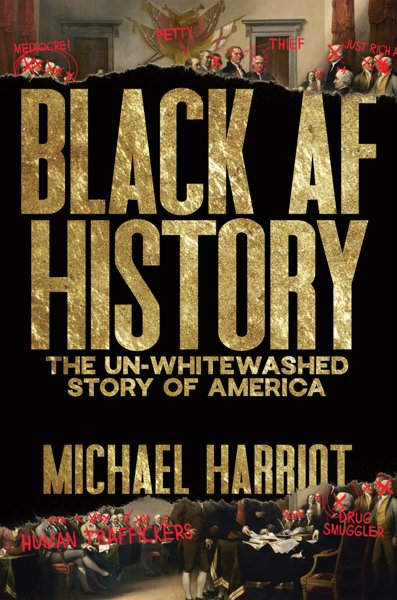
Today I’m giving you my honest take on Black AF History, by Michael Harriot. It promises the un-whitewashed story of America, and the title alone tells you this won’t be a polite textbook.
My verdict: read it, especially if school history left you with gaps. It’s funny, furious and full of stories you’ve probably never heard. But it’s a polemic, the jokes don’t always land, and it paints with a very broad brush. I give it four out of five.
What It’s About
Black AF History retells American history from the first Africans in the Americas to the present day, with Black people at the center. It runs sixteen chapters, plus short supplements, food stops with recipes, and a mock quiz after every chapter called Three Little Questions.
Harriot frames it with his own family. His grandparents’ middle room full of books, his uncle Junior the human fact checker, and his uncle Rob, who takes over whole chapters to explain things his way.
What Works
First, the stories. Juan Garrido, the Black conquistador in Florida in fifteen thirteen. Onesimus, who taught Boston about smallpox inoculation. Robert Smalls, who stole a Confederate ship and sailed it to freedom. Even if you know some history, you’ll meet people here for the first time.
Second, the voice. Harriot writes like he talks, and he’s genuinely funny. Racist Baby, a toddler who asks him questions about the Confederacy and reparations, is a brilliant device for explaining hard topics simply.
Third, the structure. Every big chapter is followed by a short, focused story, so the book never feels like a slog. It’s a history book you can read in bursts.
The Big Ideas
The core argument is that resistance, not suffering, is the main story of Black America. Enslaved people ran, plotted, sued and fought from the very beginning, and the book keeps proving it, from the Stono Rebellion to freedom suits in Massachusetts courts.
The other big idea is about who tells the story. Harriot argues that history is always written from a point of view, and he openly chooses his. In this book, he says, whiteness is not the center of the universe.
The Family Stories
The personal stories are the secret weapon. The goose down jacket and its missing sleeves. His grandmother guarding the back porch door with a pistol while his grandfather prayed. A letter to his cousin in prison.
They do real work. Each one connects a big historical idea, like stolen property or policing, to an ordinary family in South Carolina, and they’re some of the most moving pages in the book.
Writing And Pacing
It reads fast. The chapters move between jokes, history and memoir every few paragraphs. That keeps the energy up, but it can also give you whiplash, going from lynching to a punchline in the same page.
The audiobook, narrated by Harriot himself, suits the style really well, because so much of the book is performance.
What Doesn’t Work
Now the honest part. First, the tone is relentlessly sarcastic, and it generalizes about white people constantly. That’s deliberate, and he says so, but some readers will feel it undermines the argument.
Second, there are no traditional citations in the main text. There are endnotes, and a playful section called Works Not Cited, but some of his bigger claims, like who invented rock and roll, are stated with more confidence than historians would.
Third, the later chapters on modern politics are more opinion column than history, and they’ll date faster than the rest.
The Scorecard
My scores. Stories, five out of five. Voice, four and a half. Humor, four. Balance, three. Sourcing, three and a half. That averages to exactly four out of five.
Who It’s For
Read it if your history education skipped a lot, if you like Ibram X. Kendi or Clint Smith but want something lighter, or if you love history told with jokes.
Skip it if you want a neutral textbook, or if sarcasm about serious subjects isn’t your thing.
Where To Go Next
I also made a full summary, a fact check of the book’s most surprising stories, and a list of books to read next. They’re all linked below. Tell me in the comments: what history did your school skip?