The Short Version
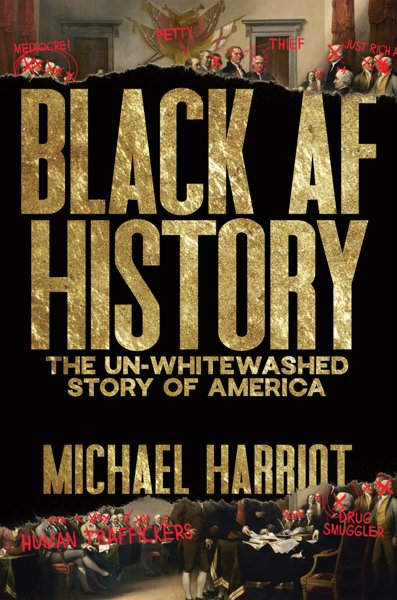
Today’s book is Black AF History, by Michael Harriot, and it’s packed with stories that sound almost too wild to be true. So I checked eight of them against other sources.
The short answer: most of them hold up remarkably well. A few are stretched for a punchline, and one or two are better described as “historians debate this.” Let’s go through them.
Jamestown’s Starving Time
Claim one: the Jamestown colonists ate each other. Harriot says it bluntly, and it’s true. During the starving time of sixteen oh nine and sixteen ten, most of the colonists died.
In twenty thirteen, Smithsonian researchers announced that the bones of a fourteen year old English girl, nicknamed Jane, showed cut marks made after death, the first physical proof of survival cannibalism at Jamestown. Harriot’s wording is more graphic than the evidence, which can’t say how she died. Verdict: true, with some extra color.
Twenty And Odd Africans
Claim two: the first enslaved Africans in English Virginia arrived in August sixteen nineteen on the White Lion, after English privateers took them from a Portuguese slave ship, the San Juan Bautista. That matches the colonial records, including John Rolfe’s famous line about “twenty and odd negroes.”
Historians believe they came from Angola, from the kingdom of Ndongo, which Harriot also says. Verdict: true.
Juan Garrido And Esteban
Claim three: Africans were in North America long before sixteen nineteen. Juan Garrido, a free African conquistador, sailed with Ponce de León and is often described as the first documented African to reach what’s now the United States, in Florida in fifteen thirteen.
Esteban, an enslaved Moroccan man, survived the failed Narváez expedition of fifteen twenty eight and crossed huge parts of Texas and Mexico. He was killed near the Zuni villages in fifteen thirty nine. Harriot mentions a theory that he faked his death; that’s speculation. Verdict: true.
Onesimus And Smallpox
Claim four: an enslaved African named Onesimus taught Cotton Mather about smallpox inoculation. True. Mather wrote about it himself. In the Boston epidemic of seventeen twenty one, about one in seven people who caught smallpox naturally died.
Dr. Zabdiel Boylston inoculated a little over two hundred and forty people, and only six died. Harriot gives slightly different numbers, but the story and the result are right. Verdict: true.
Jenny Slew
Claim five: Jenny Slew was the first enslaved person in America to win her freedom in a jury trial. She sued John Whipple in Massachusetts, arguing she was free because her mother was a free white woman, and she won on appeal in seventeen sixty six. John Adams wrote about the case in his diary.
Many sources do describe her as the first to win freedom through a jury trial. The link Harriot draws to the Massachusetts Constitution is more of an inference. Verdict: mostly true.
Haiti’s Debt
Claim six: Haiti was forced to pay France for its own freedom. True, and it’s worse than most people realize. In eighteen twenty five, France demanded one hundred and fifty million francs, backed by warships. It was later reduced to ninety million.
A twenty twenty two New York Times investigation found Haiti paid for generations, borrowed from French banks to do it, and that National City Bank, today’s Citigroup, profited from later loans. Harriot’s figure of twenty one billion dollars matches the low end of the Times’ estimate of what the debt cost Haiti in lost growth. Verdict: true.
Who Invented Rock And Roll?
Claim seven: Sister Rosetta Tharpe invented rock and roll. She was a gospel star who played electric guitar with distortion in the nineteen forties, and artists like Chuck Berry and Little Richard named her as an influence. She was inducted into the Rock and Roll Hall of Fame in twenty eighteen as an early influence.
Did she invent it alone? Most historians would say no single person did, and Harriot admits that too, before winning the argument with a dictionary joke. Verdict: exaggerated, but her influence is real.
The First Stand-Up Comedian
Claim eight: Charlie Case, a Black man from Lockport, New York, was the first stand-up comedian. Case did perform comic monologues without costumes or props in vaudeville in the late eighteen hundreds, and several historians credit him as a pioneer of stand-up.
But “first” is hard to prove, and records about his life are thin. Verdict: plausible, but debated.
The Scorecard
So, out of eight stories: five are true, one is mostly true, and two are exaggerated or debated. For a book that’s mostly jokes and attitude, that’s a strong record.
The pattern is clear. Harriot’s facts are usually solid. Where he stretches, it’s in the framing: words like “first,” “invented” and “everyone,” which make a better punchline than a footnote.
Your Turn
Which of these stories surprised you most? Tell me in the comments. My review and full summary are linked below.