Intro
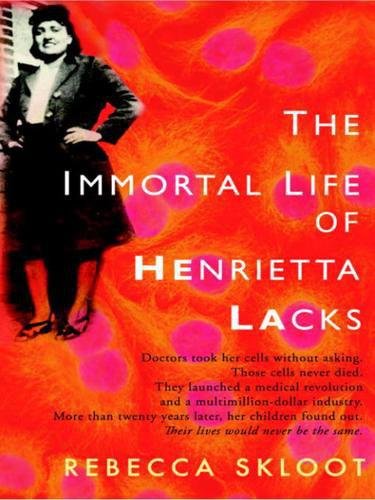
Today we are going through the real story behind Henrietta Lacks and the HeLa cells, using the facts from Rebecca Skloot’s book, The Immortal Life of Henrietta Lacks.
It is a story about science, race, and consent. It also deals with illness and death, so please take care of yourself as you watch.
Who Was Henrietta Lacks
Henrietta Lacks was born Loretta Pleasant in Roanoke, Virginia, on August first, nineteen twenty. Nobody knows exactly how she became Henrietta.
She grew up around the town of Clover, in Virginia, and she became a wife and the mother of five children.
What Happened In 1951
In nineteen fifty one, Henrietta went to Johns Hopkins Hospital in Baltimore with cervical cancer. Before her treatment, she signed a form giving the hospital permission to operate.
During her care, a surgeon took samples of her tumor, and a researcher named George Gey received them. Henrietta died at twelve fifteen in the morning on October fourth, nineteen fifty one.
Why HeLa Was Special
Scientists had tried for decades to keep human cells alive in a lab, and they always died. Henrietta’s cells were different. They reproduced again and again, and became the first immortal human cells.
They were given the code name HeLa, from the first two letters of her first and last names. For many years, the world did not know who she was.
What HeLa Made Possible
HeLa cells helped with some of the most important advances in medicine, including the polio vaccine, chemotherapy, cloning, gene mapping, and in vitro fertilization. They were even sent into space, to see how cells behave without gravity.
Today, there are trillions more of her cells in laboratories than there ever were in her body.
Why The Family Was Not Told
The Lacks family did not learn the full story for decades. Henrietta’s children grew up without their mother, and they were not told that her cells were being used all over the world.
When they finally heard, they struggled to understand what it meant, and many felt that nobody had asked them.
The Contamination Problem
There was also a scientific problem. A researcher named Walter Nelson-Rees showed that many cell lines, thought to come from other people, were actually HeLa.
It meant that HeLa had been spreading through laboratories, and it raised serious doubts about parts of cancer research.
Consent Today
In the afterword, Skloot explains that it was not illegal to use tissue like this in nineteen fifty one, and it was not illegal in two thousand nine, when the book went to press.
A nineteen ninety nine report estimated that more than three hundred and seven million tissue samples, from more than one hundred and seventy eight million people, were stored in the United States.
Where To Go Next
If you want the full story, read the book. Links are in the description below.
Tell me in the comments what you think researchers should owe to the people whose tissue they use, and thanks for watching.