The Verdict
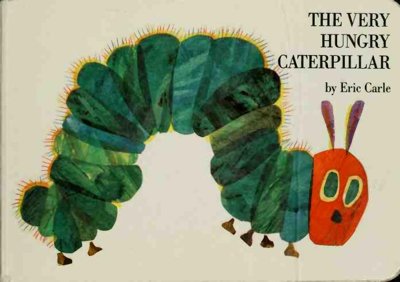
Today we are looking at a book that has probably been in a nursery near you: The Very Hungry Caterpillar, by Eric Carle.
Quick verdict. Yes, it is worth buying, and it is one of the few picture books I would call close to essential for a toddler’s shelf. It is short, it is bright, and it teaches counting and the days of the week without ever feeling like a lesson. I give it four and a half out of five. This review is spoiler free, though honestly, it is a book where everyone already knows how it goes.
What It’s About
The Very Hungry Caterpillar came out in nineteen sixty nine, and the story is simple on purpose.
On a moonlit night, a tiny egg sits on a leaf. On Sunday morning, the sun comes up, and out pops a very hungry caterpillar. He goes looking for food.
On Monday he eats one apple. On Tuesday, two pears. Wednesday, three plums. Thursday, four strawberries. Friday, five oranges. And every day, he is still hungry.
That is the whole structure. A week, a growing pile of food, and a hungry little creature who keeps going. The text is under two hundred and fifty words, so you can read it aloud in about two minutes.
The Art
Now let me tell you why the pictures matter so much, because this book is really an art object.
Eric Carle made his pictures as collage. He painted sheets of tissue paper in his own colors and textures, then cut and layered them into shapes. That is why the apples and plums look so rich, and why a leaf can seem to have its own little ridges.
Many editions, the board book included, have little holes through the pages, and the caterpillar seems to eat right through the fruit. Carle said the idea started with a hole puncher in his studio, and his first idea was a bookworm. His editor suggested a caterpillar instead, and he answered, butterfly.
For a small child, those holes are magic. They can poke a finger through, follow the path, and feel the caterpillar’s journey with their hands.
What Works
Three things work wonderfully for me.
First, the counting. One, two, three, four, five. A toddler can point and count along, and the pattern is easy enough to guess before the page turns. That feeling of getting it right is a gift for a small reader.
Second, the days of the week. Sunday through Saturday, in order, and then Sunday again. Most children learn the days from songs, and this book gives them a story hook for the same sequence.
Third, the rhythm. Every day follows the same pattern, and then it breaks on Saturday, when the caterpillar eats a long list of treats and gets a stomachache. Children love the silly pile of sweets, and the parent gets a little laugh from the pickle sitting next to the cake.
Characters and Themes
The caterpillar is not complicated, and that is the point. He is hungry, he is determined, and he does not give up.
The big theme is change. He starts tiny, becomes big and fat, builds his small house, and comes out something completely new. A child who is growing fast can feel that story in their own body.
There is a gentle lesson about overdoing it too. After the big Saturday feast he feels sick, and a plain green leaf makes him better. I like that it never scolds. It simply shows the stomachache, and lets the child draw the conclusion.
And there is a quieter theme about hope. The caterpillar does not know what he is becoming, and the ending rewards patience.
Writing and Pacing
The writing is spare and musical. Short sentences, repeated phrases, and one steady beat: on this day, he ate through this much, but he was still hungry.
That refrain is perfect for read aloud. By the third day, a toddler will say the line with you. By the fifth day, they may take over completely.
The pacing is just as tidy. The first half moves one page at a time. The Saturday spread slows everything down so you can point at each treat. Then the book wraps up quickly, which suits a bedtime read.
What Doesn’t Work
It is a classic, but I have a few honest criticisms.
One, the story is thin. If your child is four or five and wants real plot and surprise, this will be a quick read, and they may outgrow it faster than the books around it.
Two, a small science note. The book says the caterpillar builds a cocoon. Butterflies actually form a chrysalis, and cocoons belong to moths. It is a tiny thing, but a teacher or a curious child may notice.
Three, the holes. They are the best feature, and also the weak spot. Little fingers can tear around them, especially in the paper editions.
And four, a lot of sweets and processed food in the feast. I do not think it is a problem, but it is worth a quick chat if you want healthy eating to be part of the lesson.
Content Notes
There is nothing scary here. No villains, no danger, and the only trouble is a stomachache.
The Saturday list includes salami and sausage, so if your family is vegetarian, you may want to say that out loud, or swap in your own foods when you read.
For age, I would say this is a great fit from around one year, in the board book form, up to about five years old, when it often turns into a book the child reads back to you.
Board book or hardcover? The board book is sturdier and easier to chew on, so I would pick it for babies and toddlers. The hardcover is better for the art, and for reading together with an older child.
The Scorecard
Here is how I score it.
Art gets five out of five. Read aloud quality gets five. Learning value, five.
Story depth gets three and a half, because it is intentionally simple. Durability gets four, because the holes are a risk for rough hands.
That averages to four and a half out of five.
Who It’s For
Read it if you are a parent, grandparent, teacher or caregiver of a child between about one and five. It is also a lovely gift for a baby shower, a first birthday, or a classroom library.
Skip it, or at least do not make it your only purchase, if your child is already reading chapter books, or if you already own it from an older edition that is holding up.
If you like this one, look at the other Eric Carle books, and my books like it video has six more picks.
Where To Get It
You can find links to the board book and hardcover in the description. Both are widely available, and many libraries have copies in more than one format.
Tell me in the comments, what was the first book you remember being read to you? And if you want to know how the caterpillar’s story actually ends, my ending explained video is next, with a very light hearted spoiler warning.