Spoiler Warning
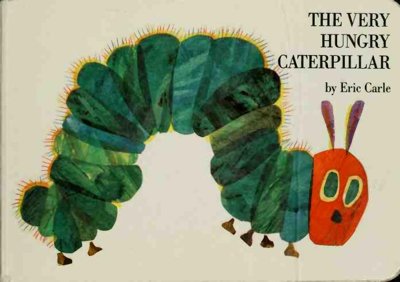
Today we’re finishing The Very Hungry Caterpillar by Eric Carle, page by page.
Fair warning, this video contains spoilers. I know, I know, the caterpillar turns into a butterfly, and you saw it coming from the title. But if a little one is watching and does not know yet, maybe cover their eyes for the last minute. The butterfly is a big reveal for a three year old.
Here is the quick answer. The caterpillar eats until he is big and fat, builds a small house around himself, and comes out a beautiful butterfly.
The Setup
Let’s rewind and set the scene.
On a moonlit night, a little egg sits on a leaf. On Sunday morning, the sun comes up, and pop, out comes a tiny and very hungry caterpillar. He goes looking for food.
Then comes the counting. One apple on Monday. Two pears on Tuesday. Three plums on Wednesday. Four strawberries on Thursday. Five oranges on Friday. And after each one, he is still hungry.
So by Friday night he has eaten fifteen pieces of fruit, and he still wants more. Hold on to that number, because Saturday is going to be very different.
The Saturday Feast
Saturday is the moment the book changes its rhythm.
Instead of one kind of food, the caterpillar eats a long list. A piece of chocolate cake. An ice cream cone. A pickle. A slice of Swiss cheese. A slice of salami. A lollipop. A piece of cherry pie. A sausage. A cupcake. And a slice of watermelon.
That is ten different foods in one day. It is the funniest page in the book, because it is such an odd mix, and children love to name each one.
Then comes the line every parent waits for. That night, he had a stomachache. This is the low point of the story, and the first time he is not simply hungry, but unwell.
The Green Leaf
The next day is Sunday again, which is the book’s way of closing the circle. A full week has passed.
This time the caterpillar eats one nice green leaf, and after that he feels much better.
I love that moment. After a feast of treats, the cure is not a lecture. It is the plainest food in the book, a leaf.
Now he is not hungry any more. And he is not a little caterpillar any more either. He is a big, fat caterpillar. The book gives him no big speech about growing up. It just says he is bigger, and it lets that feel like a triumph.
The Cocoon
So what happens next? He builds a small house, called a cocoon, around himself.
The book says he stays inside for more than two weeks. It never tells us what he is thinking. The sentence even stops mid way, on the words pushed his way out and, with three little dots. For a child, that is a pause, a pocket of waiting, and it works beautifully for suspense.
Here is the grown up note. The word cocoon is the book’s choice, and in real life butterflies make a chrysalis, while moths spin cocoons. The chrysalis is a hard shell that forms from the caterpillar’s own skin, and it often looks like a small green or brown pod. It does not change the story, but it is a nice fact to share with a curious child.
The Butterfly
And then the last page. He nibbles a hole in the cocoon, pushes his way out, and he is a beautiful butterfly.
The turn of the page is the reveal. The butterfly fills a whole two page spread, with big wings in every color. After a story of small, careful pages, it feels like a burst of light.
It is also a nice trick that the book began with a very hungry caterpillar and ends with a creature who is, we assume, ready to fly and find nectar. The book does not say it. It simply leaves the butterfly in full color, and that is enough.
What It Means
So what is this story teaching? I see four things.
First, change. The same creature is tiny, then big, then something new. For a child growing up quickly, that is reassuring.
Second, patience. The caterpillar eats and eats, and then he rests. Both are part of getting to the wings.
Third, math and time. Counting from one to five, and the seven days of the week, in order. The book plants these gently, without a worksheet in sight.
Fourth, a small lesson about balance. A treat feast leads to a stomachache, and a simple green leaf helps. The book never wags a finger. It just shows it, and children get it.
Questions Kids Ask
Here are the questions I hear most when families read this book.
Why is he still hungry after eating so much? Because he is growing. Caterpillars really do eat a lot, and that is how they get ready for the next stage.
Why does he get a stomachache? Because he ate cake, pickles, salami, watermelon and more, all in one day. A good chance to ask your child what they think would happen.
What is the cocoon? A little house that he builds around himself. And if your child is ready for the real word, it is a chrysalis.
And will he ever come back as a caterpillar? No, once he is a butterfly he stays one. But butterflies lay eggs, and if you want to say it, the circle begins again with another little egg on a leaf.
My Verdict on the Ending
I think this is a nearly perfect ending for its audience. It is short, it is hopeful, and it gives the child a big visual reward for all that counting.
My one wish is that the book gave us even one more line about the butterfly, maybe where it flies. But I understand why it does not. The image does all the talking.
Tell me in the comments, what does your child say when the caterpillar gets his stomachache? And if you want more, my books like it video is next, with six other picture books for your little reader.