The Plan
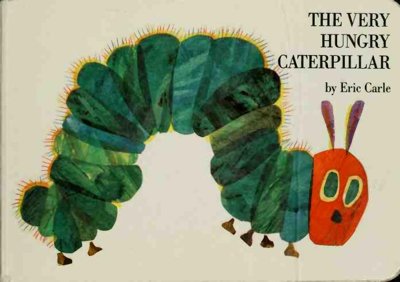
This one is a little different. It is a storytime guide for The Very Hungry Caterpillar, for parents, grandparents, teachers and anyone who reads with little ones.
I will give you reading aloud tips, discussion questions, counting and days of the week games, an art activity in the style of Eric Carle, and some simple butterfly science. Pick what suits your child, because it is all light spoilers, and nothing here has to be done in order.
Reading Aloud
Let’s begin with the reading itself, because this book rewards a little performance.
First, slow down. Take the first page in a hushed voice, as if it is the middle of the night, because the egg is lying in the moonlight. Then speed up when the sun comes up and the caterpillar pops out.
Second, let your child poke a finger through the holes. Many editions have them, and they love following the caterpillar’s path. Keep a finger on the page, and tell them where he is going next.
Third, pause before the number. Say on Tuesday he ate through, and wait. See if your child says two, and let them fill the gap.
And last, save a bigger voice for the Saturday list, and the butterfly. Page turns are your best tool.
Questions To Ask
Now some questions, and these work from age two to six, depending on how you ask.
For little ones: What is the caterpillar doing? What is he eating? Can you find the red fruit? Where did the sun go?
For preschoolers: Why is he still hungry? Why did he have a stomachache? What do you think he feels inside the cocoon? What do you think happens next, after the last page?
For early readers: What would you eat on Saturday? Is it a good idea to eat that much at once? What is the difference between how the caterpillar starts and how he ends?
There are no wrong answers here. What matters is that your child talks, and that you listen.
Counting and Days
Counting is the easy win with this book, so let’s make it a game.
Gather fruit, real or toy. One apple, two pears, three plums, four strawberries, five oranges. Let your child lay them out in a row and count each pile aloud. Then ask which pile is the biggest, and which is the smallest.
For the days of the week, make a simple chart with seven boxes, from Sunday to Saturday, and put the matching picture in each one. Older children can do it from memory, and you can ask, which day did he eat the strawberries?
Here is a fun twist for older kids. Add up all the fruit. One plus two plus three plus four plus five makes fifteen. Then ask how many foods he eats on Saturday. The answer is ten.
Tissue Paper Art
Now the art, my favorite part. Eric Carle made his pictures with tissue paper he painted himself, then cut and layered into shapes. You can try a gentle version at home.
You need white paper, glue sticks, scissors for the grown up, and tissue paper in lots of colors. Let your child tear or cut shapes, and glue them down in layers. Where the tissue overlaps, new colors appear, and that is the thrill.
If you want it to look like Carle’s work, paint the sheets first with watery paint, let them dry, and then cut them out. Make a green caterpillar out of circles, with a red head, or a big butterfly with wings in any color you like.
For a little extra fun, punch a hole in a paper fruit with a hole puncher. That is how Carle said the whole book began.
Butterfly Science
Finally, the science, and it is wonderful, because it is all real.
A butterfly goes through four stages. It starts as an egg, then hatches into a caterpillar, which is also called a larva. The caterpillar eats and grows, then forms a chrysalis, and finally comes out as an adult butterfly. That whole process is called metamorphosis.
The book says cocoon, but the real word for a butterfly is chrysalis. Moths are the ones that spin cocoons. That is a great fact to share with an older child.
You can also draw a circle with the four stages, and ask your child to put them in order. Or look outside in spring, and see if you can find a caterpillar on a leaf. Just look, and do not touch, and let it go on with its day.
Wrapping Up
That is the storytime guide. Read it slowly, count it out loud, make something messy with tissue paper, and enjoy the butterfly at the end.
If you only do one thing, let your child turn the page to the butterfly by themselves. It is the best moment in the book, and it never gets old.
Tell me in the comments, what is your favorite caterpillar activity? And if you want to know whether the book is worth buying, my review is linked in the description.