What is The Very Hungry Caterpillar about?
The Very Hungry Caterpillar came out in nineteen sixty nine, and the story is simple on purpose.
Is The Very Hungry Caterpillar worth reading?
Bright tissue paper collage, counting and the days of the week, in a story short enough to read twice at bedtime. The plot is thin and the holes can tear, but it earns its place on a toddler's shelf. Four and a half out of five. Read it if: you read with a child aged about one to five; you want a gentle way into counting and the days of the week; you need a baby shower or first birthday gift. Skip it if: your child already reads chapter books; you want a story with a lot of plot. Review: The Very Hungry Caterpillar →
How does The Very Hungry Caterpillar end?
Our ending explained covers the final chapters in full, with spoilers. The Very Hungry Caterpillar ending explained with light-hearted spoilers: the Saturday feast, the stomachache, the cocoon, the butterfly, what the book teaches and the questions kids ask. Ending explained: The Very Hungry Caterpillar →
What books are like The Very Hungry Caterpillar?
Brown Bear, Brown Bear, What Do You See? by Bill Martin Jr., Dear Zoo by Rod Campbell, Goodnight Moon by Margaret Wise Brown, Where's Spot? by Eric Hill, Chicka Chicka Boom Boom by Bill Martin Jr. and John Archambault. Books like it: The Very Hungry Caterpillar →
What age is The Very Hungry Caterpillar for?
It works from around one year old in the board book edition, up to about five, when many children start reading it back to you. It is a counting and days of the week book as well as a story.
When was The Very Hungry Caterpillar published?
Eric Carle's book was first published in 1969. The edition reviewed here credits Philomel Books, with a board book edition from 1994.
How did Eric Carle make the pictures?
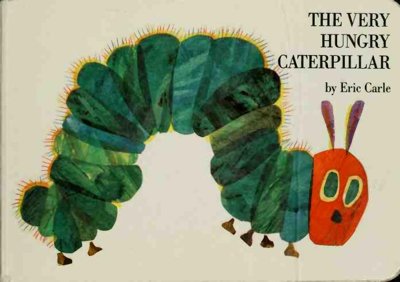
With collage. He painted sheets of tissue paper, then cut and layered them into shapes, which gives the pictures their rich colors and textures.
Is it a cocoon or a chrysalis?
The book says cocoon, but a butterfly actually forms a chrysalis. Moths are the insects that spin cocoons.