The Short Version
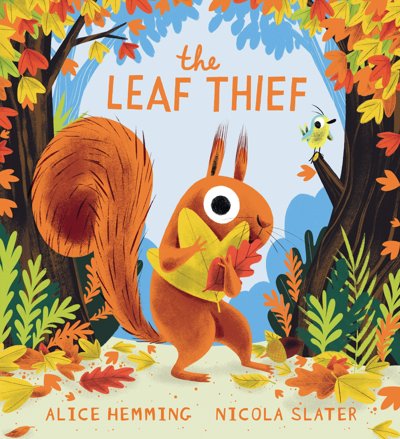
This video is for teachers, parents and librarians who want to turn The Leaf Thief, by Alice Hemming and Nicola Slater, into a full fall lesson. I’ll share how to read it aloud, questions to ask, and easy activities for preschool through second grade.
My short take: this book is a gift for a read-aloud. It’s funny, it has a mystery, and it ends with real science, so it works for reading, science and art all in one.
Before You Read
Start with the cover. Ask: what do you think a leaf thief is? Who might steal leaves, and why? Write down their guesses, so you can check them at the end.
You can also show a real leaf, or a bag of fallen leaves, and ask: where did these come from?
Reading It Aloud
The fun is in the voices. Make Squirrel dramatic and panicky, and Bird calm and a little tired. Pause each time Squirrel accuses someone and let the kids decide whether he’s right.
The text is short, so you can read it twice: once for the story, and once to look for the hidden jokes in the pictures.
Questions During Reading
Here are questions to ask during the story. One. How does Squirrel feel when he notices a leaf is missing? Two. Why does he think Mouse took it? Three. What clues do you see in the picture? Four. Why do you think Bird stays so calm?
Questions After Reading
And after reading. Five. Who was the real leaf thief? Six. Was Squirrel right to blame his friends without proof? Seven. How did Bird help Squirrel? Eight. What happens to the leaves after they fall? And nine: what season comes next, and what might Squirrel worry about then?
Social And Emotional Learning
There’s a gentle lesson here about jumping to conclusions. Squirrel accuses his neighbors before he knows the facts. Talk about how it feels to be blamed for something you didn’t do, and what Squirrel could say to them afterward.
Bird is also a great model of a patient friend, staying calm while someone else is worried.
Science Activity
Now the science. Go on a leaf walk and collect leaves of different colors and shapes. Back inside, sort them by color, by size, or by shape. Older kids can make a simple bar graph of how many leaves of each color they found.
Then read the science pages at the back of the book together, about why leaves change and fall.
Art Activity
For art, try leaf rubbings. Put a leaf under thin paper and rub over it with the side of a crayon to reveal the veins.
Or make a Squirrel’s tree. Paint a bare tree trunk and add red, gold and orange leaves with handprints, fingerprints or torn tissue paper. Then let the kids blow some leaves away with a straw to play the wind.
Writing And Drama
For writing, have kids draw Squirrel and write or dictate a “Wanted” poster for the leaf thief, with a picture of the wind. For drama, act out the story: one child is Squirrel, one is Bird, and the rest are suspects and the wind.
Pairing Ideas
It pairs well with nonfiction about seasons, with a lesson on weather and wind, or with a counting game using leaves. And if your class loves Squirrel, the series continues with other seasonal books, like The Snow Thief.
Your Turn
Tell me in the comments which activity your kids liked best. My review, the science video, and fall picture books like it are linked below.