The Short Version
Quick answer: the tree lets them go on purpose, and the wind carries them away. It’s not stealing. It’s a clever survival plan, and it’s one of the best science lessons you can do outside.
Squirrel’s Mistake
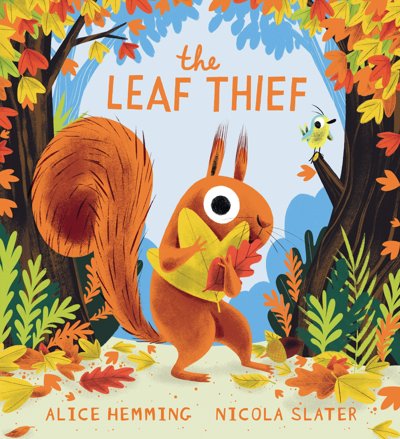
In the story, Squirrel notices leaves disappearing from his tree, and he’s sure someone is stealing them. But Bird reminds him this happens every year. The book even includes a short science section at the back, and today we’ll go a little deeper.
Why Leaves Are Green
Let’s start with summer. Leaves are green because they’re full of chlorophyll. Chlorophyll is the green pigment that captures sunlight, so the tree can make food from light, water and carbon dioxide. That’s called photosynthesis.
In summer there’s plenty of light, so the leaves work hard, and the tree keeps making fresh chlorophyll.
Why Leaves Change Color
In autumn, the days get shorter and the nights get cooler. Trees respond by slowing down, and they stop making new chlorophyll. As the green fades, other colors that were hiding in the leaf all along start to show.
Yellows and oranges come from pigments called carotenoids, the same family of pigments that makes carrots orange. They were there all summer, just covered up by green.
Where Red Comes From
Reds and purples are different. Many trees actually make new red pigments in autumn, called anthocyanins. Sunny days and cool nights tend to make the reds brighter.
Finally, as the leaf dies, it turns brown. Squirrel’s red, gold and orange are the last show before the leaf falls.
How Leaves Fall
Here’s the secret Squirrel doesn’t know. Where each leaf stem joins the twig, the tree grows a special layer of cells, sometimes called the abscission layer. It slowly cuts the leaf off and seals the spot, like closing a door.
Once that layer is ready, a leaf hangs by a thread. Then the wind gives it a push. So the wind is the getaway driver, but the tree planned the whole thing.
Why Trees Do It
Why would a tree throw away its leaves? Winter. Broad, thin leaves lose lots of water, and in winter the ground can freeze, so water is hard to get. Leaves would also catch heavy snow and break branches.
So trees like oaks, maples and beeches drop their leaves and rest until spring. These are called deciduous trees.
Evergreens
But not every tree joins in. Pines, spruces and firs are evergreens. Their needles are narrow and covered in a waxy coating, which helps them hold on to water through the winter. They do drop old needles, just a few at a time, instead of all at once.
Fallen Leaves Aren’t Wasted
And here’s a happy ending for the leaves. On the ground, they become a blanket that shelters insects and other small animals through the cold. Then worms, fungi and bacteria break them down into rich soil, which feeds the tree again.
Gardeners sometimes call this leaving the leaves.
What About Squirrels
And what does Squirrel do in winter? Squirrels don’t truly hibernate. They stay active, though they rest a lot more in cold weather, and they rely on food they stored in autumn.
Many squirrels bury nuts and seeds in lots of different spots. Some get forgotten, and those can sprout into new trees. So squirrels are tree planters too.
Try It Yourself
Here’s an easy activity. Collect leaves of different colors on a walk. Sort them by color, and talk about which pigment is showing. Then look closely at the bottom of a stem, where it broke off the twig.
You can also put a leaf under a sheet of paper and rub over it with a crayon to see the veins that carried water.
Your Turn
So, who’s the real leaf thief? The tree let them go, and the wind carried them off. Tell me in the comments: what color are the leaves where you live right now? My review and read-aloud activities are linked below.