The Short Version
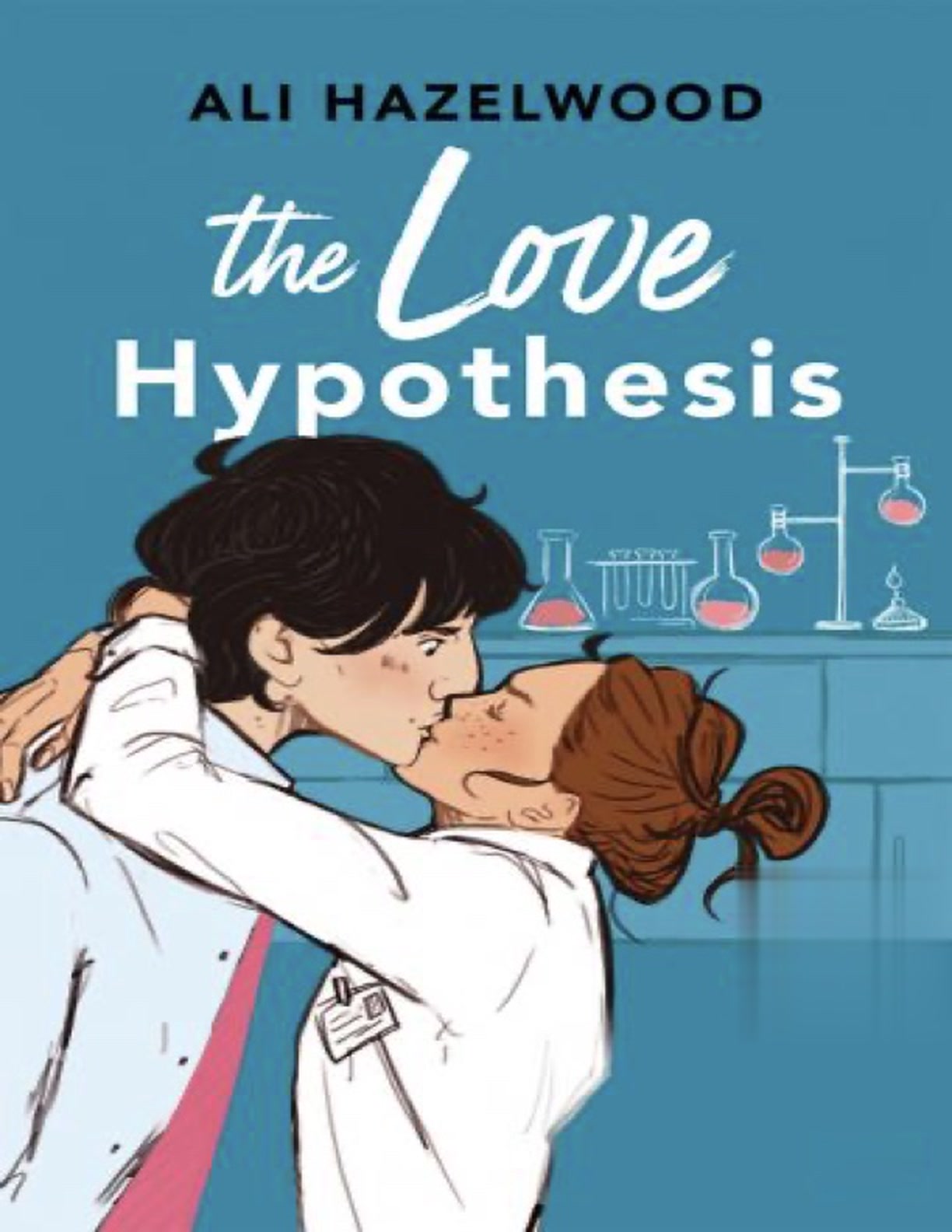
The book is The Love Hypothesis, by Ali Hazelwood, and the question is a fun one: how much of the science and the grad school life in this romance is real?
Here’s the quick answer. The details are surprisingly accurate, because the author has a PhD in neuroscience and worked as a professor. The big plot is a fantasy. Let’s go through it, piece by piece.
The Author
Start with who wrote it. Ali Hazelwood has a doctorate in neuroscience, and she spent years in academia, including working as a professor. In her author’s note, she says she writes stories set in universities because it is the only world she knows. She calls it an environment that can be impenetrable, isolating, and confining.
She also says writing the book was surprisingly therapeutic. She poured her own frustrations and joys into Olive’s adventures, even though, as she jokes, she never had a fake date. It’s one reason the lab scenes feel so lived in.
The Research
Next, Olive’s project. She studies early detection of pancreatic cancer, and that choice is not random. It is one of the hardest problems in medicine.
According to the Pancreatic Cancer Action Network, citing the American Cancer Society’s twenty twenty-six figures, the five-year relative survival rate is just thirteen percent. And there is still no screening test for the general population, so most patients are diagnosed late. That is exactly why early detection matters, and why Olive’s work would be important.
So the premise is realistic, and it carries real emotional weight. Olive lost her mother to cancer, and her research is how she keeps going.
Type One And Type Two
Here is the part I like most. At the climax, Olive explains her feelings with statistics. She talks about a type one error, a false positive, which means believing something is happening when it isn’t. Then she talks about a type two error, a false negative, which means missing something that is right in front of you.
This is accurate. In hypothesis testing, those are the two ways to be wrong. Scientists are trained to fear false positives, so they set strict thresholds before claiming a discovery. But the cost of a false negative is real, too. You can miss a result simply because you were too cautious.
Olive’s point is that she was so afraid of seeing love where it wasn’t that she refused to see it where it was. It’s a clever, true piece of science used for a human argument, and it works.
The Lab
What about the day to day? The book gets the texture right. Olive shares a windowless office with several other students, and it smells odd. Adam, as a star professor, has a corner office with huge windows. That contrast between the haves and the have-nots is a very real feature of university life.
There are also small touches that anyone who has worked in a lab will recognize: borrowed pipettes, shared microscopes, a lost multichannel pipette, and experiments that run overnight. A western blot is a technique for detecting a specific protein in a sample, and in the epilogue Olive uses her lab records, error bars included, to pin down the exact minute of her first kiss. It’s a joke, but the technique is real.
And a big part of Olive’s job is simply email. Her hypothesis about forgetting attachments is the truest line in the entire book.
Advisors, Committees, And Power
Now the part where fiction meets reality. In the book, a professor can’t supervise or sit on the committee of a student he is dating. Adam checks with the dean about the rules, and they tell him that because he isn’t her advisor, a relationship is allowed. But he has to step away from decisions that touch her career, such as a faculty job or another career opportunity, and he can never be on her thesis committee.
That matches how many real universities treat relationships between faculty and students: the closer the supervision, the stricter the rule. The details vary, so the Stanford policy in the book is fiction, but the logic is real. Power differences are why those rules exist.
And the book is honest about power in other ways. Adam’s mere reputation changes how people treat Olive. Strangers become polite. Professors reply to her emails. It’s a sharp observation of how prestige works.
The Conference
Next, the Boston conference, which is where the serious storyline unfolds. Olive gives a talk, meets researchers who might hire her, and learns that visibility is how careers are made. The book also shows something true: that students often depend on professors to introduce them to the right people. When Dr. Aslan finally emails her colleagues, doors open instantly.
It’s a quiet detail that says a lot about academia. A good result isn’t always enough. Someone with a name has to vouch for you.
Title Nine
And then the harassment. Olive’s harasser, Tom Benton, is a powerful researcher who treats her as an object, and who may steal her ideas. The book handles this carefully, and in the author’s note, Hazelwood explains Title Nine.
Title Nine is a United States federal law that bans sex discrimination at institutions that receive federal funding, which includes most universities. It requires schools to respond to harassment and assault, and universities have designated staff, called Title Nine coordinators, who handle complaints. The law dates from nineteen seventy-two, and it is central to equal access to education.
In the story, Adam encourages Olive to file a complaint, and she refuses. That is also realistic. Many people hesitate to report, because they fear retaliation or the damage to their careers. The book respects her reasons, then shows what happens when she finally acts.
What The Book Gets Wrong
Of course, this is a romance, so some things are wishful. A famous professor rarely offers a student a fake relationship. Funding is not released because a department head is moved by a relationship. And a recording that solves everything in one dramatic dinner scene is much cleaner than real life, where processes are slow, painful, and uncertain.
The book also skips the money. A real PhD student is often worried about rent, visas, and stipends, and the story mentions Olive’s twelve dollars and sixteen cents in the bank, then moves on. And it’s a stretch that four labs would answer in a single afternoon.
The Verdict
So here’s my take. The Love Hypothesis is a fantasy, but it is a fantasy built from real materials. The stress, the rivalry, the shared offices, the power of a famous name, and the quiet loneliness of graduate school all ring true.
Resources
If you want resources, the author mentions awis.org, for women in science, technology, engineering, and mathematics, and sswoc.org, for Black, Indigenous, and women of color in science. Both are linked in the description.
Tell me in the comments: what is the most accurate thing about grad school in a book or movie?