The Verdict
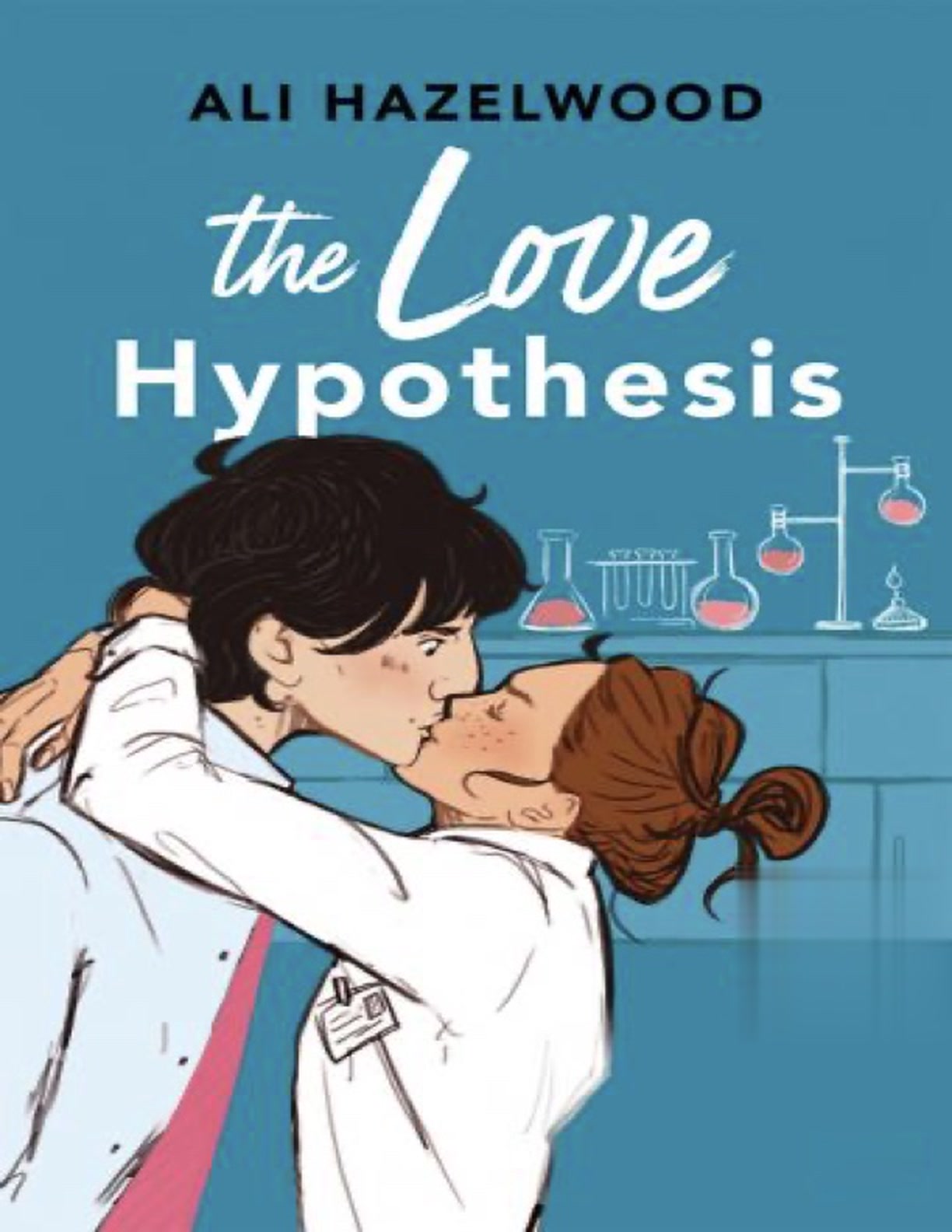
That’s The Love Hypothesis, by Ali Hazelwood. It was a huge bestseller, and this fall it became a movie on Prime Video. So is the book actually worth your time?
Here’s the short answer. If you want a warm, funny, very nerdy fake dating romance, yes. Read it. If you want a deep, surprising story, or you can’t stand the fake dating trope, skip it. I’d give it four out of five, and I’ll explain exactly why.
The Setup
Olive Smith is a third-year biology PhD student at Stanford. She studies early detection of pancreatic cancer, she has lost her mother to cancer, and she is excellent at her work and terrible at telling people how she feels.
Her best friend, Anh, is convinced Olive is still hung up on a man named Jeremy. Anh won’t date Jeremy, because she thinks it would hurt Olive. So Olive panics and does something very silly. In a hallway of the biology building, she grabs the nearest man and kisses him. And she says he’s her boyfriend.
That man is Adam Carlsen. He’s a young, famous professor. He’s tall, he’s brilliant, and he is known across the department for making students cry. Everyone calls him hostile and inaccessible.
The Deal
Here’s where the book wins you over. Adam does not expose her. Instead, he offers a deal. Olive needs her friend to believe the relationship. Adam needs his colleagues to believe it too, because his research funding is frozen, and the department suspects he is about to leave. A serious relationship would make him look like he’s staying.
So they sit down and make rules, like scientists. It’s a strictly on-campus arrangement. They won’t date anyone else. They’ll have coffee once a week, in public. And there is a date when it all ends: September twenty-ninth, the day after the department’s budget vote.
I love this part. The rules are funny, and you know from the first page that every single one of them is going to be broken.
The First Hour
The opening chapters are the strongest stretch. The kiss, the panicked lie, and the first rule-making meeting in Adam’s office happen almost back to back, and every scene is funny. There’s a great beat where Olive lays down a rule about keeping things strictly pretend, and the famously terrifying professor simply goes silent, because he never expected the subject to come up.
Then the lie spreads. By the next day the whole department knows. Strangers stare at Olive in the hallway. Students who used to steal her lab time suddenly leave her alone, and professors who ignored her emails start to answer. The book makes a smart point here: being attached to a powerful man changes how people treat you, even when it isn’t real.
And Adam’s reputation is part of the fun. Everyone in the department is certain he is cold. Olive keeps finding evidence that he is something else, like the pumpkin drinks, and a collection of stuffed squirrels she is not supposed to see.
Where It Goes
Without spoilers, the middle of the book follows the fake relationship as it gets more convincing. They have weekly coffees. They go to a department picnic where Olive is forced to put sunscreen on Adam in front of a hundred people. He helps her with her experiments, and she helps him in ways he doesn’t want to admit.
Then comes the part everyone remembers: a big biology conference in Boston, where Olive has to present her work and Adam has to stay out of the way. Hotel rooms, a single bed, and a lot of nerves follow. I won’t say more. But the stakes rise, because Olive’s career, her heart, and the lie all start pulling in different directions.
The Characters
Olive is the reason this book works. She is anxious, funny, and a little chaotic, and she lies far too much. Every chapter begins with one of her hypotheses, written like a lab notebook entry. Things like: if given a choice between a slightly awkward situation and a catastrophic one, I will always pick the catastrophe. That is a very good description of Olive.
Adam is the classic grumpy, secretly soft hero. Behind the scowl, he is careful, observant, and quietly kind. He remembers what she likes. He buys her pumpkin drinks. And the book slowly shows you how lonely his life has been.
The best friend and the supporting cast are great too. Anh is loud and loyal. Malcolm, Olive’s roommate and friend, steals many scenes. And Holden, Adam’s best friend, is chaos in a lab coat.
The Hypotheses
Let me show you the format, because it’s my favorite thing about the book. Every chapter opens with a hypothesis, and each one is a tiny joke that sets up the chapter.
Chapter two says: any rumor about my love life will spread at a speed directly proportional to my desire to keep it secret. Chapter nine says: the more I mention an attachment in an email, the less likely I am to actually include it. And chapter twelve says: if I’m bad at an activity, the chances that I’ll be asked to do it will increase exponentially.
As the book goes on, the hypotheses get more serious, and more honest. Near the end, one of them reads: when I think I’ve hit rock bottom, someone will hand me a shovel. It’s a smart little device. It gives the book a shape, it makes the jokes land, and by the end you realize the whole story has been an experiment about whether Olive can trust her own conclusions.
What Works
First, the chemistry. These two are a joy to read together. The banter is quick, the small gestures matter, and the scenes where they are simply being kind to each other land harder than any big declaration.
Second, the voice. The writing is fast, silly, and self-aware. Olive narrates in a tone that makes you laugh on almost every page, and the lab-notebook chapter openers are a clever touch that gives the whole book a personality.
Third, the setting. Most romance novels pretend work doesn’t exist. This one is full of grad school: tired students, pipettes, committee meetings, grant money, and conference posters. If you’ve ever been in a lab, you’ll laugh in recognition. If you haven’t, it still feels real.
And fourth, it has heart. Under the jokes, this is a book about being afraid to ask for what you want, and that part is surprisingly moving.
What Doesn’t Work
Now the honest part. The story is not original, and the fake dating plot is the whole engine. You can see the big moves coming from far away, including a conference trip and a classic hotel mix-up.
The conflict also leans on a misunderstanding. A lot of the third act depends on two smart people not saying a simple sentence out loud. That is a very familiar romance trick, and it can be frustrating.
And the supporting plot is thin. There is a serious storyline about a harassing researcher, and it is handled with care, but it mostly exists to push the romance forward. The villain feels more like a device than a person.
How It Compares
If you’ve read other fake dating romances, you’ll know the shape. Beach Read has more depth, and The Hating Game has a sharper office rivalry. The Love Hypothesis wins on warmth. It is the cozy, funniest option of the three, and it is easier to read in one weekend.
It is also very much a book of its moment. It began as fan fiction, and you can feel that in the pacing: the book is built around moments that readers want, and it delivers them generously.
Content Notes
A few things you should know. This book has explicit scenes, so it is not a closed-door romance. It also has a storyline about sexual harassment in academia, which includes some upsetting dialogue. And there is mild swearing throughout.
It’s also a long book. It reads fast, but it is a few hundred pages of the same central situation, and that can feel stretched in the middle.
The Film
One more thing. The film adaptation is out now. It’s streaming on Prime Video from September twenty-third, with Lili Reinhart as Olive and Tom Bateman as Adam. Claire Scanlon directed it.
If you want to read the book first, the movie is easy to watch afterward. If you watch first, you’ll still enjoy the book, because the voice is half the fun.
The Scorecard
Let me put numbers on it. Humor gets a five. Chemistry gets a five. Pacing gets a four. The plot gets three and a half, and so does emotional depth. That averages out at four point two, so overall, four out of five.
Should You Read It
So here is my verdict. Read it if you love fake dating, grumpy and sunshine pairs, workplace romance, or science jokes. Read it if you want something light, warm, and comforting.
Skip it if you want a surprising plot, a realistic portrait of academic life, or a romance with no misunderstandings. And skip it if explicit scenes aren’t your thing.
Where To Get It
If you’ve finished it, my ending explained video is linked here, and I also made a video checking how real grad school compares. The book and the film are both easy to find.
Tell me in the comments: do you think Adam is the best grumpy hero in romance?