Before the Credits
So this is not a book against film comparison, since the team has not seen the movie. Think of it as a field guide to the book underneath the film, written for anyone with a watch party coming up. Every number comes from our own copy of the text, counted chapter by chapter. If you are deciding whether to read first, here is the answer in advance. Read it first if you want a warm, funny fake dating story and you are fine with two chapters of explicit scenes. Skip it if either of those is a hard no. Everything here is spoiler free, because I point to later chapters by number and never by event.
What Can Be Confirmed
Now the film facts, and I will say which are official and which are reported. All of it is as of October thirtieth, twenty twenty six.
The official source is Prime Video’s own page on Amazon’s news site. It was published in June and updated on September twenty third to say the film is streaming now, exclusively on Prime Video and included with a Prime membership. It lists Lili Reinhart as Olive, Tom Bateman as Adam, Claire Scanlon as director, and Sarah Rothschild as screenwriter.
The same page also lists Rachel Marsh as Olive’s best friend Anh, and Nicholas Duvernay as Jeremy. It does not give a runtime or a rating, so I will not either.
That page does not print the premiere date. The date comes from two outlets, reported rather than official. ABC News, in June, and the publisher Penguin Random House International Sales, on June nineteenth, both report September twenty third, twenty twenty six.
Because I have not seen the film, I will not claim a single thing it changed. Whatever it did, the rest of this video is about the book.
The Setup, in Four Moves
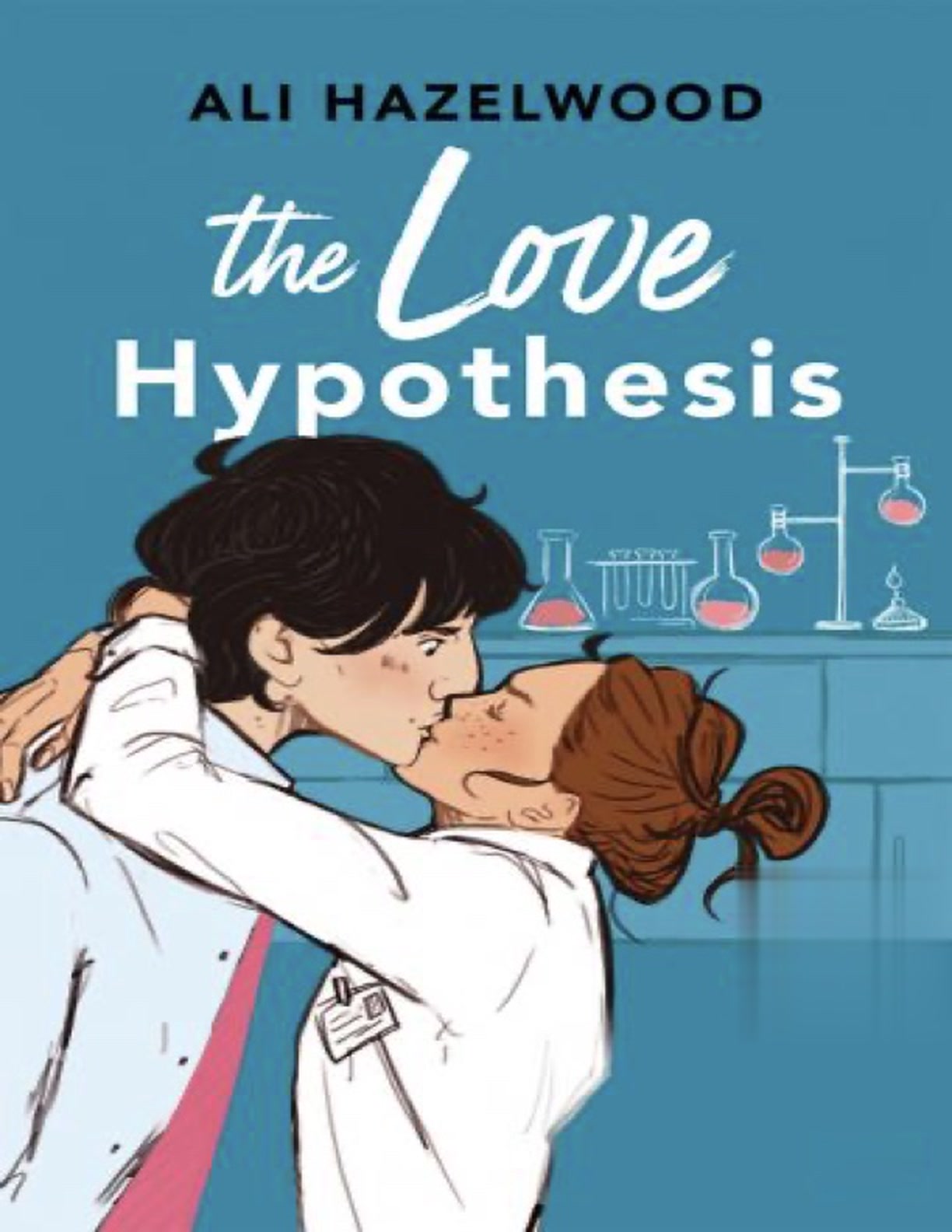
Here is what the book sets up, with the chapter where each move lands. The novel is by Ali Hazelwood, and it begins with a prologue, a bathroom, and a stranger.
In the prologue, Olive Smith is a nervous Stanford visitor with bad contact lenses, talking to a deep voiced man about why anyone does a doctorate. That is the first move.
In chapter one, nearly three years later, she is a biology PhD student. To convince her best friend Anh that she has moved on, she kisses the nearest man in a corridor. He is Adam Carlsen, a famous and famously feared professor. That is the second move.
In chapter two, Adam does not report her. He offers a deal instead, because a believable partner would help him with a funding problem. That is the third.
In chapter three, they write rules. Olive lists them with a number of conditions, including an end date and a weekly ten minute coffee. That is the fourth, and everything else grows from it.
Notice how small that engine is: two people, a list of rules and a deadline. It is also why the casting of the two leads matters so much to how any version plays, because the whole book rests on whether you believe these two while they pretend.
The Trope Board
Next, our own board. We went through every chapter and noted where each familiar trope first shows up, so you can watch for them.
Grumpy meets sunshine begins in chapter one. Fake dating is proposed in chapter two and made official, with rules, in chapter three. Forced proximity starts small in chapter six, when a crowded lecture leaves Olive with nowhere to sit.
Hurt and comfort arrives in chapter eight, when Olive talks about her mother and Adam responds in his own awkward way. The shared hotel room is set up in chapter thirteen, with Olive predicting exactly what you are predicting. And the whole thing lives on a university campus, which gives the book its lab jokes and its running chapter openers.
The book also has a rhythm you can feel. The weekly coffee dates start in chapter four as an awkward quiz, with questions about favorite colors and birthplaces, the way strangers on a bad first date might talk. The first text message conversation between the two of them is in chapter seven. And the pages move fast, because the typical chapter runs about forty six hundred words, a comfortable single sitting.
I like that the humor never stops at the rules. The book keeps asking what happens when two people who are pretending run out of things to pretend about.
Those openers matter. Every chapter begins with a one line hypothesis, a small joke or confession written in the voice of a scientist. Our copy is the French edition, so I will not quote them, but notice how they work. They tell you what Olive believes right before the chapter disproves it.
Who Is Who
Before the meter, a quick cast board, because the book is crowded with friends, and a film has to squeeze them. These are the first chapters where each person turns up, and nothing about what they do later.
Olive’s best friend Anh is named in chapter one, and so are Jeremy, Olive’s ex, and Malcolm, who is her roommate and the person she tells the truth. Tom Benton, a Harvard researcher whose lab Olive hopes to join, is in chapter two as the name on an email, and he appears in person in chapter four. Holden Rodrigues is named in chapter two and steps into the story properly in chapter eleven.
I like that the book gives each of them a job. Anh pushes, Malcolm supports, Jeremy is the reason for the lie, Tom is the career prize, and Holden knows Adam better than Adam admits. Watch whether the film keeps each of those jobs, since a film with limited running time often merges friends together.
The Content Meter
This is the part I most wanted to count. One note first. Our copy is the French translation, so the chapter numbers are from that edition and the language count is of the French words. An English copy may differ slightly. The ratings are my own opinion, so treat them as a starting point.
First, spice. By our reading, on page sexual scenes sit in chapters sixteen and seventeen, and chapter fifteen builds toward them. That is two chapters out of twenty two, plus an epilogue with none. They are explicit and detailed. Before that there are only kisses, the first in chapter one and the second in chapter six. In my view that is four out of five for spice, and a very contained four, because it is concentrated in a short stretch.
Second, language. We counted one hundred and thirteen strong swear words across about one hundred and six thousand words of story. It is steady, and it is heaviest in chapters one, two and seven. In my view, three out of five.
Third, alcohol, which is light. Beer comes up nine times in the whole book, always as a passing detail.
Fourth, the heavier themes. Olive’s mother died of cancer, and her grief drives the story from chapter five. A senior academic harasses Olive in chapter fourteen. That storyline returns in chapters nineteen and twenty, where there is also a moment of physical aggression. An abusive advisor from Adam’s past is described as well. In my view, three out of five for dark themes, and if workplace harassment is a hard no for you, this meter is your warning.
Three Things to Watch For on Film Night
Since I have not seen the movie, here are three things the book sets up so you know what to watch for in any version.
One, the lie. The whole story starts with a small lie Olive tells her best friend, and by chapter two it has grown into something the entire department believes. Watch how the film handles a heroine who is terrible at lying and keeps doing it, and notice who gets pulled into the story because of it.
Two, the rules. In chapter three the arrangement has a list of terms, an end date and a weekly coffee. Notice whether the movie keeps the list. A fake dating story lives on its rules, because a rule is only exciting when somebody starts to bend it.
Three, the bathroom. The prologue sets up a stranger who asks a quiet question and then disappears from the story for a long while. I will not say more. Just keep your eyes on how a film introduces a character who is only a voice at first.
So, Read It First?
Here is my pick, with the caveat that I have not seen the film. If the content meter is fine with you, read the book first. The humor, the rules and the slow warming of two people who start out pretending are all in the pages, and you will notice every nod on screen.
And if you are the sort of reader who likes to be ready, here is a small plan. Read the prologue and the first three chapters, which cover the whole setup and the rules, and then decide. If the tone suits you, the rest of the book keeps it up.
If the meter is not for you, you can watch the film without the book, or skip both. I would rather you know what is coming than be surprised in the dark.
If you want more before choosing, the channel already has a spoiler free review of the book, and a fact check on how real the grad school details are. Both live on the same page at book explained dot com.
Either way, if you have finished the book and want every twist unpacked, the ending explained video is waiting for you, and the page for this guide is at book explained dot com.
What is your call, book first or film first? Tell me in the comments. If this guide helped, tap like and subscribe, and I will see you in the next one.