How It Ends
Fair warning, this video spoils the whole ending, and I compare it with the twenty twenty-five movie. If you haven’t read the book yet, go and watch my other videos first.
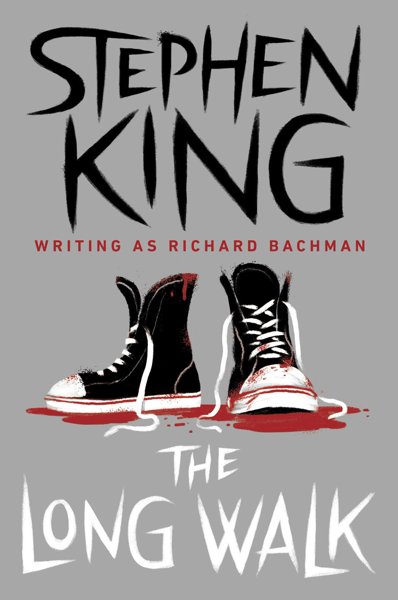
So, how does The Long Walk end? The Walk runs about five days. Out of one hundred boys, Ray Garraty is the last one still on his feet. Peter McVries sits down and is shot. Stebbins collapses and dies. Garraty wins, and the book never shows him collecting the Prize. He walks toward a dark figure only he can see, and then he runs, in the rain, with the whole country cheering.
The movie changes all of that. Garraty gives up so McVries can win, and McVries spends his wish on the Major. We will get to that, with sources.
Content note: this story is full of graphic violence against teenagers, and so is this summary of it.
Nine Boys Left
First, the setup. The Walk starts at nine in the morning on May first, at the Canadian border in Maine. The rule is four miles an hour. Drop below it and you get a warning, and a computer on the halftrack reads every boy’s speed. You are allowed three, and the fourth means the soldiers shoot you. The book calls that a ticket. The last boy walking wins the Prize, anything he wants for the rest of his life.
By Freeport, on the fourth morning, twenty-four boys are left. Garraty finally sees his girlfriend Jan and his mother in the rain, and McVries drags him back from the crowd before he gets himself shot.
Then comes an ugly deal. Abraham asks everyone for a promise: no help for anybody. Do it on your own or not at all. Garraty agrees, and hates himself for it. When the last food belts are handed out, only nine boys remain.
Parker’s Attempt
One moment on the fourth evening matters more than it first seems. Collie Parker, the loud boy from Joliet, Illinois, climbs onto the halftrack with a rifle. He shoots one soldier dead and screams at the others to come up and join him.
Nobody moves. They stare at him as if he is speaking a foreign language. A soldier shoots Parker in the back. He fires twice into the road, and then he dies, glaring at everyone who walks past.
McVries is the only one who understands. He says Parker wanted them all up there with him, and that they could have done it. Garraty does not want to know what that means.
That is the book’s one real chance at a rebellion, and it dies with Parker. Remember it, because the movie answers the same question differently.
Stebbins’s Secret
Stebbins is the boy at the back in purple pants who hardly ever speaks. On the fifth morning, Garraty finally gets under his skin. Stebbins throws up his peanut butter crackers and is warned for the second time in the whole Walk.
Then he cracks. He says he is the rabbit, like the mechanical rabbit the greyhounds chase and never catch. And then he shouts that the Major is his father.
He is one of the Major’s bastards. He planned to win and ask for the Prize of being taken into his father’s house. But the Major knew all along, and made him the rabbit, to make the other boys run faster and farther.
After that, Stebbins is almost gentle. McVries tells him to come in out of the rain, and he says thanks. It is the closest the book gets to explaining him, and it is only half an explanation.
Seven Cross The Line
Stebbins says it is the first Walk to get this far in seventeen years. They cross into Massachusetts with seven left: Garraty, Baker, McVries, Stebbins, and three boys named Fielder, Hough, and Rattigan. The hills are black with people. George Fielder screams that they are going to eat us up, spins in a circle, and is shot. The crowd is so loud that Garraty cannot even hear the gunshots. Hough and Rattigan are shot before noon.
Art Baker’s nose starts bleeding and will not stop. He asks Garraty for one favor. He has talked about it since the second afternoon, because he is afraid of rot, and rats gnawing through a pine box. He asks for a lead-lined coffin.
Then he asks Garraty not to watch it happen, and Garraty promises. They shake hands. Baker says, another time, another place. Garraty hears the shots anyway.
A sign says forty-nine miles to Boston. Three boys are left.
McVries Sits Down
Forty miles from Boston, Stebbins asks Garraty for a story to take their minds off things. Garraty starts a fairy tale about a white knight. McVries is walking with three warnings, Garraty with one, and Stebbins with none. Halfway through, he sees that McVries has fallen asleep on his feet.
He shakes him awake, and McVries smiles. No, Ray. It is time to sit down.
On the first night, McVries said that when he got tired enough, he thought he would just sit. Now he does. Garraty screams no, tries to lift him, and begs the soldiers to shoot him instead. They give Garraty a warning. McVries opens his eyes, smiles once more, and is gone.
He had saved Garraty’s life more than once. Garraty has nothing to give back except a promise. He tells Stebbins that he is going to walk him into the ground.
Stebbins Falls
By eight that evening, they are walking through Danvers, Massachusetts. Garraty finally understands. He spent too much time thinking about it. McVries, Baker, and Abraham just did it, as if it were natural, and in a way it is the most natural thing in the world.
He feels calm. He goes up to Stebbins to tell him he is finished, and puts a hand on his shoulder. Stebbins turns and claws at his shirt. Garraty sees horror in his eyes, and understands that the grip is a last reach for rescue.
Oh, Garraty, Stebbins cries, and falls down. Garraty turns him over and holds a hand to his mouth, and Stebbins is dead. The soldiers shoot him anyway.
Nobody wins this fight. Stebbins simply runs out.
The Last Page
Now there is only Garraty. A jeep roars toward him through the rain. The Major stands in it, holding his stiff salute, ready to grant any wish, even a death wish.
Garraty steps aside. Ahead of him, a dark figure beckons, someone he knows as well as himself. He asks himself which boy he has not walked down. Barkovitch? Parker? Percy? Scramm? The crowd screams his name.
A hand lands on his shoulder, and he shakes it off. The figure beckons him to come and play the game. And the last line says that when the hand touched his shoulder again, he somehow found the strength to run.
There is no word to the Major on the page. No wish. No Jan. McVries’s promise about Scramm’s wife is never kept in the book.
What It Means
So who is the dark figure? The book never says, so these are my readings, and you can disagree. One, it is every boy he outlasted, pulling him forward. Two, it is death, which is the game he is now playing. Three, it is himself, a version of Garraty that exists only on the road.
I lean toward a mix of all three. Remember what McVries said on the second morning: everyone loses, and the winner is taken out behind a barn. The book does not confirm that, but it never shows a prize either.
Stebbins gave us the other key. He told Garraty that any game looks straight if everyone is being cheated at once. By the end, nobody is left on that road to compare notes.
What the book shows is a sixteen-year-old who wins by outlasting his friends, and who cannot stop walking afterwards. That is not a victory. That is the Walk getting what it wanted.
The Movie’s Ending
Now the movie. As of October twenty twenty-six, reported by Wikipedia and Reactor: it was directed by Francis Lawrence, written by JT Mollner, and released by Lionsgate in the United States on September twelfth, twenty twenty-five. Cooper Hoffman plays Garraty, David Jonsson plays McVries, and Mark Hamill plays the Major.
Here is the change. Stebbins, who is also the Major’s son in the film, drops out. That leaves Garraty and McVries. Garraty lifts McVries up and urges him on, then stops walking himself and is executed. McVries is declared the winner, asks for a soldier’s carbine, shoots the Major, and walks away down the road.
Reactor reports that the writer added a new backstory in which the Major shot Garraty’s father. The director has said the ending shows each friend sacrificing for the other, and that you do not want the guy in it for vengeance to win. King, an executive producer, is reported to have liked it.
Which Is Better
My take, and this is opinion. The movie gives you something the book withholds: an answer to Parker. Someone finally turns a gun on the people who run the Walk. It is satisfying, and it is built for a theater full of people.
The book’s ending is meaner. It lets the Walk win. I find that harder to forget, and I think it is the stronger piece of writing, even though I understand why the movie wanted a hand to reach for the gun.
Either way, the last hour hurts because you have walked five days to get there. Both versions agree on one thing: the friendship between McVries and Garraty is the heart. If you want the whole story on one page, you will find The Long Walk on bookexplained.com. So tell me below: did the gun feel earned, or did you want the book’s road? And subscribe for the next video.