The Short Answer
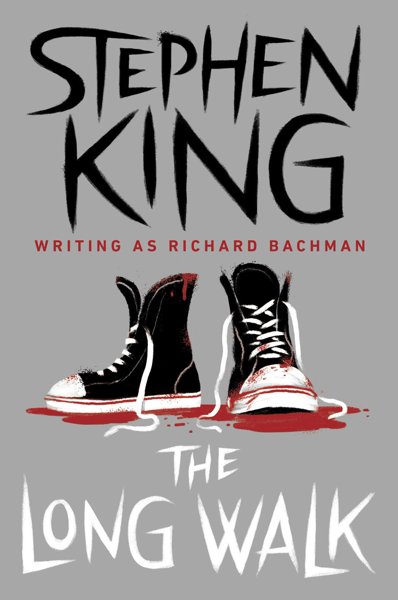
Is The Long Walk based on a true story? No. It is fiction. Stephen King’s novel about a hundred teenage boys who must keep walking until only one is left is invented, and the edition I read says so on its copyright page. It calls the book a work of fiction, and it says any resemblance to actual events, places or people is coincidence.
But the story behind the story is real, and a lot of it is documented. King wrote the book as a young man in college. It came out in nineteen seventy-nine under a pen name, Richard Bachman. And a film followed in twenty twenty-five.
So here is what King said, what the book says about itself, what is reported about the film, and where I could not find a source, so I say nothing. Everything here is as of October thirtieth, twenty twenty-six. There are no ending spoilers in this one.
Three Years
Here are the three years on the board. Nineteen sixty-six to nineteen sixty-seven is when King started writing, as a college student. Nineteen seventy-nine is when the novel reached shelves. And twenty twenty-five is when the film opened.
That is a long gap. Several outlets say King wrote the book first and published it much later, after his first published novel, Carrie, in nineteen seventy-four. That makes The Long Walk the first novel he wrote, but not the first one you could buy.
A first novel can sit in a drawer for years while later ones go out first. Here, the drawer was a pen name, and that is the next part of the story.
The book itself confirms the middle date. The copyright page of our edition reads nineteen seventy-nine, by Richard Bachman, with King’s introduction added in nineteen ninety-six. King’s introduction also says the early Bachman novels came out as paperback originals under the Signet imprint.
The Man Named Bachman
Why a pen name? King’s introduction in our edition is called The Importance of Being Bachman, and it is dated April sixteenth, nineteen ninety-six, from Lovell, Maine. It is about Bachman in general. It never mentions The Long Walk by name, so I will not pretend it explains this book.
What it does say is worth hearing. King calls Bachman, quote, the vampire side of my existence. He says the early books were written by a young man who was, quote, angry, energetic, and deeply infatuated with writing. And he says Bachman became real to him.
King describes imagining Bachman’s whole life. A dairy farmer in New Hampshire, a wife named Claudia Inez, early mornings with the cows, and evenings writing beside a glass of whiskey and an Olivetti typewriter. That biography is invented, and King says so. It is part of the fiction around the book, not a fact about it.
Then the secret got out. King writes that Bachman died when his cover was blown, and he jokes about the cause of death, a cancer of the pseudonym. He says the shock was real, though. It even pushed him to write a novel about a writer whose pen name comes alive, called The Dark Half.
As for why the name existed at all, two outlets in twenty twenty-five agree on the gist. Screen Rant, on August twenty-third, cites King’s own website, which says he wanted to publish more books, faster. Collider, on September eleventh, says his publisher would not let him release more than one book a year. That is reported, not something I read in King’s own hand.
Notice the pattern in this section. The introduction is King’s own voice, and I read every word of it in our edition. The reasons for the pen name come from outlets quoting him. I keep those two kinds of evidence apart on purpose, because mixing them is how a rumor turns into a fact.
Written in College
Now the origin. Wikipedia says King began the novel in nineteen sixty-six to sixty-seven, in his freshman year at the University of Maine, and it cites a two thousand ten afterword King wrote in his book Full Dark, No Stars. I have not read that afterword myself, so I label this reported.
Two other outlets back up the college part. Screen Rant says the first draft came during his freshman year, and that he set it aside to work on other stories before returning to it. Collider says he wrote it in the late nineteen sixties as a student at the University of Maine.
The details wobble between retellings. One report of a Vanity Fair interview, on SlashFilm in May twenty twenty-five, says he started in high school and finished in college. So I will only say this. King wrote the first version as a teenager, around his first year of college, in the late sixties. That is about a dozen years before the paperback.
Keep the arithmetic in mind. If the first draft was nineteen sixty-six or sixty-seven and the paperback was nineteen seventy-nine, the book waited about twelve years. The draft years are King’s first years as a writer, not his famous ones.
The Draft Years
Was it inspired by something real? The best-documented answer is the era. In a twenty twenty-five Vanity Fair interview, King talked about the Vietnam War and the draft. SlashFilm, on May seventh, and Biography dot com, on September twenty-fourth, both quote him.
He said, quote, you write from your times. And he added that he never thought about it consciously. So the war was in the air while he wrote, but he does not say it was his plan.
That is a careful answer, and I think it is the honest one. Writers rarely say a book is about one thing. They say the world was in their head. The reader is the one who connects a draft notice to a boy in a faded army jacket on a road.
Plenty of critics read the book as a Vietnam allegory, with young men sent to die by a uniformed authority. Wikipedia points to a two thousand twelve Guardian essay by James Smythe. That is a reading, not a source, and in my view it is a fair one.
People also compare the Walk to real endurance contests. I looked for a place where King names one as his source, and I did not find it. So I leave those comparisons out.
What Is Invented
Look at what the book gives you instead. The epigraphs in our edition are a quote from Thomas Carlyle, a line from President Kennedy in nineteen sixty-two that encouraged Americans to walk, and lyrics from Bob Dylan. The first chapter opens with a line from Groucho Marx and his quiz show, You Bet Your Life.
Those are moods, not sources. Meanwhile the setup is pure invention. A near-future America run by the military. A Major in mirrored sunglasses. A hundred boys, a nine o’clock start, a speed floor of four miles an hour, and three warnings before the next slowdown is fatal. The winner gets the Prize.
The places, though, are real. The walk goes through Maine towns like Limestone, Oldtown, Freeport and Augusta, and the copyright page says real places are used fictitiously. That is the recipe: a real map, an invented rule.
The crowds are invented too, in the sense that matters. Along the road, people cheer, hold up signs, and treat the boys like a parade. King wrote that spectacle into the book. I have found no source that says an event like it ever happened, and I would not claim one.
The Film
Now the movie, as of October thirtieth, twenty twenty-six. Lionsgate’s own announcement, from October fourteenth, twenty twenty-five, about the film’s home release on October twenty-first, lists Francis Lawrence as director and JT Mollner as screenwriter, adapting King’s novel. The cast includes Cooper Hoffman, David Jonsson, Judy Greer and Mark Hamill.
Hoffman plays Ray Garraty, and Jonsson plays Peter McVries. Wikipedia lists Hamill as the Major, and Wikipedia and The Numbers both put the United States release in the weekend of September twelfth, twenty twenty-five. Reactor reports that King was an executive producer.
One honest limit. Our team has not watched the film, so I am not comparing it with the book here. If you want the reported differences, the ending video points to them, with sources. Fiction became a film, and a film is another telling of the same invention.
For the release date I trust two outlets that agree, and for the credits I trust the studio announcement. That is the standard I use on this channel. If a source does not say it, I do not either.
So, True Or Not
My verdict, which is an opinion. The Long Walk is not a true story, but it is not unrooted either. It is a college student’s nightmare from the Vietnam years, finished and polished later, published under a name King invented to hide behind.
The documented facts are small. First novel he wrote, nineteen sixty-six to sixty-seven, nineteen seventy-nine paperback, Bachman, the film in twenty twenty-five. Everything else people say about its origins is either an interpretation or something I could not source twice.
That is the whole fact check. Fiction, with a real writer, a real year, and a real era behind it.
So if you read online that one specific real event inspired the Walk, ask where it is written. If the answer is not King, his books, or an interview you can find, treat it as a guess. A good guess can still be interesting. It just is not a fact.
If you want the story itself, I have a book summary, an ending explained, and a characters guide. Links are on the page at book explained dot com. Did you know it was King’s first novel? Tell me in the comments. If you like honest fact checks, subscribe and tap like, and I’ll see you in the next one.