The Short Version
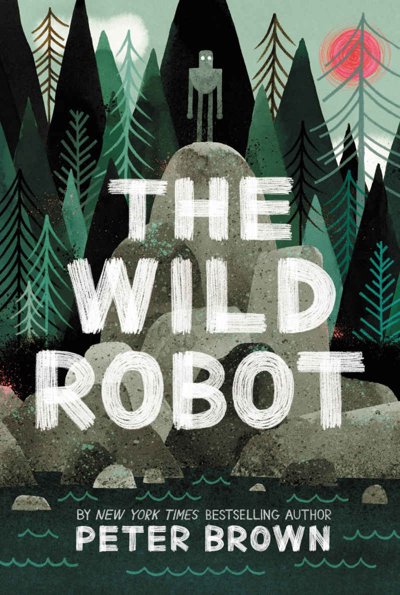
The Wild Robot is one of those rare cases where both the book and the movie are wonderful, but they are noticeably different. So today, let’s compare them.
Short answer: the film keeps the heart, a robot who learns to love and raises a goose. But it tightens the story, makes Fink the fox a co-parent, adds a new villain, and rewrites the ending. Spoilers for both from here on.
The Movie At A Glance
The film was written and directed by Chris Sanders, who co-directed Lilo and Stitch and How to Train Your Dragon. DreamWorks Animation released it in September twenty twenty four.
It runs about an hour and forty minutes, and it was a real hit: about three hundred thirty four million dollars worldwide on a seventy eight million dollar budget. It earned three Oscar nominations, including Best Animated Feature, and won Best Animated Feature at the Annie Awards.
The Voice Cast
Lupita Nyong’o voices Roz, and she’s extraordinary, starting flat and robotic and gradually warming up. Kit Connor voices Brightbill. Pedro Pascal is Fink the fox, Catherine O’Hara is Pinktail the opossum, Bill Nighy is Longneck, Mark Hamill is a bear named Thorn, and Stephanie Hsu voices the film’s villain robot, Vontra.
The Look
Before the changes, a word on the visuals. The movie looks like a painting come to life, with soft brush strokes and glowing forests. It’s clearly inspired by the book’s own illustrations, which Peter Brown drew himself.
What The Movie Keeps
The core story is the same. A storm, a crate, otters, a robot who learns animal language by watching. The rockslide that kills a goose family, the single egg, and Roz raising Brightbill to swim and fly before the migration.
The film also keeps the big beats of a hard winter, Roz sheltering animals in a lodge, and robots from the company arriving to take her back.
Change One: Fink Becomes Family
In the book, Fink the fox is a minor character, sly and mostly self-interested. In the film, Fink is a lead. He helps raise Brightbill, he becomes Roz’s best friend, and his loneliness becomes a parallel to hers.
It’s a smart change for a movie. It gives Roz someone to talk to, and Pedro Pascal makes Fink funny and moving.
Change Two: The Truth About The Nest
In both versions, Roz accidentally causes the rockslide that kills Brightbill’s family. But the film turns it into a major emotional crisis. Brightbill learns what happened, feels betrayed, and their relationship breaks before the migration.
In the book, Brightbill’s teenage storm is different. The other goslings tease him for having a monster mother, and he flies off to see the dead robots on the shore. The movie’s version is sharper, and it gives the story a stronger middle act.
Change Three: The Migration
In the book, we only hear about Brightbill’s winter afterwards, when he tells Roz about the early snow, the farm, the warm greenhouse, and the death of Longneck, who is killed by a human.
The film shows the migration on screen, with Brightbill leading the flock through danger, and Longneck making a sacrifice to save them. It also adds a falcon named Thunderbolt who helps teach Brightbill to fly.
Change Four: Vontra
The book’s villains are the RECOs, three blank, quiet robots. The film adds Vontra, a talking robot sent by the company, who is charming and menacing at the same time. The company also gets a new name in the film.
And the battle changes. In the film, the robots start a forest fire, and the animals unite to fight it and the robots together.
Change Five: The Ending
This is the biggest difference. In the book, Roz is shattered in the fight, shut down and switched back on by Brightbill, and then chooses to leave on the airship, broken, to get repaired and protect the island, promising to return.
In the movie, Roz defeats Vontra, and then chooses to go back to the company willingly, to stop it coming after the island again. She keeps her memories. And in the final scene, Brightbill flies to visit her, and they embrace. It’s a warmer, more hopeful ending than the book’s.
Which Is Better?
The book is gentler, slower and more about nature. It’s packed with small details about seasons and animals, and it trusts kids with a sad, open ending.
The movie is more emotional and more dramatic. It’s tighter, funnier, and Fink is a genuine improvement. If you loved the film, read the book for the quiet moments it had to skip. If you loved the book, the film is well worth it.
What’s Next
DreamWorks announced a sequel in March twenty twenty six, based on the second book, The Wild Robot Escapes. Troy Quane is directing, and Chris Sanders is writing. As of now, no release date has been announced.
Your Turn
Which do you prefer, the book or the movie? And what did you think of Fink’s bigger role? Tell me in the comments. My review, ending explained and a guide to all three books are linked below.