The Verdict
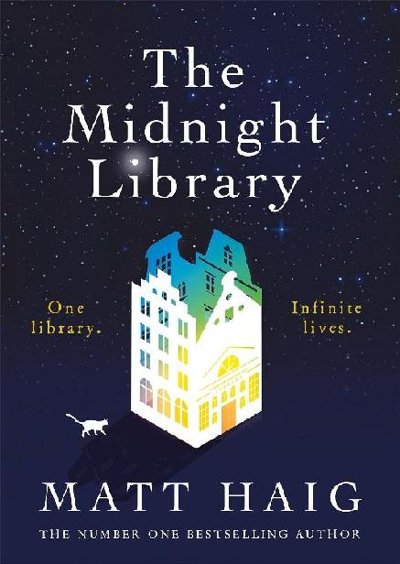
This is the Matt Haig novel that sold millions of copies, and today I’ll tell you what it’s about, what genre it is, and whether it’s worth your time.
So, is it worth reading? Yes, for most people, with one big warning. It’s warm, fast and full of lines you’ll want to underline. But it opens with a suicide attempt, and it stays close to depression the whole way through.
I give it four out of five. The ideas are simple and the side characters are thin, but the heart is real. This whole review is spoiler free, which means no late reveals, no deaths and no twists.
What Is It About
The Midnight Library came out in twenty twenty. Our main character is Nora Seed, who is thirty-five and living in Bedford, in England. In a single day she loses her job at a music shop, her cat dies, and she decides she has nothing left to give anyone.
The book counts down the hours to that decision in short, sharp chapters. Her brother won’t speak to her. Her best friend moved to Australia. Her pupil and her neighbor no longer need her. It’s a very honest picture of how a bad day can pile onto a bad life.
Then she wakes up somewhere else. A silent building, a clock stuck at midnight, and endless shelves of green books. Her old school librarian, Mrs. Elm, is waiting. Between life and death, she explains, there is a library, and every book is a version of Nora’s life.
How The Premise Works
Here’s the rule that drives the whole story. Nora has a regret, such as a path she dropped, a person she let down or a dream she never chased. She names it, Mrs. Elm finds the book, and Nora steps into the life where she chose differently.
If she loves that life, she can stay. If it disappoints her, she’s pulled back to the library and can pick another. I won’t tell you which lives she tries, because that’s the fun, but they are wildly different.
There’s one more piece. A thick grey book called The Book of Regrets lists everything she has ever wished she’d done differently. It’s a brilliant image, and it gives the story a clean engine that never really stalls.
What Genre Is It
So what genre is The Midnight Library? It’s contemporary fantasy, sometimes called speculative fiction or magical realism. There’s a fantasy rule, the library, but everything else is ordinary modern life. It’s not a hard science fiction book.
It borrows the idea of parallel universes from physics, but only as a comfortable story tool. You won’t need to know any science. It’s also very much a feelings book, closer to a fable about regret than a puzzle about how the multiverse works.
It’s written for adults, but it’s easy to read, with plain sentences and chapters that are sometimes a single page. If you’ve ever liked a high concept story that is really about how to live, this sits right in that corner.
Content Warnings
Now the content warning, because this matters. The book begins with Nora’s suicide attempt, and her thoughts about wanting to die run through the opening third. There is also depression, grief over her parents and a pet, and references to self harm scars.
Other things you’ll meet: addiction and drinking in the family, some strong language, a brief, non explicit sex scene, and a couple of tense, frightening moments that are never gory.
The book is on the side of life, and it says so loudly. Still, if you’re in a fragile place, you can pause, or read it with a friend. And if you are struggling, please talk to someone you trust or a local crisis line. You matter, and you don’t have to carry it alone.
What Works
First strength: the structure. Because every life begins at midnight, each trial is a fresh opening scene, with Nora improvising in a stranger’s shoes. That makes a book about regret surprisingly funny and surprisingly tense, because she never knows what she’s walked into.
Second strength: the emotional core. Haig knows depression, and has written about his own in a memoir called Reasons to Stay Alive. The early chapters feel true. The loneliness of a phone that never buzzes, the guilt that keeps apologizing, the sense of being a black hole. I felt that.
Third strength: the humour and warmth. Nora’s inner voice is dry and a little silly, and Mrs. Elm is a wonderful companion, with her chess board and her tissues. Even the darkest passages have a joke or a tender detail nearby.
Ideas And Philosophy
Nora studied philosophy, so the book is full of thinkers. Henry David Thoreau is her favorite, and he turns up again and again. There are also nods to Camus, Sartre, Schrödinger and others, usually in a sentence or two, never a lecture.
Is it deep? It’s accessible, which is a different thing. The ideas are delivered clearly and kindly, like a friend explaining something in a cafe. If you want a heavy philosophical novel, this isn’t it. If you want a gentle door into big questions, it works.
Some readers say the book repeats its message too directly. I understand that. But for a book that hopes to reach someone on a bad night, saying things plainly is a choice, not a mistake.
Nora And Mrs. Elm
Let’s talk about the people. Nora is easy to root for because she is so hard on herself. She notices every awkward pause, rehearses every apology, and keeps a mental list of everything she hasn’t become: a swimmer, a musician, a glaciologist, a wife. By the time the library appears, you know exactly why that list hurts.
Mrs. Elm, the librarian, is the best character in the book. She’s kind and stern at once, she plays chess against herself, and she answers big questions with small, practical ones. She is the voice of the book’s philosophy, and I wanted more scenes with her.
The rest of the cast is lighter. Her brother, her old friend, the neighbor next door and the surgeon who knocks on her door are all drawn with a few strokes. That keeps the story moving, but it also means the people she tries to save sometimes feel like symbols.
Pacing And Style
The structure is tidy. The first quarter sets up Nora’s day in short chapters, each headed by how many hours remain. Then the library opens, and the book becomes a series of trial lives, each different in tone and place, from quiet to dramatic.
The pace is fast. Chapters often run a page or two, and a few are only a paragraph, such as a single letter or a social media post. That makes the book easy to read in long sessions or in tiny gaps, and it fits the theme of a mind jumping from one possibility to the next.
If you like slow, textured literary fiction, the style may feel too light. If you want comfort, momentum and a clear emotional line, it’s a very easy book to fall into on a rainy weekend.
What Doesn’t Work
Now the honest criticisms. First, the supporting cast is thin. People Nora meets are often a single trait with a name, and some of the alternate lives feel more like postcards than places.
Second, the prose is plain. There’s the occasional lovely image, but you won’t be rereading sentences for their craft. A few jokes also land flat, and a couple of the pop culture references already feel dated.
Third, the story is very neat. Everything points to one lesson, and the middle can feel like a tour, with a life per chapter. Some readers also feel the book makes recovery sound simpler than it is. I’ll come back to that debate in my book club video.
The Hype And The Movie
Some context. The Midnight Library won the Goodreads Choice Award for Fiction in twenty twenty, and the author’s website says it has sold more than ten million copies. It became a word of mouth hit, passed from friend to friend.
As for the movie, here’s what we know as of October twenty twenty six. A film is in development, with Florence Pugh attached to play Nora Seed and Garth Davis directing. Filming is reportedly planned for early twenty twenty seven, and there is no release date yet.
Matt Haig has also published a new novel, The Midnight Train, which he describes as a companion piece rather than a sequel. I’m only reviewing the original today, and everything here is spoiler free.
The Scorecard
Time for the scorecard, out of five. For hook, five out of five. The premise is irresistible, and you’ll be turning pages from the first chapter.
Emotion gets four and a half. The first third hit me hard, and the closing pages are generous. Ideas get four, characters get three, and prose gets three.
That averages to three point nine, which I round up to four out of five. It’s not a masterpiece of style. It’s a book that does something specific and does it with real kindness.
Who It’s For
Read it if you like big hearted, high concept stories. Read it if you have ever lain awake wondering what your life would look like if you’d chosen differently. Read it if you want a fast, emotional book in very short chapters.
Skip it if a suicide attempt on the page is too much right now. Skip it if you want hard science fiction, a twisty plot or deep, complicated side characters. And skip it if simple life lessons make you roll your eyes.
If you do read it, tell me in the comments: which regret would you want to see undone? I’d love to hear. If this helped, please like the video and subscribe. Next up: the ending explained, with full spoilers. Thanks for watching, and take care of yourself.