Welcome And Warning
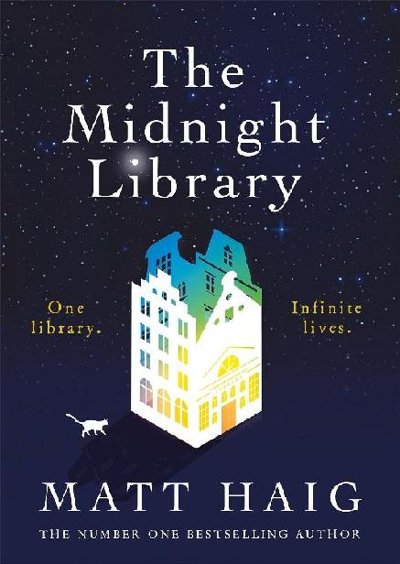
Today it’s The Midnight Library, by Matt Haig. This is the complete guide, with the full summary, the characters, every life Nora tries, the themes, the philosophy, the ending explained, and what to read or watch next.
Fair warning, it spoils everything, including the last page. If you haven’t read the book yet, my spoiler free review is the better place to start, and you can come back here when you finish.
One more thing before we start. The Midnight Library begins with a suicide attempt, and it deals with depression, grief and addiction. I’ll talk about all of it plainly and carefully, but if today is a hard day, please pause this video and talk to someone you trust. In the US you can call or text nine eight eight, and in the UK you can call the Samaritans on one one six, one two three.
Here’s the plan. We start with Matt Haig and the rules of the library, then meet Nora and the people around her. Then we walk through the story life by life, and look at the ending, the themes, the philosophy, the controversy and the movie. Chapter markers are in the description, so you can jump around.
Matt Haig And The Book
The Midnight Library is a novel by the British writer Matt Haig, published in twenty twenty by Canongate in the UK and Viking in the United States. It won the Goodreads Choice Award for Fiction that year, and became a global word of mouth hit.
The author’s website says it has sold more than ten million copies. Treat that as his figure, not an audited one. What’s certain is that it spent a long time on bestseller lists, and that readers kept pressing it into each other’s hands.
Haig is open about his own mental health. He has written that he had a breakdown at twenty-four, and in twenty fifteen he published a memoir about depression and anxiety called Reasons to Stay Alive. That background matters, because the book’s central question, why stay, clearly comes from somewhere real.
By my count the book runs to roughly seventy thousand words, in about seventy short chapters, some only a page long. The genre is contemporary fantasy, sometimes called magical realism or speculative fiction. It borrows physics, but it’s closer to a fable than a puzzle.
The Rules Of The Library
Before the story, the rules, because the whole book runs on them. The library sits between life and death. Time is stuck at midnight, and Nora’s digital watch reads zero zero, colon, zero zero, colon, zero zero, however long she stays. The building is huge, with endless aisles and no exit.
Almost every book is green, in many shades, with no titles on the spine. Each one is a life Nora could be living if she had made a different choice. When she opens one, she is placed in that life at midnight, knowing only her own past and having to improvise the rest.
If she is disappointed in full, she is pulled back to the library. If she finds a life she truly wants, she can stay, and the library will fade like a dream. Each book she uses never returns to the shelf, so she can never repeat a life.
There is also a danger. If she loses the will to carry on while between lives, her root life, the real one, may end, and the library would collapse with it. Mrs. Elm says the library only exists because Nora does.
Nora And The People In Her Life
Meet Nora Seed. She is thirty-five, lives in a damp garden flat on Bancroft Avenue in Bedford, and was once the fastest fourteen-year-old girl in the country at breaststroke. She quit swimming under pressure, studied philosophy, played keyboard in a band with her brother, and has worked for twelve years at a music shop called String Theory.
She has depression, which a doctor calls situational, and she takes sertraline. She has panic attacks, a habit of apologizing, and a conviction that everyone would be better off without her. She also has a dry wit, and it keeps the book from feeling heavy.
Around her are Mrs. Elm, her school librarian, who comforted her the day her father died. Joe, her older brother, a guitarist stuck in a London job he hates. Ravi, the drummer, who blames her for ending the band. Izzy, her best friend, who moved to Australia. And Dan, her ex fiancé, who dreamed of running a country pub.
Then there’s Ash, a kind surgeon who buys guitar songbooks at the shop, Neil, her boss, and Mr. Banerjee, her eighty-four-year-old neighbor. Doreen is the mother of her piano pupil Leo. And Voltaire is her ginger cat, called Volts. Almost every character in an alternate life is a variation of the real person, not a copy.
The Day Before
Now the story. The first chapters count down the hours before Nora decides to die. The very first scene is nineteen years earlier, in the school library, playing chess with Mrs. Elm, when the phone rings with news about her father.
Then we jump to twenty-seven hours before. Ash rings her doorbell, and tells her gently that Voltaire is lying dead beside the road. Nora is grief stricken, but she also feels something worse: envy of the cat’s peace. The next afternoon she arrives late to work, and Neil lets her go.
She wanders Bedford. She argues with Ravi in a newsagent’s, and he says her problem was never stage fright, it was life fright. Kerry-Anne asks about kids. Doreen is furious that she missed Leo’s lesson. Izzy reads her message and doesn’t reply, and Mr. Banerjee says he no longer needs her to collect his pills.
At home she opens a bottle of wine. She leaves a voicemail for Joe, saying none of it was his fault. She writes a short note that begins Dear Whoever. It is twenty-two minutes past eleven, and she decides it is a very good time to die.
Arrival In The Library
Nora arrives in a mist, in front of a stone building with a clock that says midnight, and a watch that has stopped. She wanders the green aisles until a woman warns her to be careful. It is Mrs. Elm, in her turtle-green polo neck, the same face Nora has always remembered.
Mrs. Elm explains that between life and death there is a library, and that death comes to you, you don’t go to it. While the library stands, Nora is preserved. Then the shelves begin to slide, and a gap appears holding one grey book, heavy as stone, called The Book of Regrets.
Nora opens it. It is divided by age, from zero to thirty-five, and full of everything from not exercising today to not telling her father she loved him. Some regrets are faint and flicker. Many mention Dan. The weight of it all is so physical that she can hardly breathe, and Mrs. Elm tells her to close it herself.
Then comes the pitch. Every book is a start, not a past: every life begins now, at midnight. The first one Nora chooses is the one where she stayed with Dan and they ran a country pub. The first line says she walked out of the pub into the cool night air.
The Pub And The Cat
In the first life she is standing outside The Three Horseshoes, in Littleworth, Oxfordshire, wearing a wedding ring beside her old engagement ring. It looks like the dream, with quiz nights, craft beer and a chocolate Burmese cat that is also called Voltaire.
Then the cracks show. Dan drinks too much, makes jokes at her expense, and is irritated when she knows an answer. He admits to cheating on her, and the bank loan is a worry. He never supported her band, and the song she wrote for him, Beautiful Sky, he called okay.
She finally says the answer she hid, icosagon, wishes her reflection good luck, and is pulled back. Mrs. Elm says people change, or you simply didn’t see them clearly.
Next she asks for the life where she kept Voltaire indoors. She wakes in her flat and finds him under her bed, dead. Mrs. Elm explains he had a severe heart condition, restrictive cardiomyopathy, and was never going to live long. The line I was bad at looking after Voltaire fades from the Book of Regrets, because it was never true.
Australia
Mrs. Elm refuses to hand over a good life in advance, and for a while Nora just stands in the library. In the end she chooses the life where she went to Australia with Izzy. She finds herself swimming in a salt water pool at Bronte Beach in Sydney, in the sun.
She has a terrible phoenix tattoo, scars on her arm, a job selling ferry tickets, and a flatmate named Jojo who thinks cats are a billionaire plot. She writes poems. Her phone has a text from Dan saying he’s visiting Australia, and a news story about a crash.
Izzy is dead. In this life, she was killed in a car crash on the Pacific Highway, driving to Nora’s birthday party. Nora is the grieving flatmate quoted in the article, and she has been stuck there for months. A voice on the phone tells her she is late for work, and she says, it’s one of them, and fades.
Back in the library she compares herself to a depressed zebrafish, floating below the line in an empty tank. Mrs. Elm says it was a good choice, just not a desired outcome. You can choose choices, but not outcomes.
The Olympic Life
Next Nora asks for the life where she did everything her father wanted. It is a long way back, so the book is further away on the shelves. She wakes in a London hotel as Nora Seed OBE, an Olympic gold medallist, the speaker at a conference paying her fifteen thousand pounds.
Her Wikipedia page tells her she won gold in the eight hundred metres freestyle, held a world record, swam the Channel twice, and gave a TED talk with over a million views. She does push ups with ease. She finds her own autobiography, Sink or Swim, which was ghost written.
Then Nadia phones, and puts her father on the line. He is alive, healthy and sober. But he left her mother for Nadia, and her mother died years ago after heavy drinking. Nora swims furiously, angry at him.
Joe is her manager, smiling and in a suit, and is very different from her root brother. But he only gets along with her, Nora suspects, because she earns him money. Everyone mentions Portugal, and no one explains. The only thing she knows is that she has a therapist.
The Talk And The System Error
The conference is a thousand people in a blue hall. Nora is in a panic, and thinks of Beautiful Sky to calm herself. Then she stands at the lectern and says her name, and they laugh, because everyone knows who she is.
She talks about life as a tree, with branches that split into other branches, and she mentions Sylvia Plath’s fig tree. Then she looks at a thin pink scar on her hand and stops following the script. She says success is an external idea and that life isn’t a race you can win.
She tells the room that her problem isn’t stage fright, it’s life fright, and that she is always the same rotten tree. Joe makes a cutting gesture. She says she loves him, and vanishes.
In the library, Mrs. Elm is typing urgently as the lights flicker, and says system error. She says the library exists only because Nora does. For a second Nora fears death, and the lights come back. The computer says the root cause has been fixed, and she is the root cause.
Svalbard And The Bear
Mrs. Elm tells her there is no life where her mother lives, because the library is only about her own decisions. So Nora recalls the dream she formed at eleven from a National Geographic, becoming a glaciologist. She wakes in a cabin on a research boat off Svalbard, sharing with Professor Ingrid Skirbekk. There is vodka, ice at the porthole, and a rifle against the wall.
At breakfast, a man named Hugo says he loved her paper on pulsating glaciers. She knows nothing about it. Later she is made the spotter. On a tiny nameless island, nine scientists take samples while Nora stands guard with a flare gun, a rifle, and a saucepan with a ladle. A walrus visits first. Then a polar bear walks out of the fog.
She fires the flare, and it drops into the sea. She bangs the pan and screams for Mrs. Elm. And somewhere in the terror she realizes the thing that changes the book: I don’t want to die. The bear slips into the water, and the humans find her. She is in shock, but because she wants to live.
On the dinghy back she passes puffins and lichen, and feels hope cling to her like lichen to rock. She thinks of her family, a grandfather from Puglia who ended up making bricks in Bedford, a father whose rugby career ended with an injury. She sees crushed hopes on both sides, and forgives her parents completely.
Hugo And The Sliders
That night in Longyearbyen, after a meal, Hugo Lefèvre tells her he noticed she didn’t know him at breakfast, and challenges her to name a single glacier. He says he is like her: he visits lives that aren’t his. In a communal kitchen, he explains.
He calls people like them sliders. Each has a root life where they are suspended between life and death, and arrives in a place that is always different: a library, a video store, a casino. For Hugo, it is the video store of his childhood in Lyon, with his Uncle Philippe as guide.
He says there is always one guide, someone who helped the person once. His theory comes from a quantum physicist he met in another life. The many worlds idea says every possibility happens, and the brain simplifies that into something it can understand, like a librarian.
Hugo has lived nearly three hundred lives, never found one he wants to stay in, and likes keeping death as an option. He says Nora can be anything. She kisses him, the night is a disappointment, and she thinks of a Camus line about wanting to be there if something is happening to you.
The Rock Star
Back in the library, Mrs. Elm tells her the Book of Regrets is getting lighter, with lots of white space, and that she no longer wants to die. She says Nora must choose carefully, because the library may not last. Nora thinks of the one thing that gave her joy: music.
She wakes backstage in São Paulo, sweating, as the lead singer and keyboardist of The Labyrinths, in front of twenty thousand fans. She improvises an encore of Bridge Over Troubled Water instead of the usual Howl. The crowd roars, and she feels, for the first time, powerful.
She has eleven million followers, a Grammy winning video, a famous ex boyfriend named Ryan Bailey, the actor she once fantasized about, and a restraining order against Dan, who she is told stalked her. She meets fans who say Beautiful Sky saved their lives. A manager named Joanna keeps her on track.
Then a podcaster in her hotel suite mentions Joe in the past tense. Joe died of an overdose two years ago. Nora runs downstairs to Ravi, who says Joe was schmoozing the press, meaning Joanna, and the grief is real, and the hotel dissolves around her.
The River
In the library, Nora says she hates the process and wants to hand in her library card. Mrs. Elm says she is the library card. When Nora declares she doesn’t want another book, the place shakes. Lights flicker out, books fall, and Mrs. Elm tells her she is giving up at the worst moment.
Mrs. Elm reminds her of the polar bear, and of the day in the river. At seventeen, at a party her brother threw, Nora was dared to swim across the river. As the corridor turns to water, she watches her younger self swimming and thinking one word, equidistant, not nearer either bank.
But she crossed it, Mrs. Elm says. Joe was pulled back by friends when he tried to follow. And then Mrs. Elm talks about chess, about how Nora always lost her best pieces first and gave up, and about the pawn that could become a queen.
They set up the board and play a game that shows how many possible moves there are. Nora wins, and suspects she was let win. And she makes the realization that shapes the next third of the book: every life she has tried so far was someone else’s dream.
Someone Else’s Dream
Let’s lay out that realization. The pub was Dan’s dream. Australia was Izzy’s, and her regret was guilt toward a friend. The Olympics were her father’s. The Labyrinths was her brother’s. Even the glaciologist idea was steered by Mrs. Elm. Nora has been choosing lives to please people.
So Mrs. Elm tells her to cast a wider net, to use the higher and lower shelves, the lives she never mourned. Mrs. Elm quotes Robert Frost on the road less traveled, and Nora asks what to do when there are more roads than trees. Mrs. Elm says there is no right way, there are many ways.
She asks for a gentle life. She works at an animal shelter in Bedford, walks a frightened bullmastiff named Sally, and meets Dylan, a sweet colleague who is her boyfriend, and loves dogs. He tells her, why want another universe if this one has dogs?
She likes the Nora she is there, but she does not love Dylan, and she sees that String Theory has shut down. Dylan mentions Mrs. Elm is in a care home. Nora realizes she is taking the place of a woman who loved him, and slips away.
So Many Lives
Next, a California vineyard. She is Nora Martínez, married to a warm man named Eduardo, who runs a winery called Buena Vista. She fakes wine knowledge for tourists, and the silence between them is companionable. But under the stars she feels a craving for other things.
Then Mrs. Elm lets her try dozens more. A lonely teacher in Paris. A yoga teacher. A lifeguard in Sitges. A novelist whose book is shortlisted. A concert pianist. A travel vlogger. A tabloid columnist. An aid worker in Botswana. A chess champion. Someone married to a minor royal. Someone who only eats toast.
Some last minutes, some days. She learns that undoing a regret is just a way of making a wish come true, and that depression is the belief there is no way out. Fear is wandering into a cellar worried the door will close. Despair is the door closing and locking.
But the more lives she tries, the less she knows who she is. In Corsica, Hugo says the fun is in the jumping, and she says that maybe it’s in the landing. He fades, and forgets her. Back in the dark library, she says she has run out of lives. Mrs. Elm says she hasn’t. She’s run out of wanting.
The Perfect Life
Mrs. Elm asks where else in her real life Nora has felt kindness. She thinks of Ash, who lifted her dead cat, buried it for her and took only a glass of water. She asks for the life where she said yes to his coffee. She wakes in a house in Cambridge, married, with a daughter, Molly, aged four, who has had a nightmare about bears.
They play a game of questions so she can learn her life: who is Daddy, what do we call the dog, what does Mummy do? Ash is a surgeon, there’s a Labrador named Plato, and Nora is on sabbatical from teaching philosophy, writing a book on Thoreau.
It is wonderful. Ash is a lovable nerd who tells Molly gross facts and makes lentil dal. Joe and his husband Ewan live in Hammersmith, and Joe is a sound engineer, sober for a spell. She learns to remember things she never lived. When she tells Ash about parallel universes, he laughs, and says she always makes him feel normal.
Love arrives as fear. In the garden, Molly falls off her tricycle, and Nora feels a fear, and a love, that is terrifying and real. But she sees it is not her life. She has joined the movie halfway. Her mind keeps asking: if this is the perfect life, why hasn’t she forgotten the library?
What Her Absence Cost
She drives to Bedford to see Mrs. Elm. At the care home she finds Mr. Banerjee, angry and confused, saying this was a mistake. In this life he moved there three years ago, and has never met her. And the receptionist tells her that Louise Elm died three weeks ago, in her sleep.
Walking back past her old flat, Nora meets Kerry-Anne, who is exhausted with two small children, and who now lives in Mr. Banerjee’s old house. Then on the high street, two boys are being arrested outside Boots. One is Leo. He has stolen two hundred pounds of goods and is carrying a knife.
In this life she was not in the shop the day his mother came in, so he never found music. It is the book’s clearest proof of what Mrs. Elm calls the big importance of small things. Nora feels herself fading, and tries to hold on to the beautiful life.
She drives home, says she loves Molly and Ash and Plato, and hears the line about the flowers having water, they’re looked after. And then it is gone.
The Library Burns
She lands back in the library and it is falling apart. Mrs. Elm, at the computer, tells her to calm down. Plaster rains down, sparks fly from the lights, and the shelves ignite. Under a table, Mrs. Elm tells her the watch is moving: for the first time, time is starting.
Nora begs for the nearest variation of the Cambridge life. The computer smokes and dies. Mrs. Elm says the library isn’t collapsing because it hates her. She came back not because she wants to die, but because she wants to live, and the perfect life wasn’t hers.
Mrs. Elm gives her an orange fountain pen, like the one she owned at school. One book won’t burn: eleventh aisle, third shelf from the bottom. She repeats the words she said the day Nora’s father died, things will get better, it’s going to be all right. Then the ceiling comes down.
Nora crawls through smoke, is pinned by rubble, and loses the pen. She realizes all her other lives are part of her, which is inspiring, not depressing. She hears Mrs. Elm shout, don’t you dare give up. She finds the one unburnt book, and it is blank: her real future.
She writes that she wanted to live, then decided to live, then was ready to live. Nothing happens. So she stops being clever and writes the truest thing she knows, in capitals: I am alive. The library dissolves, and she is vomiting on her duvet, one minute and twenty-seven seconds past midnight.
Awakening And The Last Scene
She staggers across the road to Mr. Banerjee’s and asks him to call an ambulance. In hospital she tells a nurse she doesn’t want to die anymore, and deletes her suicidal posts. She writes A Thing I Have Learned, which says regret is the problem, not the lives we missed.
Joe arrives with a copy of National Geographic, explaining that he’s been drinking and has started getting help. They hug. She nudges him toward a sound engineer job in Hammersmith, and tells him to ask out a doctor named Ewan Langford, and he is stunned. Izzy texts that she’s coming home in June.
Nora thanks Mr. Banerjee, who mouths thank you from his window. Doreen phones to say Leo wants to carry on, and Nora keeps his lessons. She writes an advert for piano lessons. She plays a new tune and decides she isn’t a black hole but a volcano.
In the last scene she visits the real Louise Elm, alive in a care home. They play chess. Mrs. Elm admits she hasn’t always been a good wife or mother. Nora says she’s not alone on the board, a pawn has joined her. Mrs. Elm says you never know how it ends, and Nora thinks about her next move.
The Themes And The Controversy
So what is the book about? The central theme is regret. Haig argues it is not the lives we didn’t live that hurt us, it is the regret itself, which makes us shrivel. A second theme is perspective: the flat at the end is the same as at the start, but the prison wasn’t the place, it was the perspective.
A third is other people’s dreams, and the importance of choosing your own. A fourth is connection. Ash’s kindness, Mr. Banerjee’s open door, Mrs. Elm’s chess games and Leo’s lessons are small things, and they keep her alive. Her final post says we only need to be one person.
Now the controversy. The main criticism is that the book simplifies depression and suicide, suggesting a change of perspective can cure them, and that the marketing played down the suicide attempt that starts the story. Some critics also call the prose plain, and Kirkus found the book sweet yet somewhat forgettable.
My view: the criticism is fair, but Nora takes medication, is assessed in hospital, and says her future will still contain pain. It’s a story arguing life is worth choosing, not a treatment guide. If depression is part of your life, a story can help, but it can’t replace support. Please reach out.
Philosophy And Symbols
Nora has a philosophy degree, and the book is full of thinkers. Thoreau appears the most, from Walden, with lines on advancing in the direction of your dreams and on solitude. Camus gives her the idea of living without needing the meaning of life. Sartre says life begins on the other side of despair.
Schrödinger and the many worlds idea supply the physics. Schopenhauer speaks for compassion, David Hume for how small we are, and Aristotle for the wise choice among many alternatives. A line from Sylvia Plath’s journals opens the book as an epigraph, her fig tree turns up in Nora’s talk, and Mrs. Elm quotes Robert Frost’s two roads.
The symbols repeat. Chess stands for choice, and the pawn for hope. The midnight clock marks the point between. The black hole on the National Geographic cover is how she sees herself, until the volcano replaces it. Rain, irises, the mole on her hand and the song Beautiful Sky return. And the number of possible chess games exceeds the atoms in the universe.
Movie, Companion And What Next
The film. As of October twenty twenty six, a Midnight Library movie is in development. Florence Pugh is attached to star as Nora and to produce, and Garth Davis, who directed Lion, is attached to direct. Laura Wade and Nick Payne are reported to have written it.
StudioCanal and Blueprint Pictures optioned the rights in twenty twenty, and Paramount has reportedly acquired it for much of the world. Pre-production is expected this autumn, with filming planned for early twenty twenty seven, and no release date has been announced.
Matt Haig’s newest novel is The Midnight Train, published in May twenty twenty six. He describes it as a companion rather than a sequel, following Wilbur Budd, an eighty-one-year-old bookshop owner who boards a magical train. I haven’t read it yet.
For more books in the same spirit, try Life After Life, Maybe in Another Life, Dark Matter, Replay or Before the Coffee Gets Cold. My books like it video has details on each, and my book club video has more questions.
Questions And Goodbye
Let’s end with questions for you. What would be the first line in your Book of Regrets? Which of Nora’s lives would you have stayed in, and why? Whose dream have you been living? And what small kindness has changed your own life?
Do you think it’s a book about depression, or about hope, or both? I’d love to hear in the comments. Answer one question, or all of them. Disagreeing with me is welcome.
A few extra prompts if you’re discussing it with friends. Why chess, and what does the pawn mean? Why does her relationship with Joe improve whenever she steps out of his way? What does the book say about fame, success and money, after the Olympic life and the rock star life? And how would you answer Mrs. Elm: who is Nora Seed, and what does she want?
If you found this useful, please like the video and subscribe. There are more Midnight Library videos on the channel: a review, an ending explainer, book club questions and a books like it list.
Thank you so much for watching. Be kind to yourself and to each other, and I’ll see you in the next video.