Before We Start
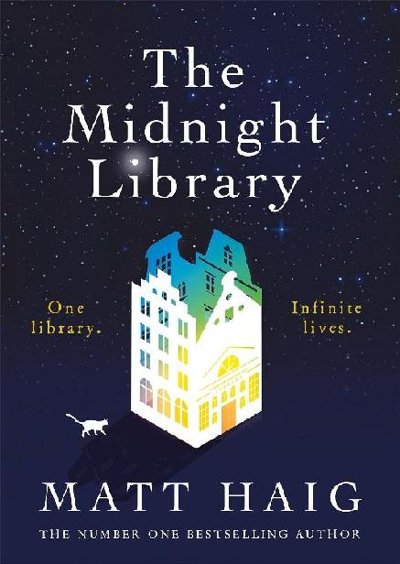
Here are The Midnight Library book club questions, with the themes and the philosophy explained, and the controversy answered straight.
Quick warning: this video spoils the whole book, including the ending. It also talks openly about suicide and depression, so look after yourself and pause whenever you need to.
The short answer on the controversy is this. Critics argue the book makes depression sound easier to solve than it is. I think that’s a fair worry, but the text is more careful than its reputation. I’ll show you where, and give you questions to argue about.
A Fast Recap
A fast recap, so we’re on the same page. Nora Seed, thirty-five, attempts suicide after losing her job and her cat. She wakes in the Midnight Library, where Mrs. Elm, her old school librarian, shows her the Book of Regrets and lets her try other lives.
She lives as a pub landlady, an Olympic swimmer, an Arctic scientist, a rock star, a vineyard owner and a Cambridge lecturer with a husband and daughter. None are quite right. When the library burns, she writes I am alive in a blank book and wakes up in her own life.
Keep that arc in mind, because most of our questions hang on it.
Regret
Theme one is regret. The Book of Regrets lists everything from tiny to enormous, and the first time Nora opens it, the pain nearly strangles her. Haig’s idea is that regret is a weight that keeps getting heavier, and that most of it is based on stories we have told ourselves.
Look at the cat. Nora blames herself for letting Voltaire out, and then learns he had a heart condition and was always going to die. Mrs. Elm calls that kind of regret something far ruder, but the point stands.
Question one: which of Nora’s regrets did you think was most real, and which was invented? Question two: if you had a Book of Regrets, which page would you open first, and which would you cross out?
Whose Dream Is It
Theme two is the quiet twist in the middle. Nora realizes every life she has tried was someone else’s dream. The pub was Dan’s, Australia was Izzy’s, the Olympics were her father’s, and the band was her brother’s.
That’s a sharp insight about regret. We often mourn paths because other people wanted us on them, not because we did. Even her wish to be a glaciologist was shaped by Mrs. Elm.
Question three: whose approval has steered your own choices? Question four: Nora’s best life, Cambridge with Ash and Molly, was still one she had stepped into. Why did that make it feel false?
Many Worlds
Theme three is the science, borrowed loosely. Hugo, a man Nora meets in the Arctic, explains the many worlds idea and Schrödinger’s cat. Every decision creates a new branch, and he claims people between life and death can slide among them.
He also says the library is not real as such. It’s the brain’s way of simplifying something too huge to understand, so a librarian for Nora, and a video store for Hugo.
Question five: did you read the library as magic, a dream or a metaphor? Question six: is it comforting or lonely to think another version of you is happily living the other choice?
The Philosophers
Nora studied philosophy, so thinkers drift through the book like old friends. Thoreau is the main one, the man who walked into the woods at Walden. She quotes him on advancing in the direction of your dreams and on solitude, and he even appears as a tattoo in her rock star life.
Others get brief cameos. Camus gives her one of the book’s best lines, that you won’t truly live if you keep looking for the meaning of life. Sartre says life begins on the other side of despair. Schopenhauer speaks for compassion, Hume for how small we are, and Plath supplies the fig tree.
Question seven: which quote stuck with you? Question eight: are these ideas used to deepen the story, or to decorate it?
Small Things And Kindness
Theme four is my favorite: the big importance of small things, as Mrs. Elm says. In the perfect life, Nora sees what her absence has caused. Mr. Banerjee has gone into a care home, and Nora guesses it is because she wasn’t there to help with his groceries and medicine. A boy named Leo is arrested, because she never taught him piano.
It works the other way, too. Ash, who buried her cat, saved her life that night in a quiet way, and Mr. Banerjee, who opened his door, called the ambulance at the end.
Question nine: who has been a Mr. Banerjee or an Ash in your life? Question ten: which small kindness of yours might have mattered more than you know?
The Controversy
Now the controversy. The criticism goes like this. First, the book opens with a suicide attempt, and some critics say the marketing played that down. Second, they argue it suggests depression can be fixed by a change in outlook, which can feel dismissive to people who live with it. Kirkus called the book sweet yet somewhat forgettable.
Here’s the case for the book. Nora is on antidepressants, gets a medical and mental health assessment in hospital, and the book never promises a cure. Her last post says life will not be free from pain, despair or loneliness. But she wants to live. Plenty of readers say that is exactly why it helped them.
Both can be true. Question eleven: does the book respect depression, or simplify it? Question twelve: would it be better, or worse, if the ending showed her in therapy?
Mrs. Elm And The Mind
Theme five is the librarian. Mrs. Elm is Nora’s school mentor, and the version in the library is not the real woman. Hugo suggests guides are always people who showed someone kindness, and Nora’s mind builds the library around one.
When the real Louise Elm appears, she is old, lonely and worried about what she failed to do. The book gives Nora the chance to repay the help.
Question thirteen: why does Nora’s mind choose a librarian? Question fourteen: how did you feel when Mrs. Elm turned out to have died in the Cambridge life, yet to be alive in Nora’s own?
The People Around Nora
A big strength for discussion is how the same people change from life to life. Dan is a charming dreamer who loves her mum in one life, and a drinker who cheats in another. Izzy is a whale watching friend in one, and a tragic headline in another. Ravi is bitter, then corporate, then a drummer in a suit.
Joe is the heart of it. In the pub life he is happy, in the Olympic life he is her manager, in the rock star life he is dead, and in the Cambridge life he is married to Ewan and teetotal. The book keeps asking how much of a person is chosen by you, and how much is theirs.
Question fifteen: which version of a side character surprised you most? Question sixteen: Nora keeps assuming she is the cause of everyone’s happiness or pain. Is she right, or is that a symptom of depression?
Fame, Success And Money
Two of the lives are about getting what society says you should want. The Olympic life gives Nora medals, money and a body at its peak, and a speech where she tells a thousand people success is a delusion. The rock star life gives her adoration, millions of followers and a restraining order against Dan.
Neither makes her happy, but they are not horrible. They are lonely in different ways, and both cost her something, a mother in one life, a brother in the other.
Question seventeen: why does the book test fame and success before it tests small, gentle lives? Question eighteen: where do you think a happy life sits between ambition and ordinary peace?
The Ending
Last theme: the ending. Nora doesn’t choose the best life. She chooses her own. The blank book is her real future, and the first thing she writes is that she is alive. It’s a simple gesture, yet it carries the moral of the whole story.
Some readers find that too neat. Others find it the right amount of hope. Notice what hasn’t changed: she is still jobless and behind on rent, still missing her mother. What changed is how she sees herself.
Question nineteen: does the ending feel earned? Question twenty: what do you think Nora does next?
Bonus Questions
A few bonus questions for a longer evening. Why does Haig use chess, and what does the pawn that becomes a queen mean? How does Nora’s relationship with Joe change from life to life, and why does it improve when she gets out of the way?
What does the book say about fame, success and money, after the Olympic life and the rock star life? And how would you answer the question Mrs. Elm asks: who is Nora Seed, and what does she want?
If you want my own answer, I think the book says that what you want is not a different life, but a different relationship with the one you have.
Discuss
Thanks for watching. If your club has a favorite question, put it in the comments, and tell me whether you thought the book was helpful or too simple. I read every reply.
And if this video helped you plan your meeting, please like it and subscribe. Next, I’ll recommend books like The Midnight Library. If you are struggling, please talk to someone you trust, or call a crisis line, such as nine eight eight in the United States, or the Samaritans on one one six, one two three in the UK. Take care.