Welcome Back
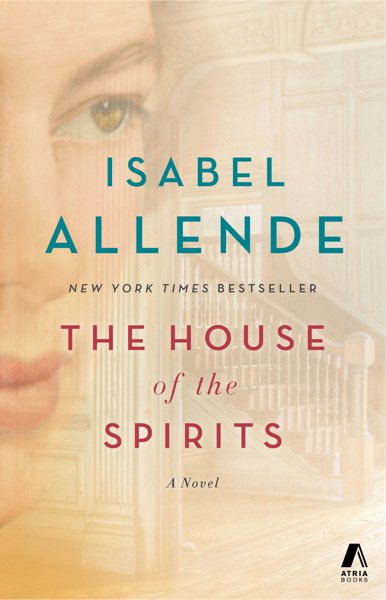
Today it’s The House of the Spirits, the Isabel Allende novel that people call a classic and also call hard to read. This is my spoiler-free review, with what it’s about, how the magic works, and my honest score.
Short version: it is not as hard as its reputation, and it is one of the best family sagas I have ever read. I give it four and a half out of five. Stay to the end for who should read it and who should skip it.
By spoiler-free, I mean no late reveals, no twists, and nothing from the second half of the story. If you’ve searched for the house of spirits book and want to know whether to start it, this video is safe to watch.
What It’s About
The House of the Spirits was published in nineteen eighty-two. It was Isabel Allende’s first novel, and it made her famous around the world. In English, most editions use the translation by Magda Bogin, and that is the one I read.
It follows one family over about fifty years. On one side is Clara del Valle, a strange, gentle girl who sees the future and moves objects with her mind. On the other is Esteban Trueba, a poor young man who decides to become rich and powerful, whatever it costs him or anyone else.
The two of them marry, and then the book follows their children and grandchildren through love affairs, family feuds, earthquakes and elections. The big house on the corner, which keeps sprouting new rooms, is where everything meets. Behind it all, a whole country is slowly sliding toward political violence.
Is It Hard to Read?
Let’s answer the question in the title. Is The House of the Spirits hard to read? Honestly, it looks harder than it is. The paragraphs are long, and some run for most of a page. The family is big, and names repeat across generations, which can make the first chapters feel crowded.
But the sentences themselves are clear, quick and often very funny. Allende is a storyteller, not a puzzle maker. There is no complicated timeline to decode. Time moves forward with a few jumps, and you always know whose story you are in.
My advice is simple. Give it fifty pages. Keep the family tree from our characters video handy, and don’t panic if you lose track of a cousin. After that opening stretch the book pulls you along, and the long paragraphs start to feel like someone telling you a story at a kitchen table.
How the Magic Works
Now the magical realism. If you have read One Hundred Years of Solitude by Gabriel García Márquez, you know the idea. Impossible things happen, and everyone treats them as completely normal. If you haven’t, it’s easier than it sounds.
Here, Clara can move a saltshaker across the dinner table without touching it. She predicts earthquakes, she reads dreams, and she talks with spirits. The family reacts the way you would to a guest who sneezes. They pass the soup and carry on with the argument they were having.
What I love is the contrast. The magic is soft and cozy, while the politics and the violence are written in plain, hard realism. The ghosts never rescue anyone. The supernatural shows you how Clara sees the world, and it gives the book some air so the dark parts never become unbearable.
The Characters
The book lives on its people. Clara is the heart of it: dreamy, kind, impossible to pin down, and somehow stronger than anyone around her. Allende handles her with great care, and she is one of the most original women in modern fiction.
Esteban Trueba is the problem and the engine. He is proud, violent, stubborn and sometimes pitiful. He does terrible things, and the brilliant part is that the book never lets you write him off. You hate him, you understand him, and then he surprises you again.
Around them are daughters, sons, servants, priests, singers, ghosts and one unforgettable sister-in-law. Every one of them feels like a real person with a bad habit and a private longing. If you want the full cast, watch our characters explained video.
Where the Book Comes From
You don’t need to know any history to enjoy this novel, but a little context helps. Allende never names the country in the book. Readers recognize it as Chile, where she was born and raised, and the details fit.
She wrote it in exile. She left Chile after the military coup of nineteen seventy-three, and in January of nineteen eighty-one she began a letter to her dying grandfather. That letter grew into this novel, and it is a big part of why the book feels so personal.
So the story is invented, but the mood is real. Behind the family drama you can feel a society where a few families own the land and everyone else works it. That tension builds quietly all the way through. For what is real and what is made up, see our history fact-check video.
What Works
First, the prose. It is rich without being heavy. A single paragraph can make you laugh, wince and tear up. Even in translation the warmth comes through, and the jokes still land. Allende can describe a dinner table, a plague of ants and a heartbreak in the same easy voice.
Second, the women. Allende gives them most of the book’s power and imagination. One grandmother fights for women’s right to vote. Clara builds a spiritual life in her own odd way. Their daughters and granddaughters push against the walls around them, each in a different way.
Third, the way the book ties family to country. Small things, like a dinner argument or a love letter, turn out to carry the weight of big history. By the end, the house and the nation feel like the same thing, and that is a rare trick to pull off.
What Doesn’t
It isn’t perfect. The pacing wobbles in the middle. Some stretches are crowded with new relatives, and a few characters, especially some of the sons, feel less developed than the women. I wanted more time with a couple of them.
The book also repeats a pattern. Men with power do harm, women absorb it, and the next generation inherits it. That is exactly the point, but you can feel the rhythm after a while, and it makes some chapters predictable.
And some scenes are very hard to read. The violence is not hidden, and a few moments of cruelty go on longer than I wanted. I understand why they are there. I still think a lighter touch in a couple of places would have made the same point.
Content Notes
Because this is an adult novel, here are honest content notes. These are the reviewer’s assessment, not an official rating, and I am keeping them spoiler-free.
The book contains rape and sexual violence, torture, murder, the death of children, and political violence. Some of it happens early, and the heaviest material comes in the last third of the book.
It is not graphic for shock, but it is direct. If those topics are hard for you, you can still decide the book is worth it, but go in knowing, and take breaks. There are also frank sex scenes, though far less explicit than most modern romance.
The Scorecard
Time for the scorecard. Story gets four and a half, because the sweep is huge and mostly gripping. Prose gets a five, funny and beautiful. Characters get a five, because these people stay with you for years after you close the book.
Pacing gets three and a half, since the middle can feel crowded. Impact gets a five, because it changed how I think about family, memory and power, and few novels do that.
That averages out to four and a half out of five. It is a book I would read again, and one I would hand to anybody who loves big, generous stories.
Who It’s For
Read it if you loved One Hundred Years of Solitude and want something warmer and clearer. Read it if you like multi-generation family sagas, strong women, or history told through people instead of dates.
Skip it if you want a fast thriller, if graphic violence against women is a hard line for you, or if long paragraphs and big casts drive you away.
If you finish and want more, try Like Water for Chocolate by Laura Esquivel, or Allende’s own Of Love and Shadows and Eva Luna. Her memoir Paula is also wonderful, and very sad.
Your Turn
That’s my spoiler-free review of The House of the Spirits. Verdict: four and a half out of five, dense at first and unforgettable by the end.
Tell me in the comments: did you find it hard to read, or did it click right away? And who is your favorite character, no spoilers please?
If this helped, hit subscribe, and check the description for our characters explained, ending explained and history fact-check videos. Thanks so much for watching, and I’ll see you in the next one.