Is It a True Story
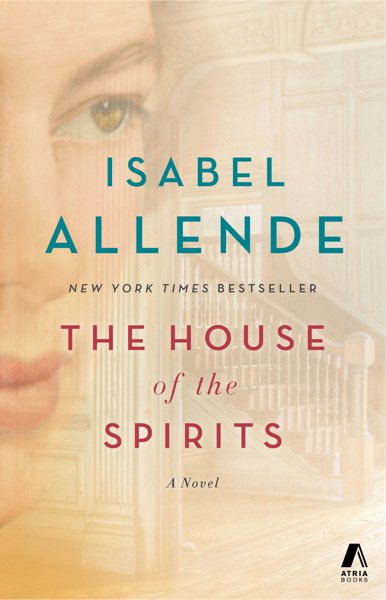
Today’s question: is The House of the Spirits a true story? Short answer: no, it’s a novel. But it is built on a real family and real history, and a lot of what shocks you in the last third of the book really happened.
We’ll go through what is real and what is invented: Chile, the coup, the people behind the Candidate and the Poet, Isabel Allende’s own family, and the movie and TV series. This video has light spoilers, and I’ll stay away from the ending.
If you came here asking whether there is a movie, a TV show, or a Netflix version of The House of the Spirits, stay to the end. As of October twenty twenty-six, the answer is yes, yes, and no.
How the Book Began
Let’s start with how the book began, because it’s a story in itself. In January of nineteen eighty-one, Isabel Allende was living in Venezuela as a political exile. She got word that her grandfather, who was about a hundred years old, was dying back in Chile.
She could not go home to see him. So she started writing him a letter, one that she hoped would keep him alive in memory. She has reportedly started every book since on January eighth. The letter kept growing, and it became the novel.
It was published in Spanish in Barcelona in nineteen eighty-two, after several publishers turned it down. It became an enormous bestseller. The English translation by Magda Bogin came out in nineteen eighty-five.
Isabel Allende and Salvador Allende
Here’s the question everyone asks. Is Isabel Allende related to Salvador Allende, the Chilean president? Yes. Reports describe him as her father’s first cousin, so he was a relative, though not the close uncle some people assume.
Isabel grew up in Chile and worked as a journalist. When the military overthrew Salvador Allende’s government in September of nineteen seventy-three, her family name became dangerous. She eventually left for Venezuela, where she lived for about thirteen years.
That personal background matters. The coup in the novel is not an abstract idea to her. It is the event that sent her family and friends scattering, and it is why the last third of the book reads like a testimony.
Chile in Disguise
The strangest thing about the book is that it never names its country. There is a capital city, a great mountain range, volcanoes, earthquakes, and a history of colonial families. Readers recognize it all as Chile.
Look at the details. The northern desert and its mines match Chile’s nitrate and copper country. The nitrate boom collapsed when synthetic substitutes arrived, and the book shows the unemployed workers walking south. Women in Chile won the full national vote only in the late nineteen forties, and Nívea’s campaign echoes real suffragettes.
And earthquakes are real, too. Chile sits on a very active fault. The nineteen sixty earthquake near Valdivia, at magnitude nine point five, is the strongest ever recorded. So when the novel’s earthquake flattens Tres Marías, it isn’t a stretch.
The Candidate
Now the politics. In the book, a Socialist doctor runs for president for many years and finally wins. He is called the Candidate, and later the President, and he is never named. Almost every reader sees Salvador Allende.
The real story fits. Allende, a Socialist doctor, ran for president several times. In nineteen seventy he won with about thirty-six percent in a three-way race, and Congress confirmed him in October of that year.
His government tried to nationalize key industries and expand land reform. The right and business groups fought back, the United States opposed him, and shortages and strikes followed. The book gets this mood right: long lines, black markets, truckers on strike, and neighbors banging empty pots.
The Poet
The other famous unnamed figure is the Poet. In the novel, Clara supports a young poet who becomes world famous. Readers widely see him as Pablo Neruda, the Chilean poet who won the Nobel Prize in nineteen seventy-one.
Neruda died on September twenty-third, nineteen seventy-three, twelve days after the coup. Public gatherings were banned, but mourners still followed his coffin through Santiago, and the funeral turned into one of the first quiet protests against the new regime. The book’s funeral scene echoes that.
Some readers also see a hint of Víctor Jara, the folk singer, in the singer Pedro Tercero. Jara was killed after the coup, and in twenty twenty-three Chile’s Supreme Court convicted eight retired officers of his murder. But the book itself never says so.
The Coup
Now the coup itself. On September eleventh, nineteen seventy-three, Chile’s armed forces rose against President Allende. The presidential palace, La Moneda, was bombed from the air. Allende gave a final radio address and died inside. Official investigations have concluded that he took his own life.
The novel keeps this close to the truth. The President refuses to leave the palace. The military takes over, and the book spends little time on generals and a lot on ordinary people caught up in the violence.
What the book does especially well is show how members of the upper class cheered it on. Many in the conservative class thought the army would fix things quickly and return the country to them. That part is invented in the character of Esteban Trueba, but it matches many real reactions.
What Came After
The military junta, led by General Augusto Pinochet, ruled Chile until nineteen ninety. Congress was shut down, parties were banned or suspended, and people disappeared. Official truth commissions later documented more than three thousand people killed or disappeared, and tens of thousands imprisoned and tortured.
That is the real history behind the last chapters of the book. Allende does not show it as spectacle. She shows it through one family, one house, and one young woman, which is why it feels so personal.
I’ll leave the details there, because the ending is a spoiler. But yes, the arrests, the secret prisons and the fear are drawn from real events, and the book is a way of keeping that memory alive.
What Is Invented
So what is invented? Almost all of the family. Clara’s powers are fiction, though Allende has said her own grandmother inspired Clara, and her grandfather helped shape Esteban. Reports say neither is a portrait. Esteban Trueba bears little resemblance to her real memories.
The Trueba family, Tres Marías, the big house on the corner, the Mora sisters, Barrabás, Blanca and Alba, are all made up. The spirits and the green hair are made up too.
What is real is the setting, the social classes, the coup and its aftermath. A good way to read it is this: the people are invented so that the history can be felt.
The 1993 Movie
Let’s talk screen versions. The 1993 film is directed by Bille August, a Danish filmmaker. Jeremy Irons plays Esteban, Meryl Streep plays Clara, Glenn Close plays Férula, Winona Ryder plays Blanca, and Antonio Banderas plays Pedro Tercero.
It was shot mostly in Denmark, with some scenes in Portugal, on a budget of about forty million dollars. It earned roughly sixty-one million worldwide, but most of that came from Europe. In the US it made only about six million.
Reviews were rough. On Rotten Tomatoes it sits around thirty percent. Critics said the story felt rushed, and many objected to casting mostly English-speaking stars as Latin American characters. Latino actors protested the US premiere. It did win some European awards.
The TV Series
Now the new one. As of October twenty twenty-six, a Spanish-language series is out on Prime Video. It is eight episodes, the first Spanish-language TV adaptation of the novel, and it premiered on April twenty-ninth, twenty twenty-six, with a finale on May thirteenth.
The showrunners are Francisca Alegría, Fernanda Urrejola and Andrés Wood, and Isabel Allende is an executive producer with Eva Longoria. It was shot in Chile, and it premiered at the Berlin Film Festival in February.
Alfonso Herrera plays Esteban. Nicole Wallace and Dolores Fonzi share the role of Clara. Fernanda Castillo is Férula, Rochi Hernández is Alba, and Fernanda Urrejola and Sara Becker play Blanca. Reviews I found were mostly warm, with some saying it is faithful but slow.
Netflix, Prime and Where to Watch
Now the Netflix question. As of October twenty twenty-six, I could not find either the film or the series on Netflix. The series is a Prime Video original. Streaming rights change from country to country, so check your own services.
Should you watch them? My advice: read the book first. It’s the real thing, and the screen versions have to squeeze a huge novel into a couple of hours or eight episodes. If you love the book, the series is the better companion, and the film is an interesting curiosity.
Your Turn
So, is The House of the Spirits a true story? It is fiction, built on a real family, a real country and a real tragedy. That mix is exactly why it hits so hard.
Tell me in the comments: have you watched the movie or the new series, and which one did you prefer? Did you know how closely the book followed Chile’s real history?
If this helped, subscribe, and check the description for our spoiler-free review, the characters explained and the complete guide. Thanks for watching, and I’ll see you in the next one.