Spoiler Warning
Fair warning: this video is full of spoilers, including deaths and the final reveal. If you haven’t finished the book, come back later.
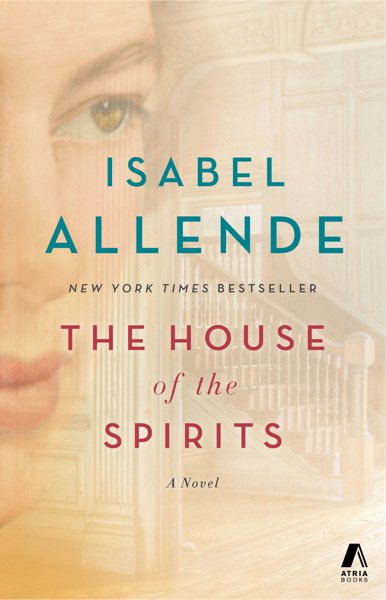
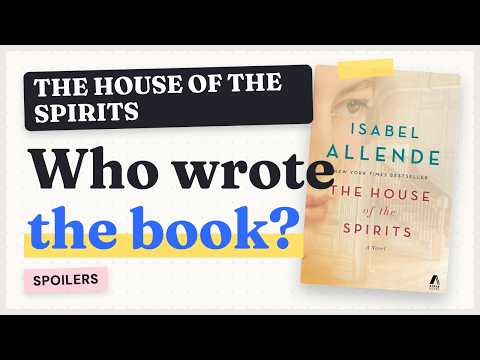
Here is the answer in one breath. Alba tells the story. She writes it from Clara’s notebooks while she waits for a better world, and Esteban Trueba dies in Clara’s bed at ninety, in Alba’s arms.
The last line sends us back to the very first line of the book, and I’ll explain why that matters. We’ll cover the coup, Alba’s arrest, Tránsito Soto’s favor, the narrator reveal, and Esteban García.
Quick Recap
Quick recap for the ending. The novel follows Esteban Trueba, a violent, proud landowner, and Clara, the clairvoyant he marries. Their daughter Blanca loves the peasant singer Pedro Tercero, and their child is Alba.
By the last third, Esteban is an old senator, Clara is dead, and the country is splitting. Alba is a young woman in love with Miguel, a revolutionary student. Her uncle Jaime, a doctor, is a close friend of the Socialist President.
The Socialists win the election. The rich panic, and Esteban joins the plotting against the government. He believes the army will fix things quickly, then hand the country back to the people like him. He is wrong, and that mistake drives the ending.
The Coup
On the day of the coup, Jaime is called to the presidential palace and stays with the President. When the palace is bombed, he is arrested, beaten and tortured. Soldiers want him to say the President was drunk and killed himself, and he refuses. He is shot.
Meanwhile, Esteban opens champagne at home to celebrate. Alba snatches the glass from his hand and smashes it. She tells him they will not toast the death of the President or anybody else.
Soon Esteban sees what he has helped build. People disappear, and the new rulers ignore him. He admits he made a terrible mistake, and he weeps for his country. That change is the first step in his slow, painful redemption.
Arrested
Alba spends months helping people escape. She drives Jaime’s car, with two sunflowers painted on it, to take fugitives to embassies, and she feeds hungry families through church kitchens. Blanca hides Pedro Tercero for months, and Esteban finally helps them get out of the country.
Then one night the political police come for Alba. A man hits her when her grandfather refuses to sign a statement, and he signs it. In the van, blindfolded, she hears a voice. It is Esteban García, now a colonel.
Here is why he matters. He is the grandson of Pancha García, the peasant girl Esteban Trueba assaulted as a young man. He grew up poor and angry, and now he has power over the granddaughter of the man who wronged his family.
The Doghouse
Alba is held in a secret prison. She is tortured by his men and sexually assaulted by Esteban García, who is not really looking for Miguel. As she slowly realizes, he is taking revenge for a lifetime of resentment, and nothing she says will stop him.
She meets Ana Díaz, a fellow prisoner from her university days. The two women lift each other up, and even sing together when prisoners pass in the corridor. Small kindnesses, like three carnations in a can, keep her alive.
Finally she is sealed into a tiny cell nicknamed the doghouse. She decides to die. And that is when Clara’s ghost appears, in white linen and winter gloves, and tells her something unexpected.
Clara’s Ghost
Clara tells Alba that the point is not to die, but to survive. And then she gives her a task. Write the story, in her head, without paper or pencil, so the world will know.
This is the hinge of the book. The ghost doesn’t rescue Alba from prison. She gives her a reason to live, and that reason is storytelling. Alba invents a code to remember events in order, and all the people of the family story crowd into the cell with her.
From that point on, Alba is beyond Esteban García’s power. He still has her body, but he no longer has her mind. The book is telling you what writing is for.
Tránsito’s Favor
Meanwhile, Esteban Trueba is searching for his granddaughter. His friend, General Hurtado, and the cardinal can do nothing. He tries every contact he has, and nothing works.
Then comes a surprise. He visits the Christopher Columbus, the brothel-turned-hotel, and asks for Tránsito Soto. Remember the fifty pesos he lent her, back at the start? She has always said she owes him a favor.
He begs her for help, and she listens. Two days later she calls: I did what you asked me to. The epilogue adds a small twist. It was Miguel who first suggested going to Tránsito. The old patriarch and the young revolutionary, two men who could not be more different, work together to save her.
Release
Alba is moved to a secret clinic for prisoners the regime doesn’t want to die. Her hand is infected. A kind nurse named Rojas treats her, and he tells her that Amanda, Miguel’s sister, has died in custody without betraying her brother.
Then Alba is sent to a women’s camp. The women there sing for her, and Ana Díaz hands her a notebook. Alba writes with her left hand, continuing the story begun in the doghouse. She says she was happy there.
After a few days, police take her away, and leave her in an empty lot near the poor district. A woman in a shantytown gives her tea. A friend of the family brings her home in a horse-drawn cart.
The Last Days
Back at the big house on the corner, Alba finds Esteban shrunken in his armchair. He sees her injured hand and weeps and smashes his cane against the furniture, the way he always did. She refuses to leave the country, because she wants to wait for Miguel.
So they stay, and they repair the house. They plant a garden, buy birds for the cages, and put flowers in the vases, as Clara would have. And Esteban suggests the idea that changes everything: write the story, so she can take her roots with her.
They go through old photographs, and Clara’s notebooks, and Blanca’s letters. Esteban writes pages in his own hand. He remembers everything, down to the last second of his ninety years. And Clara’s ghost, he says, helps them.
The Narrator Reveal
Here is the reveal at the center of the ending. The epilogue opens with the line: my grandfather died last night. Suddenly the narrator is speaking in the first person, and it is Alba.
All along, the story has been her reconstruction. The warm, fond voice that describes Clara’s world comes from Clara’s notebooks. The angry old man who says I is Esteban, in the pages he wrote himself in his last months.
Look back at the first page. The narrator says she will use Clara’s notebooks fifty years later to reclaim the past and overcome terrors of her own. The clue was there from the start. The book you have been reading is the testimony Alba began in the doghouse.
Esteban’s Death
Esteban Trueba dies at ninety, peacefully, in Clara’s bed, in Alba’s arms. He confuses her with Clara, and at times with Rosa. Férula’s curse, that he would die like a dog, does not come true.
Clara’s ghost has been close to him in his final days. First a mysterious glow, then Clara herself, laughing, with all her teeth. He dies murmuring her name: Clara, clearest, clairvoyant.
It is a quiet, strange mercy. A man who spent his life taking dies being cared for by the granddaughter who forgave him enough to sit with him. Whether he deserved it is for you to decide.
Breaking the Chain
Now the hardest idea. In the doghouse, Alba imagined taking revenge on Esteban García. Now she says her hatred has been watered down. She sees that Esteban García is part of a design, a chain that began when her grandfather assaulted Pancha García.
The grandson of the woman who was raped has done the same to the granddaughter of the rapist. Alba decides she must break that terrible chain. Her work is life, not revenge.
She is pregnant, and she doesn’t know whose child it is: the daughter of many assaults, or perhaps of Miguel. Above all, she says, the child is her own. And Miguel? He may still be alive. She waits for him. Blanca and Pedro Tercero, we learn, got out safely.
The Last Line
Here is the last line. Alba says Clara’s notebooks begin like this, and then she repeats the first sentence of the entire novel: Barrabás came to us by sea.
The book ends exactly where it began. It is a circle, and a handoff. Clara’s writing becomes Alba’s, and Alba’s becomes ours. The family’s story will not disappear, because someone wrote it down.
That is my take on the ending. It is dark, but it is generous. It says that memory is a form of resistance, and that telling the truth, patiently, is how you answer cruelty.
Your Turn
That’s the ending of The House of the Spirits explained. Tell me in the comments: did you find the ending hopeful, or heartbreaking, or both? And what do you make of Esteban’s last days?
If this helped, hit subscribe, and check the description for the complete guide, the characters explained and the history fact-check. Thanks so much for watching, and I’ll see you next time.