The Short Version
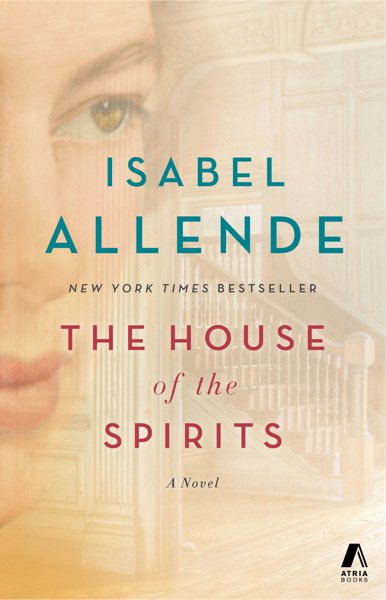
The House of the Spirits, Isabel Allende’s 1982 debut, suits a book club because it ties one family to the story of a whole country. It follows the Trueba and del Valle families across about fifty years, from the clairvoyant Clara and the ruthless Esteban Trueba to their granddaughter Alba, in a country the book never names but readers recognize as Chile.
Below are twenty questions: ten you can use before everyone has finished the book, and ten that spoil the ending. A short section on what is real and what is invented gives the group something to check. The book scores four and a half out of five in our review, with top marks for prose and characters.
Before You Start: Content Notes For Your Group
Tell your group first. The book contains rape and sexual violence, torture, murder, the death of children and political violence, and the heaviest material comes in the last third. If someone in your club may find that hard, say so before you pick it.
Spoiler-Free Questions
- The novel never names its country. Why might Allende have left it unnamed, and did that make the story feel more universal or more evasive?
- Clara moves a saltshaker across the dinner table without touching it, predicts earthquakes and talks with spirits, and her family reacts the way you would to a guest who sneezes. What does that matter-of-fact magic do for the book?
- Esteban Trueba is proud, violent, stubborn and sometimes pitiful. Did you ever find yourself understanding him, and where did that stop?
- The magic is soft and cozy while the politics are written in plain, hard realism. How do the two registers work together?
- The big house on the corner keeps sprouting new rooms. What does the house stand for in the story?
- Nívea fights for women’s right to vote, and Clara builds a spiritual life in her own odd way. Which women in the family seemed to you to hold the real power?
- Names repeat across generations and the paragraphs are long. Did the style slow you down, or did it start to feel like someone telling a story at a kitchen table?
- The book follows the family through love affairs, feuds, earthquakes and elections. Which strand pulled you in most?
- The book has a pattern: men with power do harm, women absorb it, and the next generation inherits it. Does the repetition deepen the point or make it predictable?
- Our review gives the pacing three and a half out of five because the middle can feel crowded. Where did you feel that?
Spoiler Questions (Finish The Book First)
- On the day of the coup, Esteban opens champagne and Alba snatches the glass and smashes it, saying they will not toast the death of the President. What did that moment reveal about each of them?
- Esteban believes the army will fix things and hand the country back to people like him. How does his mistake change him, and is it enough to count as redemption?
- Jaime stays with the President at the palace and is shot after refusing to say the President was drunk. How did you read his death?
- Esteban García, now a colonel, is the grandson of Pancha García, the girl Esteban Trueba assaulted as a young man. Discuss how the book links the past to the torture of Alba.
- In the doghouse Alba decides to die, and Clara’s ghost tells her to survive and write the story in her head. Why does the ghost give her a task and not a rescue?
- Esteban asks Tránsito Soto for help, calling on a favor owed since the fifty pesos he lent her at the start. Why does the book route Alba’s release through her?
- The epilogue opens with “my grandfather died last night,” and we learn Alba has been the narrator all along, using Clara’s notebooks and Esteban’s own pages. Did the reveal change how you read the earlier chapters?
- Esteban dies at ninety in Clara’s bed, in Alba’s arms, and Férula’s curse that he would die like a dog does not come true. Did he deserve that mercy?
- Alba says her hatred has been watered down and that she must break the chain that began with Pancha García. Is that forgiveness, or something else?
- The last line repeats the first sentence of the novel: Barrabás came to us by sea. What does ending where it began say about memory?
What Is Real And What Is Invented
Your group may ask whether it is a true story. It is fiction, but it is built on real history. Allende began the book in January 1981 as a letter to her dying grandfather, who was about a hundred years old, while she lived in Venezuela as a political exile. Salvador Allende, the Chilean president, was reportedly her father’s first cousin. The Candidate is widely read as Salvador Allende, and the Poet as Pablo Neruda, who died on September 23, 1973, twelve days after the coup. The military overthrew Allende on September 11, 1973, and official truth commissions later documented more than three thousand people killed or disappeared. The Trueba family, Tres Marias, the big house, Clara’s powers and the spirits are all invented.
What To Read Next
If your club enjoyed it, our review suggests Like Water for Chocolate and Allende’s own Of Love and Shadows, Eva Luna and Paula. For a spoiler-free start, read our review first, and use the ending explained after the discussion. We also cover the characters and the 1993 film and new series in separate pages.