The Verdict
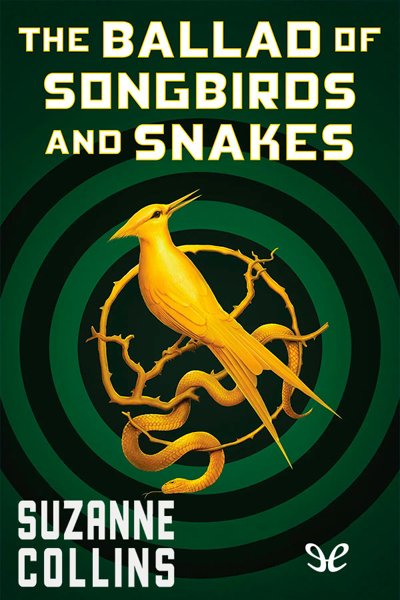
What if the most hated man in Panem was once a hungry, polite teenager you almost rooted for? That’s the dare of Suzanne Collins’ prequel, and it mostly pulls it off.
My verdict: read it, if you’re ready for a slower, colder, more philosophical book than the original Hunger Games. It’s a gripping character study with a villain you can’t look away from. But it’s long, and the final stretch tests your patience. I give it four out of five, with no spoilers.
What It’s About
It’s the morning of the reaping for the tenth annual Hunger Games, decades before Katniss. The Games are still crude and clumsy here. The arena is a crumbling stadium, and nobody in the Capitol is sure the whole idea will last.
Eighteen year old Coriolanus Snow is a senior at the Capitol Academy. His family was once rich and powerful. Now they hide their poverty behind a penthouse with cracked walls, a roof garden of prized roses, and a lot of boiled cabbage.
His way out is a mentorship. Students are paired with tributes, and the best mentor earns a prize that could save his family. Then he gets his assignment: the girl from District Twelve, the lowest of the low. Her name is Lucy Gray Baird.
The book runs about five hundred pages, in three parts. Those parts are called the Mentor, the Prize, and the Peacekeeper, and each one feels like a different book.
Coriolanus
Let’s talk about Snow, because the whole book rests on him. Collins stays inside his head, and it’s a clever, anxious, proud place to be. He counts every risk, he rehearses every smile, and he is terrified of being found out as poor.
Here’s the trick. You know where this boy ends up. The book doesn’t pretend otherwise. So every kind act, every small lie, every moment he justifies something becomes a question: is this the moment he turns?
I won’t say how. But Collins makes his reasoning feel so sensible that it gets uncomfortable. To me, that’s the best thing in the book.
Lucy Gray
Lucy Gray Baird is nothing like Katniss. She belongs to the Covey, a band of traveling musicians who ended up in District Twelve. She sings, she performs, and she understands an audience better than anyone in the Capitol.
On reaping day she steps onto the stage and wins over the whole country. Snow notices. So does the reader.
She’s charming, slippery, and hard to pin down. Sometimes you aren’t sure what she wants, and I think that’s on purpose. Her songs are a big part of the book, and the lyrics are printed right in the text.
The Games, Version One
The first part is my favorite. Snow and his classmates are handed a job nobody has done before. There’s no playbook for being a mentor, the idea of sponsors is brand new, and the tributes are kept in a cage at the zoo.
A zoo cage. Yes. That scene alone tells you how different this world is from the glitter of the Katniss books.
I also want to praise how Collins handles the mentors. They’re teenagers, still in school, and they treat the Games like a group project with a grade. That casual cruelty is more disturbing than any speech from a villain.
Watching the Games take shape is fascinating. You see rough first versions of ideas that become famous later, and Collins lets you notice them without pointing a finger.
The Supporting Cast
The side characters are a quiet strength. Tigris is Snow’s older cousin, a would-be fashion designer who sews, schemes, and keeps the family afloat with sweetness and nerve. Then there is the Grandma’am, who still sings the anthem out the window and insists her grandson will be president.
Sejanus Plinth is the most interesting. He’s rich, new money, born in District Two, and he cannot stop caring about people the Capitol has decided not to see. He is Snow’s opposite in almost every way.
Together they give Snow something to protect, something to resent, and something to hide from. That makes his choices feel like they cost something.
What Works
Three strengths. First, the villain’s logic. Collins doesn’t excuse Snow, but she lets you follow every step of his thinking, and that is far more chilling than a monster.
Second, the world, and the details that sell it. The postwar Capitol feels lived in: rationing, rebuilding, old money pretending it still has money. The poverty behind the penthouse is vivid, and it makes his desperation make sense.
Third, the ideas. Characters argue about whether people need rules or chaos, and whether a government is a contract or a cage. The book keeps asking whether anyone is good when nobody is watching.
The Big Question
That question runs under the whole story. Doctor Gaul, the Head Gamemaker, believes humans are creatures who need control, and she takes a close interest in Snow. His classmate Sejanus believes the opposite, and he says so loudly, which is dangerous in the Capitol.
Those two relationships pull Snow in different directions. One offers him a way to rise. The other offers him a way to be decent.
I love that Collins never tells you which one is right. She trusts you to feel the pull yourself.
Writing and Pacing
The prose is plain and quick, in close third person, with plenty of sharp little details. A sandwich, a shirt, a white rose. Collins uses small objects to say big things, and she rarely wastes a line on scenery.
The structure is the real story. The first third is tight and tense. The middle slows down and wanders. The last part changes the setting and the tone, and it’s the part readers argue about.
Pacing is a mixed bag. The book has a lot of walking, waiting, and worrying, so if you want the nonstop feeling of the first Hunger Games, adjust your expectations.
What Doesn’t Work
Now the honest part. First, the length. This is about a hundred and fifty thousand words, and the middle repeats itself. Snow worries about the same few problems, again and again.
Second, the songs. The lyrics are lovely on the page, but some scenes stop so a character can sing a full verse. If you skim music, you will skim a lot.
Third, the last act. After that slow middle, it hurries, and to me it felt a little rushed and too neat. That’s my opinion, and you may feel differently.
Fourth, Lucy Gray herself. Because we only see her through Snow’s eyes, she can feel like a mystery rather than a person. Some readers will love that, and some will want more of her.
Fifth, a small thing: Snow is obsessed with how things look. His shirt, his manners, his borrowed confidence. After a while, the polish starts to feel like a mask, and I wanted one scene where it slipped.
Content Notes
A heads up before you pick it up. There’s war violence, children killing children, executions, hunger and starvation, grief, bullying, and plenty of alcohol use.
It’s shelved as young adult, but it’s darker and more disturbing than the original trilogy in places.
The Hunger Games Connection
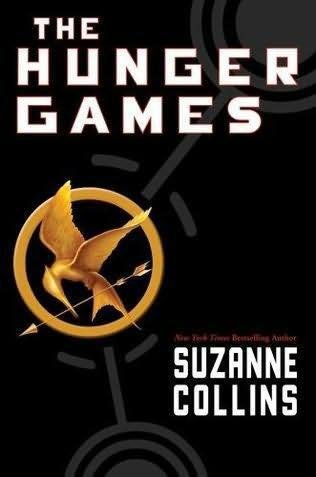
Do you need to have read the original trilogy? No. It works alone. But the more you know, the more you’ll catch. There are songs, names, places, and quiet echoes that Katniss readers will spot.
If you liked my Hunger Games review, this book is the cold mirror of that one. Katniss survives by refusing to become what the Capitol wants. Snow survives by doing the opposite.
If you’re a Katniss fan, go in knowing this is a different kind of story. It asks you to sit with a character you’ve been trained to hate, and to understand him before you judge him. That takes patience, but I found it worth it.
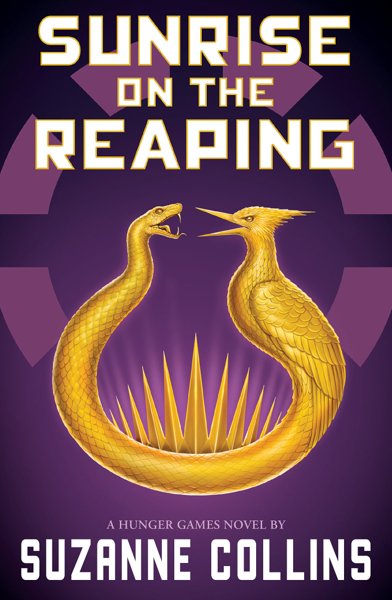
And if you’ve picked up Sunrise on the Reaping, you’ll see how Collins keeps building the history of Panem, one generation at a time. There’s also the film, released in November twenty twenty three, with Tom Blyth and Rachel Zegler.
The Scorecard
My scores. Snow as a character, four and a half out of five. Lucy Gray, four. Ideas, four and a half. Pacing, three. Prose, four.
That averages to four. A smart, uneven, deeply unsettling book that I’m glad exists, even when it frustrated me.
Who It’s For
Read it if you love character studies, if you want to see how a tyrant is made, or if you’re a Hunger Games fan who wants more of the world.
Skip it if you need a fast plot, if you want Katniss back, or if you want a hero to cheer for.
If you like this, try Lord of the Flies by William Golding, Brave New World by Aldous Huxley, and Wicked by Gregory Maguire.
Where To Get It
You’ll find The Ballad of Songbirds and Snakes in print, ebook, and audiobook, and the links are in the description. The audiobook is a good way to hear the songs.
Tell me in the comments: do you think a villain can be written sympathetically without being excused? Thanks for watching, and subscribe for more honest book reviews.