The Verdict
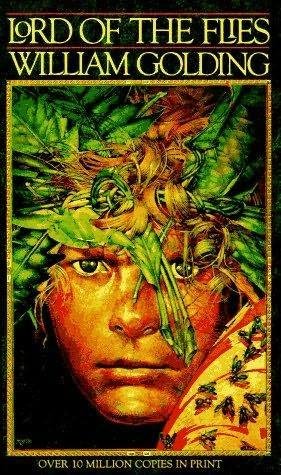
If you’ve been assigned Lord of the Flies, or you’re wondering whether a seventy year old school classic still holds up, this one’s for you.
My verdict: yes, read it. It’s short, tense, and genuinely disturbing, and the last chapters hit harder than most modern thrillers. But the prose can be dense, the characters are more symbols than people, and the opening is slow. I give it four out of five, with no spoilers.
What It’s About
A plane carrying a group of British schoolboys is shot down during a war, and crashes on an empty tropical island. There are no adults. Ralph, the boy they choose as chief, is twelve and a few months.
At first, it’s an adventure. They find a beach, a lagoon, fruit, and a big cream and pink shell, a conch, that can call everyone together.
The Rules
The boys hold an assembly and elect a chief, Ralph, a fair haired, likable boy. They make a rule: whoever holds the conch gets to speak.
And they agree on two jobs. Build shelters, and keep a signal fire burning on the mountain, so a passing ship will see the smoke.
The Boys
Ralph wants order and rescue. Piggy, his overweight, asthmatic, bespectacled friend, is the smartest boy on the island, and the one nobody listens to.
Jack, the leader of a school choir, wants to hunt. Simon is quiet and strange and kind. And there are the littluns, the small children, who are frightened of something in the dark.
The Fear
That fear is the engine of the book. The littluns talk about a beast. The older boys laugh at first. Then they start to wonder.
Golding builds the dread slowly, through rumors, nightmares, and noises in the forest. You’ll know something is going to go wrong long before it does.
The Author
William Golding was a schoolteacher in England who had served in the Royal Navy in World War Two, including on D-Day. The book came out in nineteen fifty four. It was his first novel.
He later said the theme was an attempt to trace the defects of society back to the defects of human nature. In nineteen eighty three, he won the Nobel Prize in Literature.
What Works
First, the tension. The book is only around two hundred pages, and the second half moves like a thriller.
Second, the symbols. The conch, Piggy’s glasses, the fire, the beast. Each one is a simple object that means more and more as the story goes on.
Third, the honesty. Golding wrote it partly as an answer to cheerful island adventure stories. He refuses to pretend children are naturally good.
What Doesn’t
Now the honest part. First, the prose. Golding’s descriptions of the island are long and sometimes hard to follow, especially early on.
Second, the characters. They’re vivid, but they’re also ideas: reason, power, goodness, savagery. Don’t expect much inner life.
Third, it’s a product of its time. There are no girls at all, and some of the language about savages and painted faces hasn’t aged well.
Content Notes
There’s violence against children, animal killing described in detail, bullying, and the deaths of children.
The Scorecard
My scores. Themes, five out of five. Tension, four and a half. Symbolism, five. Characters, three. Prose, three and a half. That averages to four.
Who It’s For
Read it if you like dark, idea driven stories, if you enjoyed books like Animal Farm, or if you want to know why this book is still taught everywhere.
Skip it if you need warm, rounded characters, or if violence involving children is too much for you right now.
Where To Go Next
I’ve also made an ending explained, a guide to the symbols and themes with discussion questions, and a comparison with the films and the new BBC series. They’re linked below. Tell me in the comments: did you read this in school?