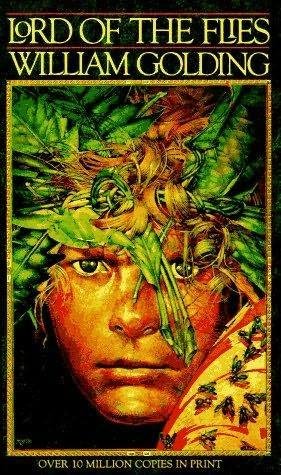
The Short Version
There are spoilers for the book’s ending.
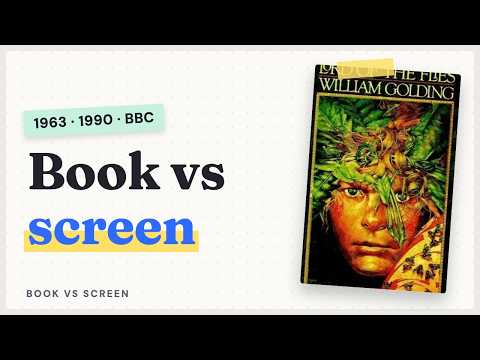
The short version: the nineteen sixty three film is the most faithful, the nineteen ninety film changes the most, and the BBC series is the most ambitious, and the first to give each boy his own episode.
The 1963 Film
The first film was directed by Peter Brook and released in nineteen sixty three. It’s in black and white, and the boys are real British schoolboys, most of them non professional actors.
It was shot in Puerto Rico, including on the island of Vieques, and the crew reportedly filmed more than sixty hours of footage, then spent about a year editing it down to around ninety minutes.
What 1963 Gets Right
It feels almost like a documentary. The boys improvise, the island looks raw, and the descent into savagery is gradual and believable.
It keeps the key beats: the conch, the fire, the pig’s head, Simon’s death, Piggy’s death, and the officer on the beach. If you want the book on screen, start here.
The 1990 Film
The second film, directed by Harry Hook, came out in nineteen ninety, in color. The big change: the boys are American military school cadets, not British schoolboys.
It was shot mainly in Jamaica, with some scenes in Hawaii and California. Balthazar Getty plays Ralph, and a young James Badge Dale plays Simon.
What 1990 Changes
The biggest change is an adult. In this version, the pilot survives the crash, badly injured and delirious, and hides in a cave. The boys mistake him for the monster, and Simon later finds his body.
That replaces the book’s dead parachutist falling from an air battle. It also loses the sense of a war going on overhead, which matters a lot to Golding’s ending.
How It Was Received
Critics were mixed on the nineteen ninety film. They praised the young actors and the scenery, but many felt it softened the story and cut Simon’s conversation with the pig’s head down to a few stares.
It’s watchable, but it’s the weakest of the three as an adaptation.
The 2026 BBC Series
Then, in February twenty twenty six, the BBC released a four part series, written by Jack Thorne and directed by Marc Munden. It’s the first television adaptation of the novel.
In the US, Netflix added it in May twenty twenty six. The score is by Cristobal Tapia de Veer, with additional music from Hans Zimmer and Kara Talve.
One Boy Per Episode
The clever idea is the structure. Each episode is named after one of the four central boys: Piggy, Jack, Simon and Ralph, in that order.
So you see the same island through four sets of eyes. Piggy’s episode comes first, which says a lot about whose story the show thinks this is.
The Cast
Winston Sawyers plays Ralph, Lox Pratt plays Jack, David McKenna plays Piggy, and Ike Talbut plays Simon. Talbut also voices the Lord of the Flies, which is a brilliant choice, given that the head says it’s part of Simon.
The ensemble has more than thirty boys, and many of them were making their professional debuts.
How The Series Did
Reviews were mostly strong. Rotten Tomatoes shows ninety one percent positive, and Metacritic gives it eighty three. The Telegraph gave it five stars. The Guardian and the Financial Times were cooler, at three stars each.
It also picked up Emmy nominations for sound editing and sound mixing.
Which To Watch
So, which should you watch? For the book as Golding wrote it, the nineteen sixty three film. For the deepest look at the boys themselves, the BBC series.
And read the book first, if you can. None of the adaptations fully capture that last page, with the officer looking out at his cruiser.
Your Turn
Which version have you seen? Tell me in the comments. My review and the ending explained are linked below.