The Short Version
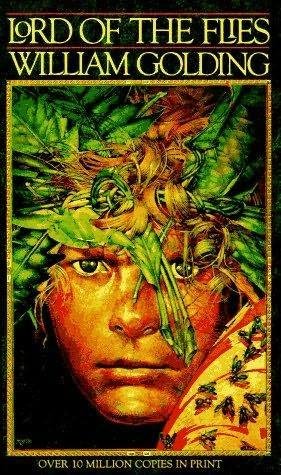
Today is a study guide for Lord of the Flies: the main symbols, the big themes, what the characters stand for, and questions for your book club or your class. There are spoilers here, so finish the book first.
The short version: almost everything on Golding’s island stands for something bigger. And the title is the biggest symbol of all.
The Conch
The conch is the cream and pink shell Ralph and Piggy find on the first day. Blow it, and everyone gathers. Hold it, and you have the right to speak.
It stands for order, rules and democracy. Watch how its power fades. At first everyone respects it. Later, Jack says it doesn’t count on his end of the island. When it’s smashed, the last trace of civilization goes with it.
Piggy’s Glasses
Piggy’s glasses are the boys’ only way to make fire, by focusing sunlight. So they stand for reason, science and clear thinking.
One lens breaks when Jack hits Piggy. Then the hunters steal the glasses entirely. As Piggy loses his sight, the island loses its sense.
The Signal Fire
The fire on the mountain is the boys’ link to home. It means hope, and the will to be rescued.
When it goes out, the island slips further away from civilization. The terrible irony is that the final fire, the one meant to kill Ralph, is what brings the ship.
The Beast
The littluns’ beast starts as a nightmare, becomes a rumor, then gets a body: the dead parachutist on the mountain.
But Simon realizes the truth. The beast is the fear and cruelty inside the boys themselves. The more they try to hunt it, the more they become it.
The Lord Of The Flies
The title comes from the pig’s head on a stick, swarming with flies. Lord of the flies is a translation of Beelzebub, a name for the devil.
In Simon’s vision, it says it’s part of them, and that it’s the reason things are what they are. That’s the book’s thesis in one scene.
What The Boys Stand For
Ralph stands for civilization and leadership. Piggy for intellect and science. Jack for the hunger for power, and the savagery under the surface.
Simon stands for natural goodness, almost like a saint. Roger stands for pure cruelty, held back only by rules, until the rules disappear. And the twins show how ordinary people get pulled along.
Theme One: Human Nature
Golding said the book traces the defects of society back to the defects of human nature. In other words, a society is only as good as the people in it.
The boys aren’t corrupted by the island. The island just removes the rules that were holding them back.
Theme Two: Civilization Is Thin
Watch how quickly it fades: the face paint that lets Jack’s hunters feel free of shame, the long hair, the chant, the dance.
The book argues that civilization is a thin layer, and it can disappear fast when fear and hunger take over.
Theme Three: Fear And Power
Jack doesn’t win with better ideas. He wins by using the boys’ fear of the beast, offering meat and protection, and staging rituals.
That’s why so many readers see the book as a story about how dictators rise.
Theme Four: The Adult World
The boys are on the island because of a war. A dead soldier falls from the sky. And they’re rescued by a warship.
Golding’s point is that the grown ups are doing the same thing, just on a bigger scale.
Questions For Discussion
Here are some questions to talk about. Is Golding right that people are naturally cruel, or would a real group of children behave differently?
Who is most responsible for Simon’s death? Why does Piggy insist they were on the outside? Would the story change if the island had girls on it too?
More Questions
Why does Ralph keep forgetting why the fire matters? Is Jack evil, or just a boy who likes power? What does Roger show us that Jack doesn’t?
And the big one: when the officer arrives, are the boys actually saved?
Your Turn
Which symbol do you think matters most? Tell me in the comments. My review and the ending explained are linked below.