Spoilers and the Tally
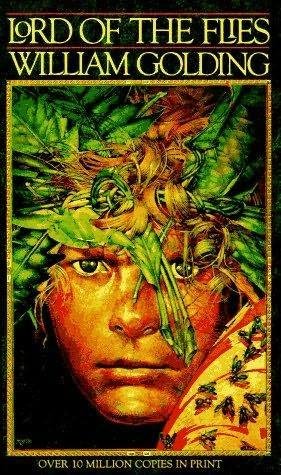
Spoiler warning. This covers the whole of Lord of the Flies, by William Golding, both deaths and the ending, so finish the book first. Now the number. By my count of the ebook text, the word conch appears one hundred eighty times. In chapter seven, it appears zero times. That gap is the story of every symbol on this island.
Here is the short answer. Nearly every symbol begins as a tool or a comfort, and ends as proof of the opposite. The fire, the conch, the beast, the glasses, the paint, the pig’s head, even the island itself. I counted each one chapter by chapter. What they mean is my reading, so treat that part as opinion.
The Fire, Two Hundred Thirteen
Start with the biggest number. Fire or fires appears two hundred thirteen times, more than any other symbol. In chapter two the boys light it using Piggy’s glasses, and it means one thing: rescue. Ralph wants special people to keep it going, because any day a ship may pass.
Then it slips. The first blaze spreads and burns a patch of forest a quarter of a mile square, and a small boy with a birthmark is never seen again. In chapter four a ship passes while the fire is dead, because the hunters went off to kill a pig. Ralph screams at the ship to come back.
By chapter eight there is no mountain fire at all, only a beach fire with no smoke, and Jack’s hunters steal burning branches from it. That chapter has forty seven fire mentions, the highest of any chapter. One fire is meant to be seen by rescuers. The other is meant to cook meat. And in chapter twelve the hunters set the whole island alight to flush Ralph out. The naval officer says, we saw your smoke. The fire that was meant to kill finally rescues.
The Conch, One Hundred Eighty
Now the conch. Piggy knows what the shell is in chapter one, and Ralph blows it to gather everyone. In chapter two comes the rule: whoever holds it speaks. It is the strongest symbol of order, and the tally shows it. Chapter two has forty three mentions. Chapter five has forty six, the peak, where Ralph says the rules are all they have.
Then watch where it stops working. In chapter two, Jack says the conch does not count on top of the mountain. In chapter six he shouts that they do not need it any more. In chapter nine he says it does not count at this end of the island, and Ralph answers that it counts everywhere. The shell loses ground one place at a time. Chapter seven, the long hunt, never mentions it at all.
In chapter ten the hunters raid the shelter at night and leave the conch behind. Piggy says they did not come for it. In chapter eleven, Roger leans on a lever, a rock falls, and the conch explodes into a thousand white fragments. Piggy dies in the same moment. The rules die with the shell, and with the boy who kept saying he had it.
The Beast, One Hundred Eleven
The beast comes next, at one hundred eleven mentions, counting beastie and snake-thing. It begins in chapter two as a small boy’s snake in the dark, and Ralph says there is no beast. At the chapter five assembly Simon says, maybe it’s only us. Jack waves it off. That one line is the key to the whole symbol. The beast peaks in that same chapter, with twenty two mentions, and returns to twenty in chapter eight.
In chapter six a dead parachutist drifts onto the mountain, and the wind makes him sit up and bow. The twins run and report claws and teeth. In chapter eight Jack decides the beast is a hunter, then leaves a sow’s head on a stick as a gift for it. So the fear changes hands. First it is something the boys are afraid of. Then it is something they feed.
In chapter nine Simon climbs up and sees the airman for what he is, harmless and horrible. He runs to tell the others, but in the dark dance they are chanting kill the beast, and the crowd kills Simon. After that the word nearly vanishes. Chapters ten, eleven and twelve have three, one and one. The boys no longer need to talk about a beast. In my reading, they have become it.
The Glasses, Seventy Two
Piggy’s glasses, specs and spectacles add up to seventy two mentions, and most come early. In chapter two Jack grabs them to use as burning glasses, and Ralph focuses them on a pile of wood until it catches. They are the island’s only technology. Notice who owns them. Piggy, the boy nobody listens to, cannot see without them.
In chapter four Jack hits Piggy and one lens breaks. Piggy says now he has only one eye. From then on the book calls it his one glass, and he is half blind and half useful. In chapter ten the hunters raid the shelter at night, and Jack trots off with Piggy’s broken glasses dangling from his hand.
In chapter eleven Piggy tells the assembly they blinded him, and says he will have to be led like a dog. Here is a small detail. In chapter twelve, near the officer, a little boy with red hair carries the remains of a pair of spectacles at his waist. The text does not name him, so that is my guess. If it is Jack, the thing that made fire for everyone ends up as a trophy.
Paint and the Chant, Thirty Nine
Face paint is the youngest symbol. The words paint, painted, mask and masked appear thirty nine times, first as an idea in chapter three. In chapter four Jack smears white and red clay and charcoal on his face, sees a stranger in the pool, and the book says he hides behind it, free of shame and self-consciousness.
The chant tells the same story. In chapter four the hunters sing, kill the pig, cut her throat, spill her blood. In chapter seven they act out the hunt on Robert, who plays the pig and gets hurt. In chapter nine the last word changes. Kill the beast, cut his throat. The pig has become a boy, and the boy is Simon.
By chapter eleven paint is how a whole tribe stops being itself. Ralph shouts, no paint, because we aren’t savages. In chapter two, Jack had said almost the same thing. In chapter twelve, Ralph glimpses a striped hunter and thinks it is Bill, then decides this was not Bill, but a savage. Paint is a name being put away.
The Pig’s Head
The pig’s head has no tally, because it has one big scene, in chapter eight. After the hunters kill a sow, Jack leaves her head on a stick sharpened at both ends, a gift for the beast. Flies cover it. Simon, hidden nearby, hears it speak in the voice of a schoolmaster. It says the beast cannot be hunted and killed. It says, I’m the Beast. And it says it is part of him.
This is the book’s answer to the beast. The fear was never out in the forest. In chapter nine Simon sees the dead airman and understands there is nothing to hunt. In chapter twelve the head comes back. Ralph finds the skull, white as the conch once was, and hits it. It breaks in two, and he takes the quivering stick as a spear.
Now look at that stick. In chapter twelve the twins whisper that Roger sharpened a stick at both ends, and Ralph cannot work out what it means. Later, hiding in the thicket, he sees that his own spear, the stick from the skull, is sharpened at both ends too. My reading is that the next gift for the beast could be him. The text only hints, but the hint is there.
The Island
Last, the island itself. In chapter one Ralph stands on the mountain and says it belongs to them. In chapter two the boys compare it to Treasure Island and Coral Island. For them the island is an adventure story, a place made for children.
Watch how the island gets marked. In chapter one a long scar from the crashed plane already runs through the jungle. In chapter two the boys’ own fire burns a black patch into the forest. In chapter twelve their fire takes the whole island. The marks get bigger each time, and the last one is made on purpose.
By chapter twelve it is scorched like dead wood. The officer arrives, hears that two boys are dead, and says, jolly good show, like the Coral Island. Ralph weeps for the end of innocence, the darkness of man’s heart, and the loss of Piggy. The island has gone from a story the boys borrowed to proof that the story was wrong.
The Tracker
Here is the tracker I built, chapter by chapter, from my own counts. In chapters one and two every symbol is a tool. The conch, the glasses and the fire all work. In chapter four comes the first crack, with the broken lens and the missed ship.
In chapters five to eight the beast takes over, and the conch loses ground. In chapters nine to eleven Simon dies, the glasses are taken and the conch breaks. And in chapter twelve the fire that was meant to save them is the one that does, in the cruellest way.
What It Adds Up To
My reading, and it is an opinion, is that Golding does not replace one symbol with another. He lets each symbol change sides. The fire for rescue becomes a hunting fire. The shell for rules is overruled. The glasses for sight are stolen. Even the fear gets fed.
If you want the tracker as a page, with every chapter summarized, the link is in the description. Subscribe, tap like, and tell me in the comments which symbol you think turns first.