The Verdict
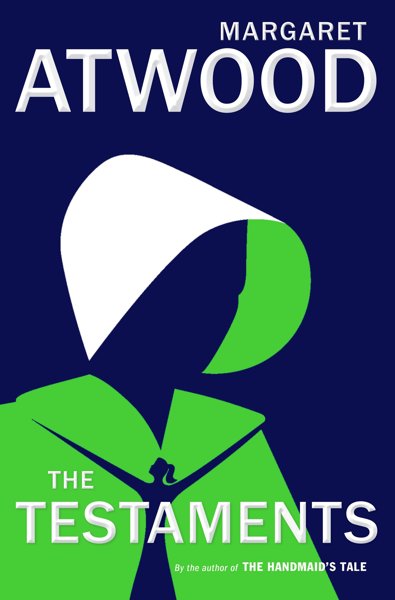
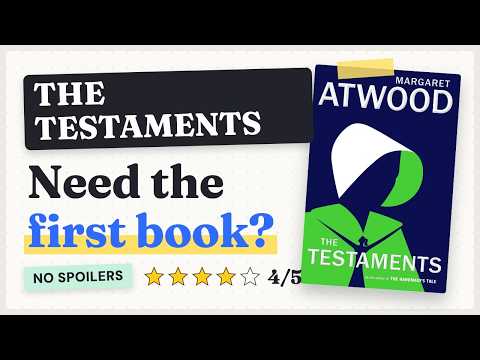
This is my honest review of Margaret Atwood’s sequel to The Handmaid’s Tale, and it is completely spoiler free.
Quick answer: yes, it is worth reading, and I give it four out of five. It’s faster and smarter than most sequels, and it has one of the best narrators in modern fiction. It’s also uneven, and one of its three voices works much better than the others. Spoiler free means no late reveals, no deaths and no twists.
What Is The Testaments About?
The Testaments came out in twenty nineteen, more than thirty years after The Handmaid’s Tale. It’s set in the same country, Gilead, roughly fifteen years after the first book. And instead of one narrator, it gives you three.
The first is Aunt Lydia, the most feared woman in Gilead. She’s writing a secret manuscript in a private library, and she promises to tell the truth about how she got her power. The second is Agnes, a girl raised inside Gilead as a pampered Commander’s daughter. The third is Daisy, a teenager in Toronto who believes she has an ordinary life.
Do You Need To Read The Handmaid’s Tale First?
This is the question people search for most, so here’s my straight answer. You do not strictly need to. The Testaments explains what Gilead is as it goes, and a new reader can follow every scene.
But I’d still read the first book first, and not just for the history. Aunt Lydia is a small but chilling figure there, and her story lands harder if you remember that flat, cold version of her. The sequel also answers questions the first book left open, and those moments mean more if you know it. If you only have time for one, start with The Handmaid’s Tale. It’s short.
The Hype and the Booker Prize
Some context on the noise around it. Atwood was seventy-nine when The Testaments won the Booker Prize in twenty nineteen, and she shared it with Bernardine Evaristo for her novel Girl, Woman, Other. The judges broke the rules to name two winners, and Atwood became the oldest person ever to win.
Does it deserve the attention? I think it deserves the readers more than the awards. It is not as perfect as the first book. But it’s a confident, entertaining novel from a writer who clearly enjoyed herself, and the pleasure shows on the page.
Three Voices
The structure is the cleverest thing about this book. Agnes and Daisy are given as witness testimonies, each one told in the first person. Aunt Lydia’s chapters are a handwritten manuscript, which she calls her holograph, hidden somewhere nobody would think to look.
The three voices could not sound more different. Agnes is soft, formal and sheltered. Daisy is blunt, modern and swears. Lydia is dry, funny and menacing, often in a single sentence. Atwood cuts between them every few chapters, so each one works as a break from the last.
Why Aunt Lydia Steals The Book
Let me say a little more about her without giving anything away. In the opening pages she tells us that she has been given a statue, while still alive, and that she hates how it makes her look. Right away you know her tone: proud, sarcastic and always one step ahead of whoever is listening.
She also tells us she keeps secrets, and that knowing things is her real power. Every chapter she writes is a small lesson in how to survive under a regime that eats its own people. You never fully trust her, but you cannot look away, and that’s what a great narrator does.
What Works
My first strength is Aunt Lydia. Her chapters are the reason to read this book. She is vain, ruthless and darkly funny, and she tells her story like someone who has outlived every rival and enjoys reminding you of it. She never asks for your forgiveness, which somehow makes you trust her more.
My second strength is the world. Atwood shows ordinary life in Gilead: the schools, the Marthas in the kitchen, the games children play. It’s more frightening than any execution because it feels so normal.
My third strength is the pace. The first book is slow and haunting. This one is closer to a thriller, with a mission, a clock, and chapters that end on a hook.
Agnes, Daisy and the Weak Spots
Agnes’s chapters are the quiet heart of the book. You watch a bright girl discover what her world really is, and the small cruelties she notices are some of the most affecting writing in it. Be warned that she stays in the dark for a long time, and some readers will find her slow.
Daisy is the weaker voice for me. Her chapters move fast, but the teenage slang can feel forced, and the plot leans on convenience more than I’d like. People help at exactly the right moment, and plans go a little too smoothly for a world this dangerous.
The Ideas Underneath
Beneath the plot, Atwood is asking a few big questions. How do ordinary people end up working for a cruel system? What do you tell yourself so you can sleep? And what does it cost a woman to hold power in a place built to keep women small?
The book never lectures. It just lets you watch decent people make small compromises, and then bigger ones. If you read the first book as a warning, this one reads as a case study in how the people on the inside think. For me that is the sharpest part of the whole novel.
How It Compares To The First Book
The Handmaid’s Tale is a locked room. You never leave Offred’s head, and you never learn how the world works beyond what she can see. That’s what makes it so airless and so frightening.
The Testaments opens the door. You see the schools, the offices, the secret files and the people who run it all. Gain in plot, loss in dread. I think that’s a fair trade, but it explains why readers split on the book: some wanted a second locked room, and some wanted to finally see the machinery.
What Doesn’t Work
Let me be fair about the flaws. First, the middle section leans on coincidence. A story about a regime this paranoid needs more things to go wrong.
Second, some supporting characters are thin. A few exist mainly to deliver information or to be a villain, and they don’t get the care that Lydia gets.
Third, if you want the bleak feeling of the first book, this one trades some of it for plot. That’s a deliberate choice, and I enjoyed it, but a reader hoping for a second masterpiece of dread may feel let down.
Writing and Pacing
On the page, Atwood is a pleasure. The sentences are short and clean, and she can land a joke and a threat in the same line. The chapters are brief, usually a few pages, so it reads quickly.
I’d call it a weekend book. The first third is the slowest, because it has to set up three narrators and a lot of rules. After that the story picks up, and by the last stretch you’ll probably be reading faster than you intend. The audiobook is also a strong choice, since each narrator gets a different voice.
Content Notes
Here is my honest content note. There are no explicit sex scenes. But the book includes the sexual abuse of a child, described briefly but clearly. It also includes forced marriage of young girls, suicide attempts, public executions, torture and imprisonment, and a mob killing that is described in some detail.
Daisy uses strong language throughout. If any of that is a hard line for you, think about it before you start. Nothing is there for shock alone, but it is not gentle.
The Hulu Series
You may also know this title from the Hulu series, which began in April twenty twenty-six. I’m only reviewing the book today, but you should know that the series changes a lot, including who some of the main characters are. If you watched it first, the book will still surprise you. I have a separate video comparing the two.
The Scorecard
Time for the scores. The hook is four out of five. The voices get four and a half, almost entirely because of Aunt Lydia.
The plot gets three and a half, because of the coincidences. The ideas get four out of five. And the impact gets four. That’s an average of four out of five.
Who It’s For
Read The Testaments if you loved The Handmaid’s Tale and wanted to know what came next. Read it if you like layered narrators, and if you enjoy a villain who is also the most fascinating person in the room.
Skip it if the first book was too bleak for you, because this one covers some of the same ground. Skip it if you need plausible plotting more than ideas. And skip it, or read the content notes first, if harm to children is a hard line.
Where To Get It
That’s my verdict on The Testaments, with no spoilers. I’ve put links to the book and the audiobook in the description.
Now tell me in the comments: did you read The Handmaid’s Tale first, or did you start here? And which of the three voices was your favorite? If you want the full breakdown, the ending explained and a book versus Hulu comparison are on the channel. Subscribe, and I’ll see you in the next one.