The Verdict
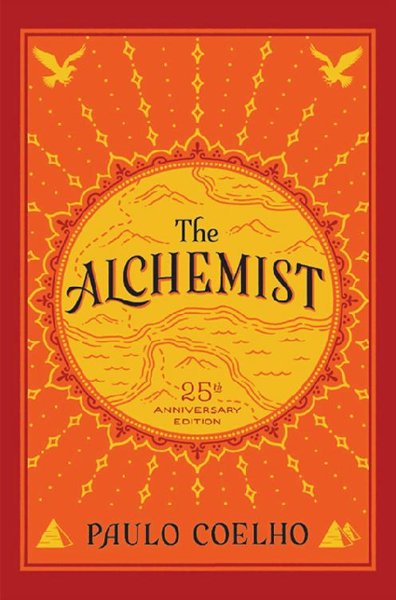
Today I’m reviewing The Alchemist, by Paulo Coelho, one of the best selling books in the world.
So, is it as wise as people say? Partly. It is a gentle, easy, and often beautiful little fable, and it is also a bit preachy and simple. I give it three and a half out of five. And this whole review is spoiler free.
What It’s About
Santiago is a young shepherd in Andalusia, in the south of Spain. He has a dream, twice, about a hidden treasure near the Pyramids of Egypt. He sells his sheep and sets out to find it.
Along the way he meets a king, a thief, a crystal merchant, an Englishman who is studying alchemy, a woman of the desert, and finally the alchemist himself. Each one teaches him a little more about what Coelho calls a Personal Legend, the thing you were put on earth to do.
The book was first published in nineteen eighty eight in Portuguese, and it is short, around two hundred pages, so you can read it in a weekend. It has reportedly sold more than one hundred million copies.
What Works
My first favorite thing is the simplicity. The story reads like a parable. The sentences are plain, the lessons are clear, and it never feels like homework.
My second favorite thing is the atmosphere. The desert chapters are quiet and vivid, with caravans, oases, and long nights under the stars. You can feel the sand.
My third favorite thing is one specific stretch in the middle, where Santiago works for a crystal merchant. It is the most grounded part of the book. It has real stakes, a real argument about taking risks, and a character who is afraid of his own dream.
The Characters
Santiago is not a deep character. He is an everyman, curious and stubborn, and that works for a fable. You are meant to see yourself in him.
The crystal merchant is the best supporting character, because he is afraid and honest about it. The alchemist is a calm, wise guide, but he is more a symbol than a person.
The women in the book, especially Fatima, are warm but thin. They exist mostly to test what Santiago wants.
The Writing And Pacing
The prose is simple and translated, and it carries a calm, almost spoken feeling. The pacing is steady. Some stretches, especially in the desert, are repetitive, and the same idea gets repeated in slightly different words.
What Doesn’t
My first criticism is that it can be preachy. Many pages are speeches about following your heart and listening to omens, and some of those lines feel like slogans on a poster.
My second criticism is that the book makes success sound easy. If you believe, the universe helps. That is comforting, but real life asks for more than belief, and the book hardly shows the cost.
My third criticism is that things happen very conveniently. Characters arrive at the right moment with the right advice. In a fable, that is fine, but I wanted a bit more friction.
The Scorecard
Ideas: three and a half out of five. Story: four. Characters: three. Writing: three and a half. Impact: four. That gives an average of three point six out of five.
Who It’s For
Read The Alchemist if you want a short, hopeful book about courage and purpose. It is a good gift, a good book for a hard season, and an easy way to start reading again.
Skip it if you dislike self help language, or if you want complex characters and realistic plots.
If you enjoyed it, try The Little Prince by Antoine de Saint Exupéry, Siddhartha by Hermann Hesse, or Life of Pi by Yann Martel.
Where To Get It
Links to the book and the audiobook are in the description below. Tell me in the comments: what is your own Personal Legend? Thanks for watching, and I’ll see you next time.