The Short Version
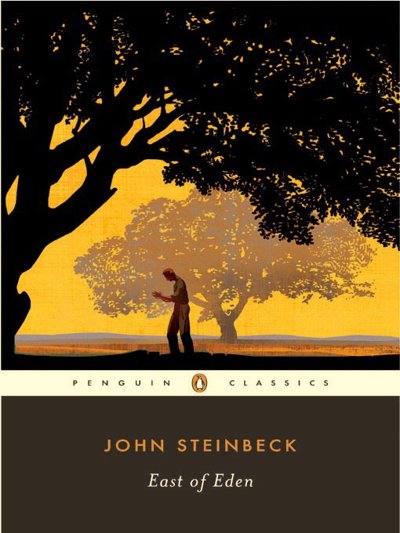
East of Eden, John Steinbeck’s 1952 novel, suits a book club because it hands a group one big idea to argue over: the Hebrew word timshel, “thou mayest,” which says you are not doomed to be good or bad and get to choose. Two families in California’s Salinas Valley, the invented Trasks and the Hamiltons, who are Steinbeck’s real grandparents, replay Cain and Abel from the Civil War to World War One.
Below are twenty questions: ten you can use before everyone has finished the book, and ten that spoil the ending. A short section on the book, the 1955 movie and the Netflix series gives the group something to compare. The book is about six hundred pages, and it scores four out of five in our review.
Before You Start: Content Notes For Your Group
Tell your group first. The book uses racist language and stereotypes, especially about Native Americans and Black characters, and the women are mostly saints or monsters. Later chapters involve a brothel and a suicide by poison. The middle section, before the twins grow up, is slow, so agree on a reading schedule.
Spoiler-Free Questions
- The opening chapter describes the Salinas Valley, its poppies, dry years and floods. How does the land set the tone before any character appears?
- Steinbeck steps in as a narrator, a grandson of Samuel Hamilton, and stops to talk about good and evil, money and war. Did those detours deepen the story or slow it down?
- Samuel Hamilton is an inventor who never made money, yet he is warm, funny and kind. What does the book want us to value in him?
- Adam Trask is a gentle, wounded man who moves west with his new wife, Cathy, to build an Eden on a ranch. Why does he fail to see who she is?
- Steinbeck calls Cathy a monster and explains her as born without a conscience. Is she one of fiction’s great villains, or is she almost too evil to be human?
- Lee pretends to speak pidgin English so people will leave him alone, yet he is the wisest person in the book. What does his disguise say about how the others see him?
- Lee studies the story of Cain in Genesis and argues that timshel means “thou mayest,” not “thou shalt.” How does that reading change the way you judge each character?
- Cal and Aron are twins who live out Cain and Abel again. Which brother did you side with, and when did you first choose?
- Most of the women are either saints or monsters. Does that pattern weaken the book for you, or does Steinbeck’s purpose excuse it?
- Our review scores pacing at three and a half and how the book has aged at three. Which section tested your patience, and did the payoff justify it?
Spoiler Questions (Finish The Book First)
- Cal secretly makes fifteen thousand dollars selling beans to the British and gives it to Adam, who refuses it because he sits on the draft board. Was Adam right, or did he fail his son?
- Cal takes Aron to Kate’s brothel and introduces him to the mother he was told was dead. Was this revenge, honesty or both?
- Aron runs away, lies about his age, joins the army and is killed in France. How much of that is Cal’s fault, and how much is Aron’s refusal to accept any story that does not go his way?
- Kate writes a two-line will leaving everything to Aron and swallows the poison capsule she carried for years. Why does Steinbeck let her end this way?
- Lee tells Cal he is not a tragic hero, only an ordinary kid who did something mean. Why is that the right thing to say to him?
- Abra tells Cal she loves him because he is not good, and that Aron loved a perfect story rather than her. Did her change of heart feel earned or rushed?
- When the telegram arrives, Adam has a massive stroke and is left almost completely paralyzed. How does that moment reshape the father and son story?
- Lee begs Adam to give Cal his blessing, and Adam whispers timshel. What does that single word do, and what did Cain never receive?
- The book never says whether Adam dies; the doctor says he could live a week or two years. Why leave it open?
- Is Cal free to choose who he becomes, or does his mother’s blood still hang over him? Make your case for or against timshel.
Book, Movie And Series
Your group may want to compare versions. The 1955 movie, directed by Elia Kazan, was James Dean’s first big starring role, with Raymond Massey as Adam, Julie Harris as Abra and Jo Van Fleet winning an Oscar as Kate. It starts around 1917, in the book’s final section, so it has no Charles, no young Cathy, no Samuel Hamilton and no Lee, which means the timshel discussion mostly disappears.
The Netflix series came out on October 1, 2026, in seven episodes released at once. It was created by Zoe Kazan, Elia Kazan’s granddaughter, with Florence Pugh as Cathy, Christopher Abbott as Adam, Mike Faist as Charles, Hoon Lee as Lee and Ciaran Hinds as Samuel Hamilton. There is also a 1981 TV miniseries with Jane Seymour as Cathy, which won her a Golden Globe.
What To Read Next
If you want to read first and talk later, start with our spoiler-free review, and save the ending explained, which unpacks what timshel means, for after the discussion. If your group enjoyed it, our books-like-it list covers six more epic novels to try next.