The Short Version
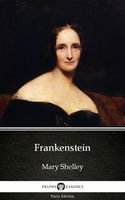
Frankenstein, Mary Shelley’s gothic classic, began in the summer of 1816 near Lake Geneva, was published in 1818 and was revised in 1831. It suits a book club because one clean question drives everything: what do you owe the thing you made? It is also short for a classic, about seventy-seven thousand words in the 1831 text, with four letters followed by twenty-four chapters, so a group can finish it over a long weekend.
Below are twenty questions: ten you can use before everyone has finished the book, and ten that spoil the ending. A short section on the novel and Guillermo del Toro’s film gives the group something to compare. The book scores four out of five in our review. Check which edition each member has, since most copies print the 1831 text.
Before You Start: Content Notes For Your Group
Tell your group first. The book includes death and murder, a great deal of grief and despair, and some unsettling scenes about the laboratory and dead bodies. None of it is explicit, but it is a book about loneliness, and the language is formal and old fashioned.
Spoiler-Free Questions
- The story opens with letters from Robert Walton, an explorer sailing toward the North Pole, who writes that he has no friend. Why does Shelley begin with him instead of with Victor?
- The book is a story inside a story inside a story: Walton writes letters, Victor confesses, and the creature speaks for himself. Which narrator did you trust, and why?
- If you know the films, what surprised you? In the book there is no storm of lightning, no helper named Igor and no triumphant shout.
- Victor looks at what he has built, feels sick and runs out into the rain. Why does the book make the moment of success the moment of horror?
- The creature wakes in a forest, not knowing what light, cold or hunger are, and teaches himself to speak by secretly listening to a family through a wall. What makes his voice the best writing in the book?
- The creature asks Victor why he was made and then left. Does he deserve an answer?
- Everyone judges the creature by his face before he speaks. Is the book asking who the real monster is, or is the answer too easy?
- Victor has a loyal friend in Henry Clerval and a girl named Elizabeth who grew up beside him. Do they feel like real people, or do they exist mostly to give Victor something to lose?
- Victor announces how wretched he is again and again. Did his self pity wear thin, or does it fit a man who refuses responsibility?
- Our review scores pacing and the supporting cast at three each, and ideas and the creature at five. Did the slow family backstory pay off once the creature begins to talk?
Spoiler Questions (Finish The Book First)
- The creature strangles William, Victor’s little brother, and plants the portrait of Victor’s mother on a sleeping servant, Justine, who is hanged. Victor stays silent. How guilty is he?
- Victor agrees to build the creature a female companion, then tears her apart in a hut in the Orkney Islands. Was he right to fear a race of devils, or did he deny the creature the only thing he asked for?
- The creature promises to be with Victor on his wedding night, and Elizabeth is strangled at an inn in Evian. Did Victor misread the warning, or did he see it and fail to act?
- Victor lists the dead for Walton: William, Justine, Clerval, Elizabeth and his father, who dies of grief. Who bears the most blame for that toll?
- After the oath in the Geneva graveyard, Victor chases the creature for months through the Rhone, the Mediterranean, Tartary and Russia. The creature leaves messages cut into bark and stone, leading Victor north. Who is hunting whom?
- Walton’s crew demands he turn south if the ice breaks, and he agrees. Does his choice answer the book’s question about ambition without responsibility?
- The creature appears over Victor’s coffin, mourns him and says he will burn himself on a funeral pile at the far north. Do you believe him?
- At the glacier above Chamonix the creature says he ought to have been Victor’s Adam but is rather the fallen angel. Does the ending prove him right?
- The book ends with a fire, and del Toro’s film ends with a sunrise after the creature and Victor reconcile. Which ending feels truer?
- Who owes more, Victor to the creature or the creature to the people he harmed? Make the case for each.
Book And Film
Your group may want to compare. Guillermo del Toro’s film opened in a few theaters on October 17, 2025, and came to Netflix on November 7. As reported in summaries, it keeps the ship in the ice, the creature’s own story and the blind friend, and it changes the people around Victor. Jacob Elordi plays the creature and Mia Goth plays Elizabeth, who is engaged to Victor’s brother William, and Christoph Waltz plays a patron named Harlander. Reports say Walton’s letters, Clerval and Justine are cut, and that Victor fires the pistol that hits Elizabeth at the wedding. Critics are split on whether it is faithful, so check the film itself.
What To Read Next
If your group would rather start with a verdict, our spoiler-free review covers what works, what does not and which edition to pick. Our summary and book versus movie pages are best saved for after the discussion. For similar reads, the review suggests Dracula by Bram Stoker, Strange Case of Doctor Jekyll and Mister Hyde by Robert Louis Stevenson and Never Let Me Go by Kazuo Ishiguro.