The Short Answer
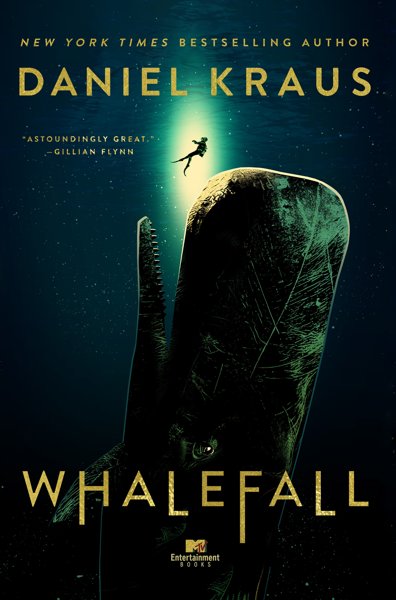
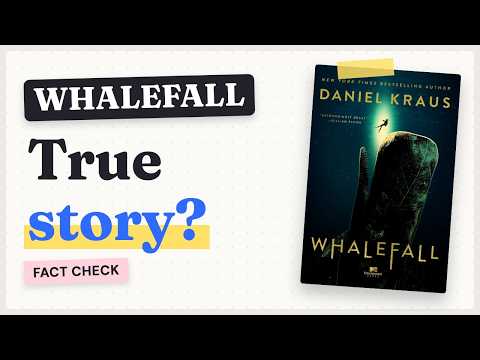
Is Whalefall a true story? No. Daniel Kraus invented Jay Gardiner and his dive.
But the science underneath is better researched than you’d expect. Kraus thanks whale and diving experts by name, and he flags the one big liberty himself. I’ll go through what’s real, what’s plausible, and what’s invented. Mild spoilers for the middle of the book, none for the very end.
Where It Came From
Let’s start with the origin, because Kraus tells it in his author’s note. On the night of November ninth, twenty twenty, he was talking with friends on a Chicago beach, and the talk turned to a viral video of two kayakers in San Luis Obispo Bay nearly ending up inside a breaching humpback’s mouth.
The video led him to old legends of people swallowed by whales. And in June twenty twenty one, a lobster diver named Michael Packard said a humpback carried him in its mouth for about thirty seconds. Kraus is blunt that headlines saying Packard was swallowed are misleading. He was mouthed, then spat out.
Can A Whale Swallow A Person?
For most whales, no. Humpbacks and other baleen whales have narrow throats. Reports at the time put a humpback’s throat at roughly fist sized, stretching to something like fifteen inches at most. A conservation expert quoted in the news said the only whale with a throat big enough to swallow a person is a sperm whale.
That matches the book. Kraus says Phil Clapham, a senior scientist and former director of a National Marine Mammal Laboratory program, told him a sperm whale’s throat made it theoretically possible. Jay even thinks through the same point in the book, noting that the stories about baleen whales are all clickbait.
So the verdict is that it’s physically conceivable, but there is no record I could find of it ever happening. Theoretically possible is a very long way from true.
The Whale
Now the animal itself. Kraus names his main whale experts: Phil Clapham, Lara Horstmann, and Joy Reidenberg, an anatomy professor. He also lists the books he kept beside him, including Hal Whitehead’s Sperm Whales and Richard Ellis’s The Great Sperm Whale.
The book’s whale is an old bull with scarred skin and sucker marks on its head. That is the classic picture: sperm whales hunt deep sea squid, including the giant squid, and a stranded whale’s stomach is full of squid beaks. One study of three stranded whales in the Bay of Biscay recovered hundreds of beaks from nineteen kinds of cephalopod, and the beaks survive digestion because they’re made of chitin, like fingernails. Jay’s rescue tool, Beaky, is a beak.
The Stomach
Inside the whale, Jay passes through a first chamber, a second one full of acid, and a narrow third. I could not find a source to check that layout, so I’m treating it as Kraus’s research rather than something I can confirm. The vivid details, like the squid’s beak and the heartbeat Jay times his breathing to, are the author’s imagining of a place no one has been.
The Clicks
The book says sperm whale clicks are the loudest sounds ever made by a living thing. That one is well supported. A two thousand three paper in the Journal of the Acoustical Society of America, by Møhl and colleagues, measured on axis clicks at up to two hundred thirty six decibels in water, the loudest biological sound recorded.
What I could not verify is the book’s claim, delivered by Mitt, that a click could break every bone in a diver’s body. Treat that as a dramatic exaggeration. And whether sperm whales stun squid with sound is still debated, which the book admits when Mitt calls suction feeding a theory.
The Dive
The diving is the most grounded part of the book, and a lot of it is simple physics. Jay carries a steel tank of three thousand P S I and watches the number fall with every breath. Deeper means faster. He loses colors as he sinks, red first, which is real optics, since water absorbs red light before green. And he worries about nitrogen narcosis and about coming up too fast.
Kraus thanks divers and a dive videographer, Connor Gallagher, who helped choose Monastery Beach and filmed the dive to the canyon edge. I haven’t checked the specifics against dive agency manuals, so take the numbers as the book’s.
The Scream
Here is the big liberty. In the author’s note, Kraus says the most contentious part of the novel is the idea that an adult sperm whale larynx can be manipulated to make a primal scream. He writes that this is theoretical and debated, and that he included it because it was thematically perfect.
So if you want one bright line between science and story, this is it. A sperm whale producing a human style cry because a boy pulled on cartilage is invented. The wish behind it is fiction doing its job.
The Explosion
The ending relies on methane, a steel wool pad and a nine volt battery. Kraus thanks P. Andrew Karam for the calculations needed to make the explosion realistic. Steel wool touched to a nine volt battery really does glow and burn, it’s a well known demonstration. And Mitt says whale stomachs are full of methane, which I could not confirm from a source, so that is the book’s claim.
What I can’t tell you is whether anyone could survive it from inside. Nobody has tested that, and I wouldn’t try the steel wool trick at home. That part is Kraus asking you to believe in a plausible mechanism and a very lucky kid.
Whale Fall
The title is real science. A whale fall is what happens when a whale dies and sinks. Monterey Bay Aquarium Research Institute scientists found one in the Monterey Canyon in two thousand two, at about two thousand eight hundred ninety one meters. The Monterey Bay National Marine Sanctuary describes three stages of decay, ending with bacteria breaking down fats in the bones and releasing hydrogen sulfide that feeds mussels, clams and snails.
The book is accurate that a single carcass can support a whole community for years. It is one of the best bits of real science in the book, and it gives the story its shape.
The Place
Monastery Beach is real. It’s a small crescent of sand between Carmel and Point Lobos, in Carmel River State Beach, and it has a steep drop, strong backwash and sleeper waves. Reports say the rip currents have claimed at least thirty lives, which is the same number as the beach signs in the book.
The Monterey Canyon is real too. Jay’s route follows the edge of Carmel Canyon, which the book places pointing at the beach. And the helmet jellyfish he uses as a lantern is a real, deep sea, bioluminescent species, Periphylla periphylla, which avoids sunlight.
The Scorecard
So, is Whalefall a true story? No. But here’s how I’d score it. Setting: real. Whale and squid biology: mostly real. Swallowing: theoretically possible, never recorded. Survival, the scream and the explosion: invented. Overall, about three out of five on the realism scale.
Keep Going
Kraus says plainly that he is not a scientist and any mistakes are his, and I like him for it. If you want to go further, read his author’s note, then Hal Whitehead’s book on sperm whales, and check the Monterey Bay Aquarium Research Institute’s pages on whale falls. Subscribe for more fact checks, and thanks for watching.
Want the story itself? Read the Whalefall summary or the spoiler-free review.