Welcome and Warning
If you’ve read the book, watched the Netflix series, or you’re just curious what the fuss is about, grab a drink, because we’re going through all of it.
We’ll cover the world, the cast, the story day by day, the killer’s plan, the baby, the ending, the themes, and how the Netflix show compares. It is a long one, so use the chapters to jump around.
Fair warning: this video is full of spoilers, including every death and the identity of the killer. If you haven’t finished the book and want to be surprised, stop here, watch my spoiler free review, and then come back.
Here is the story in one breath. Anna, a BBC newsreader, loses her job. A woman is found stabbed in the village where Anna grew up. The detective is her ex husband, who is hiding that he slept with the victim. More bodies follow, and the killer is someone nobody suspected.
A quick note on names. The book’s village is Blackdown, in Surrey, England. The Netflix show moves everything to Georgia, and I’ll point out the differences near the end, so don’t worry if you are a show only viewer.
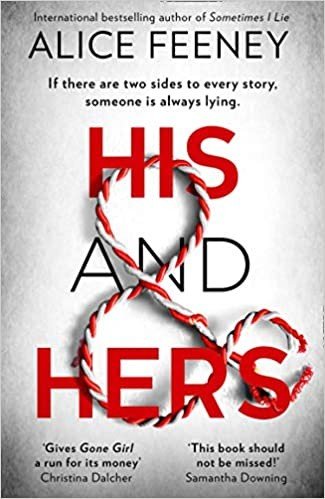
Alice Feeney and the Book
Let’s start with the writer. Alice Feeney spent fifteen years at the BBC, working as a reporter, news editor, arts producer and a producer on the One O’Clock News. That’s exactly the world Anna lives in, which is why the newsroom scenes feel so real.
His and Hers was published in twenty twenty and is her third novel, after her debut, Sometimes I Lie. The Netflix adaptation arrived in twenty twenty-six.
The structure is the trick. Most chapters are labelled Her, for Anna, and Him, for Jack, with time stamps like Tuesday, seven fifteen. Between them are short chapters called Bodymatter, spoken by a killer with no name and no gender, who tells us what they are doing and why they think they are right.
It all happens fast. The main story runs from Monday morning to Friday afternoon, with a short epilogue six months later, so every chapter feels like a ticking clock.
At the back of the book you’ll also find the opening of Sometimes I Lie, and some reading group questions. One asks who you most wanted to believe, Anna or Jack. Keep that in mind, because the real answer turns out to be neither.
Blackdown
The setting is a character in its own right. Blackdown is a made up village in the Surrey Hills, less than two hours from London. It’s the sort of chocolate box place with thatched cottages, white picket fences and a green with a pub called The White Hart.
But it’s surrounded by an ancient forest, and the book keeps reminding us that the trees have swallowed it. The woods hide a secret clearing where schoolgirls used to sneak off to smoke, drink and worse, three fallen logs around a firepit.
The railway station is a listed Victorian building with no security cameras, and only one way in and out. The girls’ grammar school, St Hilary’s, has playing fields that run down toward the woods. And a National Trust car park beside those woods is where the first body turns up.
Everyone knows everyone, and everyone forgets quickly. That is the village’s true superpower, and the killer uses it.
Weather plays its part too. It rains hard on the morning the body is found, washing away tyre tracks and footprints, and the cold, dark winter days make the whole story feel like it is happening at the bottom of a well.
Anna Andrews
Anna is our first narrator. She is a polished BBC presenter in her mid thirties, with a chestnut bob and a collection of red coats. She cleans her desk with antibacterial wipes, remembers every cleaner’s name, and bakes cupcakes for the team.
She is also an alcoholic in denial. She carries miniature bottles of spirits in her handbag, uses mints to hide her breath, and even keeps a personal breathalyser in her glovebox. She insists she never forgets anything she does drunk.
Behind this is grief. Anna’s baby daughter, Charlotte, died two years earlier. She also left Blackdown at sixteen and never wanted to come back, for reasons the book reveals slowly.
She is brave, sharp and funny. She is also lying to us, and to herself, for much of the story, and that is what makes her such a good unreliable narrator.
Her job defines her. As a presenter she writes her own intros, and she likes that in the studio she faces a robotic camera, so she can’t see people staring. Yet the one story she cannot tell honestly is her own, and she knows it.
Jack Harper
Jack is our second narrator, a detective chief inspector who has moved to Surrey to run the county’s Major Crime Team. He has grey hair, a crumpled shirt, and a Harry Potter style scarf with his initials, which Anna and her mother once knitted for him.
He is sarcastic, tired and secretive. He gave up smoking years ago and starts again within hours of the first body. He thinks of himself as a good man, but he lies, he spies on women on social media, and he has been sleeping with the murder victim.
Jack and Anna were together for fifteen years, married for ten. Since Charlotte died, Anna has blamed him, and he blames himself.
His voice is dry and defensive, and he is the main way the book makes us suspect Anna. Every time he finds a clue that points at her, he hides it.
He also notices how people talk. He listens to voices and accents, and he catches himself talking out loud without meaning to. That habit matters, because he lets slip things he shouldn’t, including the victim’s name.
The Supporting Cast
Around them are a crowd of memorable people. Priya Patel is Jack’s young detective sergeant, relentlessly keen, with a ponytail, tortoiseshell glasses and a habit of bringing him coffee and cigarettes. Richard is Anna’s cameraman, a retro T shirt wearing flirt with a past he doesn’t discuss.
Cat Jones is the red haired presenter who returns from maternity leave to take Anna’s job. Zoe is Jack’s chaotic younger sister, who lives in their dead parents’ house with her little girl, Olivia.
Dr Levell is the creepy pathologist who looks too happy at work. The Thin Controller is Anna’s boss, who can’t pronounce his Rs.
And then there are the dead. Rachel Hopkins, a charity boss with a secret. Helen Wang, the headmistress. And, behind everything, Anna’s mother, a cleaner with a beehive and a failing memory.
Look at how each of these people is introduced as a type. Priya is the eager rookie, Richard the charming rogue, Cat the glossy rival. Feeney lets us file them away neatly, and then gleefully breaks every file.
Even the minor figures matter. Rachel’s elderly husband never appears on the page at all, which is itself a clue to how little anyone really knew about her.
Monday and Tuesday Morning
The story opens on a Monday at six a.m. Anna walks to Broadcasting House with cupcakes, and it’s her birthday. Then she discovers that Cat Jones is back from maternity leave. She has been demoted to correspondent, with a new contract to sign. She wishes Cat were dead.
On Tuesday, before dawn, Jack is called to Blackdown Woods, where a woman has been found. She’s blonde, expensive and stabbed repeatedly. Her fingernails have been cut and painted with the words two faced. There’s something red in her mouth, and Jack knows who she is, because he was with her last night.
Anna, meanwhile, is hungover and told to cover a murder in the one place she never wants to return to. It was Cat who suggested it, in front of the whole team, and the Thin Controller agrees.
When she arrives, she charms Priya out of a pair of shoe covers, then asks a question at the press conference nobody should know the answer to: was there something in the victim’s mouth?
Notice that by lunchtime on Tuesday, both of our narrators have already lied to the police and to each other. Jack hides his affair. Anna hides that she was in Blackdown the night before, which we only learn much later.
Anna’s Mother’s House
Anna drives to the cottage where she grew up, and it’s a mess. The lounge is stacked with cardboard boxes, there’s a stench from the kitchen, and her mother is asleep in front of the television, until she opens her eyes and laughs.
Her mother says she’s moving to a care village, because people say she’s been forgetting things. She is wearing a cardigan with embroidered bees, she keeps bees, and she boils her kettle on the hob. Then she accuses Anna of being an impostor, insisting that Anna is fifteen years old.
In her old bedroom, Anna finds a photograph of five teenage girls and a red and white friendship bracelet, and takes them both.
We learn that her father vanished after the night Anna found her mother bleeding on the floor. And Jack, who has been visiting, has power of attorney over her mother. Anna storms out, furious at him, and he tells her the dead woman is Rachel Hopkins.
It’s an unsettling scene, because Anna’s mother is both tender and frightening. One minute she hands Anna a glass of whisky and a smile, and the next she is screaming at her to get out of her own house. Keep that switch in mind.
The Mortuary and the Bracelet
Anna doesn’t flinch when Jack says Rachel’s name, and he can’t read why. Jack has already found nail clippings in a Tic Tac box and black lace knickers in his glovebox, so someone is playing with him. He also spots a pay and display ticket in Anna’s Mini that’s dated the day before.
At the mortuary, Dr Levell says Rachel was stabbed over forty times and bled to death slowly. The killer cut her fingernails, probably to take them. Rachel’s husband is eighty-two and bedridden, though Rachel told Jack she was divorced.
Then comes the shock. A friendship bracelet was tied around her tongue, and Jack realises it matches the one on Anna’s wrist.
Meanwhile, Anna goes live on the news with the victim’s name, which Jack had only told her in confidence. Jack is furious, and later that night he finds Rachel’s phone and her missing shoes in the boot of his own car.
Priya, meanwhile, has gone to tell Rachel’s family and comes back with news that rattles Jack: Rachel was still married. Everything he believed about the woman he was sleeping with is turning out to be a lie.
Tuesday Night
Anna and Richard book into The White Hart, where she tries to proposition him and gets turned down. He is married with two children, and his wife is, as we will learn, not a stranger. After her shower, Anna finds the empty bottles tidied away and the bed turned down.
Across town, Jack gets home to Zoe, who has been watching Anna on television. She knows he was sleeping with Rachel, and she tells him Rachel left a message on the landline at midnight. It says her tyre was slashed, and she can see Jack’s headlights.
Jack deletes the message. He admits he saw Rachel in the woods, then left, and returned to find her gone. Zoe quietly asks whether he did it.
He realises a knife is missing from the kitchen block, and for the first time since his daughter died, he cries.
It is a quiet, unsettling pair of chapters. Nobody is attacked, but both narrators are being watched and handled. Somebody has been in the hotel room, somebody has been in the house, and neither of them can prove it.
Helen Wang
At five a.m. on Wednesday, Anna gets a call from a distorted voice about a new murder. She drives to St Hilary’s, and discovers the headmistress, Helen Wang, with her throat cut in her own office.
Helen’s blouse is open and the word liar has been fixed to her chest with a staple gun. There’s white powder on her nose and drugs in her drawer. A friendship bracelet is tied around her tongue. And on her computer, the killer has typed Helen should not tell lies.
Jack arrives, horrified, because he was outside the school the night before and saw a light on. Priya admits she let Anna in, and the call was made from the school landline.
Anna’s car window is smashed with the school’s drama trophy, her bag is stolen, and a smiley face air freshener hangs from her mirror, tied with a bracelet.
Anna calls her newsroom before the police, because a serial killer story could keep her on air for weeks. Jack takes her phone, and the fact that she keeps turning up first at every scene makes her look more and more guilty.
St Hilary’s
Now the past. Anna arrives at St Hilary’s at fifteen, after her father vanished and the fees ran out. Rachel adopts her, introduces Helen and Zoe, and warns her off a lonely girl named Catherine Kelly.
Rachel’s kindness is a performance. Helen hands out diet pills, and Anna takes them to please Rachel. Rachel buys her presents with money she steals from a Children in Need bucket, and begins a sexual relationship with her that is really manipulation and abuse.
She also bullies Catherine. At lunch she makes Anna invite Catherine to the table, then lets her drink from a can she has urinated in, while the whole school laughs.
When Anna fails an essay, Helen writes the same essay twice, and the English teacher catches them. Rachel gets them off the hook by doing something to him that Anna only guesses at.
Anna narrates all of this in a daze, because she is fifteen and desperate to be liked. Her mother, who cleans for the headmistress, has talked the school into taking her, and Anna wears second hand uniforms and shoes a size too big.
The Party in the Woods
Anna’s sixteenth birthday is the book’s secret. Her mother lets her have the girls over, and gives her a kitten called Kit Kat. Jack, who is Zoe’s older brother, drops Zoe off and takes a photograph of the five girls in matching friendship bracelets that Anna made.
After he leaves, the girls give Catherine a makeover and take everyone into the woods, where older men are waiting around a fire. Rachel passes out pills and takes photographs, and the men have paid.
Anna fights back and runs home. Catherine, drugged, is assaulted. Anna says nothing, because Rachel threatens to share nude pictures of her. Catherine vanishes from school, and Rachel starts a rumour that she killed herself.
Afterwards, Zoe takes the kitten as a warning. She had been stealing neighbourhood cats and making coats from their fur. Anna rescues Kit Kat, writes a suicide note and burns it, then leaves for boarding school.
This is the heart of the book, and it is handled in the past, in short bursts. Feeney shows enough to explain every later revenge, and grown up Anna’s drinking and silence make sense once you know she has carried this for twenty years.
Wednesday: The Photo and Priya
Back in the present, the clues pile up. Rachel’s phone, found in Jack’s car, starts getting texts like miss me, lover. Anna admits Rachel was blackmailing her, and a black cross appears over Rachel’s face on the old photograph in her hotel room.
Jack finds Anna in the clearing in the woods, and in a rare tender moment they hug, while a magpie eats a dead magpie. She tells him the other girls in the photo were Rachel, Helen, his sister Zoe and a girl he can’t remember.
Later, Jack lets Priya cook for him at her house. He reads Rachel’s last email, to Helen, saying she planned to end the affair. He drinks too much, they kiss, and he walks home in the dark.
His phone buzzes with a text from the dead woman’s number: you should have gone straight home tonight, Jack. He walks faster. His front door is open.
That magpie moment is the nicest bit of the day, and it is spoiled almost at once, because Anna still isn’t telling Jack everything about the photograph, the bracelet, or why she was in Blackdown the night Rachel died.
Zoe
Jack’s niece, Olivia, is asleep upstairs, drugged. The knife is missing from the block. The photo of the five girls has been left on the counter, and three faces have been crossed out: Rachel, Helen and Zoe.
He kicks open the locked bathroom and finds his sister in the bath. Her wrists are cut, one eye is sewn shut, and a friendship bracelet is tied around her tongue. On the tiles, in her own blood, she has written a word: Andrews.
Priya arrives and takes over the case. The deputy chief constable pulls Jack off, and the team finds his Timberland boots in the bin. He now looks guilty of everything.
Priya’s trust vanishes. She tells him the fifth girl in the photo is missing, and that Anna may be next.
It is the point where the book changes gear. Up to now, we have been solving a puzzle. After Zoe, the killer is hunting, and every remaining name on that photograph is at risk.
The detail that haunts me is the sewn eyelid. Jack realises it means turn a blind eye, which is exactly what Zoe did while the others hurt people, and the killer wanted her to wear it.
The House in the Woods
Meanwhile, Anna and Richard find that the BBC’s hotel rooms have been cancelled. Richard says he knows somewhere to stay, a house his wife’s parents once owned. In the car, Anna dozes and relives the night of the party.
They reach a dark, ivy covered house in the woods. Richard goes upstairs. Anna finds a photograph on the mantelpiece of a girl with white blonde hair, braces and sticky out ears: Catherine Kelly. It’s Cat Jones. The woman who took her job is the girl from the woods, and Richard’s wife.
Then Anna hears Richard scream. Her phone has been taken from the hall. She has to choose between running and finding out, and she walks upstairs.
At the end of the landing she finds Cat hanging by a school tie, a bracelet in her mouth, and Richard on the floor with a crushed skull and stab wounds. He whispers one word: alive.
Notice how Feeney lets the house do the work. It has windows like eyes, no phone signal, creaking floors and a dead phone line. By the time Anna climbs the stairs, we’re as scared as she is.
The Chase and the Final Night
Then Cat opens her eyes. She had tied the noose with a sailing knot, and now she loosens it, staring at Anna with hatred. Anna runs through the woods, twisting her ankle, and calls Jack. Priya answers, and the line dies.
Anna finds her mother wandering the woods in a nightdress and bumblebee slippers, who tells her something astonishing: she killed Anna’s father, with a cast iron Christmas tree stand, and buried him beneath the vegetable patch.
Meanwhile Jack finds Richard dead in the house, and Priya, gun in hand, tries to arrest him. They struggle, and he flees. When he finds Anna, someone shoots him in the shoulder. It was Priya.
Cat, covered in blood, stabs Anna’s mother. Anna drags her to a crashed car and, as Cat steps in front of the headlights, hits the pedal, thinking it is reverse. The car pins Cat against a tree, and when Cat lifts her knife, Priya shoots her dead.
The sequence is relentless, and it uses coincidence like a hammer: a stag in the road, a crashed car with the key in the ignition, a gunshot in the dark. It is thrilling, and also the part where I roll my eyes most.
The Aftermath
On Friday afternoon, Anna wakes in hospital. Jack tells her that her mother will live but has aggressive cancer. He says he is moving back to London to raise Olivia, and Anna admits he was right about her mother.
The police are sure it was Cat, because they found her childhood diaries, full of hatred for the girls. They can’t find the knife, which is odd, because three people saw her holding it.
Jack and Anna almost reconcile. She asks if he will come back later, and he says of course, though the narration tells us that wasn’t entirely true.
When he leaves, she discharges herself from the hospital, because she needs to leave. And in her bag is the knife that killed them all.
It is also where the police version of the story hardens. Cat Jones had a motive, an opportunity and a murderous diary. Priya is the hero of the hour, and Jack’s career is rescued by compassionate leave and a quiet move to London.
Priya’s role stays ambiguous. Jack says she did everything right, even though he is the one with a hole in his shoulder. Anna doesn’t quite believe it, and honestly, neither do I.
The Real Killer
The last chapter reveals the truth. The killer is Anna’s mother, who has never had dementia. She faked it to bring Jack back into her life, hoping Anna would follow.
When she cleared the cottage, she found Anna’s burned suicide note in the chimney, and it told her about the party, the drugs, and what Rachel, Helen and Zoe did. She had cleaned all of their houses, kept the keys, and set about punishing them.
She planned to frame Jack, because she hated him for leaving Anna and for sleeping with Rachel. She borrowed his boots, planted evidence and sent the texts. Then she realised Jack and Anna still belonged together, so she needed a new fall guy, and Cat Jones was perfect.
She lured Cat with a message from Richard’s phone and took her children, ordering her to hang herself. Richard wasn’t supposed to turn up, so she killed him too.
She also explains the smaller details. The hotel rooms were cancelled because she hoped Anna would come home to her. The tidying, the bottle of water and the turned down bed were her way of looking after her daughter.
Charlotte and the Last Pages
The baby is the book’s quiet heart. Charlotte died at three months old, in her travel cot at Anna’s mother’s house, on the night of Anna’s birthday. Jack had arranged a dinner, and her mother babysat. The coroner called it a cot death. Her mother had been drinking and did not call an ambulance.
Anna has never forgiven herself, and it is why she hates her birthday, and why she was at the cemetery in Blackdown on the night Rachel was killed.
The ending is quiet and chilling. Anna lays a new patio over the vegetable patch, after digging up her father’s bones. The knife is hidden in the hive. Her mother lives in a luxury retirement village, and she is making a new friendship bracelet, for someone else, next time they visit.
She tells us Priya keeps stopping by to ask questions, and that loose threads should always be dealt with. Little Olivia runs about in a bee costume, and the mother hears her song as happy family. She has finally got what she always wanted.
That final picture, a family around a table with tea and honey and cake, is the book’s most chilling image. Everyone smiles, and only the reader and the mother know what lies beneath the new patio.
Themes
Beneath the plot are some strong themes. The title is the first: his and hers, because there are two sides to every story, which means someone is always lying. The book is full of memory that bends, characters that edit their own pasts, and narrators who deceive.
The second is motherhood and what it costs. Anna and her mother, and Cat and her daughters, show how far a mother will go.
The third is female friendship at its most toxic, and how bullies create monsters. Rachel, Helen and Zoe were never punished by the adults, and they grew up to be a headmistress, a charity boss and a cushion seller.
And there is the idea that revenge feels like justice. The killer sees herself as providing a public service, and the book invites us to be unsettled by how reasonable that sounds.
There is also loneliness. Almost every character is alone in a crowd, and the book keeps coming back to ordinary isolation, from Anna’s flat to Jack’s borrowed house and the mother’s cottage full of boxes.
And it is a book about silence. Anna’s silence about the party, her mother’s silence about her father, and Jack’s silence about Rachel all do damage, and each secret is a little bomb waiting to go off.
Craft, Symbols and Clues
Feeney plants clues everywhere. The cleaner, the keys, the tidy hotel room, the kettle on the hob, the honey tea, and the pills on the windowsill are all signs of the mother. The imaginary friend is a red herring that points at Jack.
Symbols matter too. Magpies, which Anna salutes, stand for sorrow and joy. In my reading, bees stand for family, the hive, and the silence that protects a queen. The friendship bracelet, a childish gift, becomes a gag, a weapon and a signature.
Even the killer’s voice is a trick. When she says people trust people like her, we imagine a detective or a journalist. We never imagine a cleaner, or a little old lady with dementia.
The name on Zoe’s wall is the cleverest clue. Andrews points at Anna, but it was also her mother’s name.
Look, too, at the time stamps. Each chapter starts with a day and a time, so you feel the hours ticking, and the three voices let Feeney hide the one fact that matters in a different narrator’s blind spot.
Another trick is repetition. Train wheels, windscreen wipers and creaking floorboards are all turned into chanting phrases, the way the killer hears kill them all in the rhythm of a train.
Book Versus Netflix
How does the Netflix series compare? The killer, the victims and the motive are the same. But the setting moves to Georgia, with Anna a former Atlanta anchor and the town called Dahlonega. Cat Jones becomes Lexy Jones, and Anna and Jack are separated but still married.
Rachel’s husband becomes a younger suspect. The killer’s chapters turn into a letter that Anna reads in voiceover. And the finale changes: Priya shoots Lexy, Richard survives, and Anna and Jack adopt Zoe’s daughter, Meg.
If you want the full breakdown, see my video on the Netflix show versus the book. For this guide, the main point is that the Netflix version keeps the heart of the plot and changes much of the scenery.
It premiered on January eighth, twenty twenty-six, in six episodes, and as of October twenty twenty-six there is no second season announced.
One more detail. The Netflix cast includes Tessa Thompson as Anna, Jon Bernthal as Jack and Crystal Fox as Alice. Reviews were mixed to positive, and it was a major hit for Netflix in January.
Another change is tone. The show is moodier and quieter, while the book is wickedly funny about the media and about Jack’s grumpy inner monologue.
My Verdict and Questions
My verdict: His and Hers is a gripping, twisty and often nasty thriller, and I give it four out of five. The mother twist is brilliant, though the plan requires a lot of luck and the final act is melodramatic.
Here are some questions to chew on. Does Anna know the truth? Was the mother right? Who is the real villain, Rachel, the men, or the adults who failed those girls? And what is Priya going to do?
If you’ve stayed with me this far, you’re exactly the kind of fan this book is written for. Reread it with the ending in your head, and you’ll see how much was hiding in plain sight.
A content reminder before you reread: the book includes sexual abuse of teenagers, the death of an infant, cruelty to animals and graphic violence, so look after yourself.
Tell me your answers in the comments, and if you want more, subscribe for the ending explained and the Netflix comparison. Thanks for watching, and I’ll see you next time.