Read Before You Watch
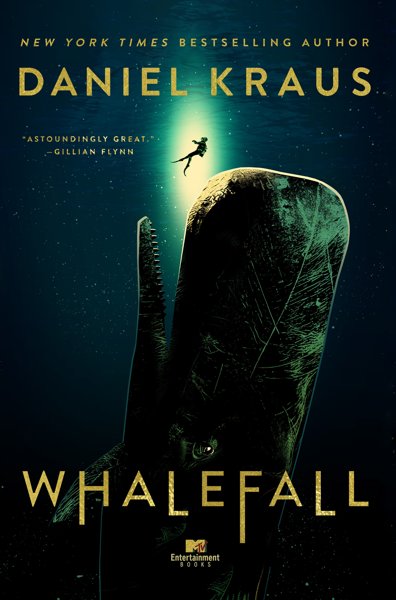
Is the Whalefall movie the same as Daniel Kraus’s book? Mostly the same dive, with a different clock and a lot fewer memories.
A note on how I’m working. I’ve read the novel cover to cover. I have not watched the film, so everything about it here is reported by outlets I name, dated as of November twenty twenty six. The second half has full spoilers for the book.
The Film At A Glance
Here’s what’s reported. Whalefall is a twentieth century studios release, directed by Brian Duffield, who co wrote the script with Daniel Kraus himself. It opened in United States theaters on October sixteenth, twenty twenty six.
Austin Abrams plays Jay Gardiner and Josh Brolin plays his father, Mitt. Elisabeth Shue is reported as Jay’s mother, Zara, and John Ortiz as Hewey, the old family friend. Jane Levy and Emily Rudd are reported as Jay’s sisters, Eva and Nan, though that pairing rests on one cast listing, so treat it as likely rather than certain.
The film is reported as rated PG thirteen and a little under two hours long. The book is stronger stuff, with plenty of swearing, gore and a suicide at the center of the story.
What The Film Keeps
Reviews say the movie stays close to the page, and the core is clear. Jay, a teenager, dives off Monastery Beach to look for the remains of his father, who has died by suicide. A sperm whale swallows him. Inside, he has to use the survival lessons his father drilled into him.
The giant squid is reported to appear inside the whale’s belly, as in the book. And the heart of it is the same: a hard father, a son who left, and a dive that is really about forgiveness. Duffield has said he wanted the movie to feel the way the book feels when you finish it.
Who Mitt Is In The Book
Since Josh Brolin is the name on the poster, here’s the man he’s playing, as the book draws him. Mitt Gardiner is a diving legend in Monterey, with a big tattooed body and a head full of sea facts. He is also a drunk who cannot keep a job. The book lists golf ball diving, a landfill dive, and a charter boat from which he was fired for a remark about whales and September eleventh.
At the end he buys a battered whale watching boat named Sleep, after the six a.m. wake up call he shouts every morning, Sleepers, arise. He quizzes Jay on whale flukes and gas laws, and he is cruel and tender within the same minute. Then he is diagnosed with cancer, and Jay, who has left home, refuses to visit.
That is a lot of person to compress, and it is where the cut flashbacks will be missed.
The Clock
The biggest structural change is the clock. In the book, every short chapter is headed by the air left in Jay’s tank. It starts at three thousand P S I and counts down to zero, so you feel the air running out on every page. Between those are about forty seven flashback chapters, each labeled with a year.
Reports on the film describe Jay having one hour of oxygen once he’s swallowed, which is a simpler countdown. Reviewers say the film’s cutaways and slower moments soften the book’s frantic pace.
What Gets Cut
Kraus told reporters the biggest difference is the flashbacks. The book has dozens of them, and the film keeps only about five or six, so many of the small scenes that build Mitt are gone. That matters, because those are the pages where he is funny, gentle and cruel in the same afternoon.
So if the movie’s version of Mitt feels simpler to you, that is probably why. The book spends forty seven chapters making him a person.
Jay, Age And Ending
Two more changes are reported, each by a single outlet, so I’d double check them. First, Jay’s age. In the book he is seventeen. One outlet says the film makes him older, with an argument about college in another state.
Second, the ending. Spoilers from here. In the book, Jay blows a hole in the whale’s insides with methane, steel wool and a nine volt battery. Then he crawls out through the heart. The whale has come into the shallows thirty feet from Monastery Beach, and scientists working on a different, dead whale pull him out.
One outlet reports that in the film the whale is still out at sea, and scientists on a boat pick him up. Other outlets mention a letter in the film’s ending, and the book has no letter from Mitt that I found, so that looks like new material. I couldn’t read those pieces in full, so I’m not going to guess what it says.
What To Look For
I can’t tell you which of these made it into the movie, but they’re the book’s best set pieces, so check them against what you saw. The whale’s voice, which Jay hears and decides must be his father. The orca attack and the sperm whales’ rosette defense. The helmet jellyfish Jay uses as a lantern, with a gym sock for a glove. And the larynx scene, where Jay makes the old whale scream.
If the film leaves them out, that’s a loss. If it keeps them, tell me in the comments how they looked.
Content Notes
The film’s rating is reported as PG thirteen. The book is an adult read in a young adult frame. It has constant strong language, a suicide at the center of the story, a lot of blood, parental cruelty, a badly mangled hand, and the death of a sea lion and of a giant squid. If you watched the film and want the book, know that it goes further.
Reception
For context, as of late October twenty twenty six, reports put the opening weekend at around eight million dollars in the United States against a reported budget of sixty million. Critics were warmer than ticket buyers: Rotten Tomatoes sat in the low seventies, and audiences gave it a B from CinemaScore. Those numbers move, so check the sites.
Which First
My advice, and it’s opinion, is to read the book first. It is short, fast and angrier, and the memories are what make the ending land. If you’ve already seen the film, the book fills in everything it had to leave out.
If you’ve read it, which cut hurt most? Leave a comment, and thanks for watching. Subscribe for more book against screen comparisons.
Want the full story? Read the Whalefall ending explained and the spoiler-free review.