The Short Version
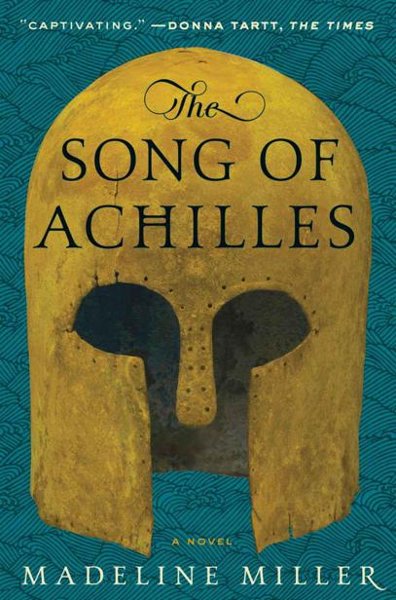
The Song of Achilles, Madeline Miller’s 2011 first novel, suits a book club because it retells the Trojan War through Patroclus, an exiled prince who grows up beside Achilles, falls in love with him, and follows him to Troy. It won the Orange Prize in 2012, and almost a decade later became one of the biggest books on BookTok.
Below are twenty questions: ten you can use before everyone has finished the book, and ten that spoil the ending. A short section on what comes from the myth and what Miller invented gives the group something to check. The book scores four and a half out of five in our review. As we say there, bring tissues.
Before You Start: Content Notes For Your Group
Tell your group first. The book includes graphic war violence, sexual content, human sacrifice, sexual coercion and the deaths of children. If someone in your club may find that hard, say so before you pick it.
Spoiler-Free Questions
- Patroclus is the man the Iliad treats as a side character. What changes when the story is told from his side?
- Patroclus is a small, awkward prince who disappoints his father and is exiled after a terrible accident. How did his early life shape who he is with Achilles?
- Achilles is golden, gifted and half god, with a sea nymph mother, Thetis, who has big plans for him. What did you make of her?
- The two boys go from rivals to best friends to something more, and study with a centaur named Chiron on a mountain. Did the slow burn feel earned?
- A prophecy says Achilles will be the greatest warrior of his generation, and that greatness has a price. You probably know how it ends, so where does the tension come from?
- Miller studied Greek and Latin and taught them for years. Did the world feel real to you, with its figs, sea salt, lyres and sweat?
- Our review says Achilles is idealized because we only see him through Patroclus’s adoring eyes. Did he feel real or too perfect?
- About a third of the book is childhood and life on the mountain before the war begins. Did the slow first half pay off?
- Our review says most of the women are villains, victims or pawns, with Briseis a lovely exception. How did you find the women in the book?
- Patroclus’s voice is humble and loving. How does that voice shape your feelings toward Achilles?
Spoiler Questions (Finish The Book First)
- In the tenth year, Agamemnon takes Briseis, and Achilles refuses to fight. Patroclus tells him he wants him remembered as a man worth remembering. Is Achilles’ pride the cause of everything that follows?
- Patroclus wears Achilles’ armor and leads the Myrmidons, and then breaks his promise to stay in the chariot. Why does he do it?
- Patroclus’s last fear is for Achilles, because once Hector kills him, Achilles will have to kill Hector. How does that prophecy turn the quiet scenes into a countdown?
- For ten years Achilles avoided Hector to buy them time together. Did that choice make you see his behavior in the earlier chapters differently?
- King Priam walks into the Greek camp alone and kneels before the man who killed his son. Achilles feeds him and gives Hector’s body back. Why does this moment hit so hard with Patroclus’s body still in the tent?
- Miller skips the famous heel: the arrow hits Achilles in the back and he smiles as he falls. Why leave the heel out?
- Achilles’ son Pyrrhus refuses to put Patroclus’s name on the tomb, and the dead need a name to rest. Did you find Pyrrhus a cartoon villain, as our ending page says?
- Briseis tells Pyrrhus that his father loved the man buried with him, stabs him, and is killed with a spear. Why did Miller invent this death?
- Patroclus gives Thetis his memories of Achilles, from his hair in summer to the figs he juggled and the word “catch.” Why is it this woman he gives them to?
- The final lines have two shadows reaching for each other, and Thetis carves Patroclus’s name beside Achilles’. Did you cry at the last line?
What Is From Homer And What Is Miller
Your group may ask how much is from the myth. The big events are ancient. Homer never says Achilles and Patroclus were lovers, but later Greeks read it that way: Aeschylus showed them as lovers, and in Plato’s Symposium characters argue about which was older. The golden urn is real, since in the Iliad Patroclus’s ghost asks for their bones to lie together. The prophecy about Hector is in Homer, but Miller moves it to before the war. The heel comes from much later, and Achilles hiding on Scyros in a dress comes from later writers such as Statius. The Iphigenia sacrifice is an old story from Greek tragedy. Pyrrhus refusing Patroclus’s name, Briseis’s death and Thetis carving the stone are Miller’s inventions.
What To Read Next
If your club enjoyed it, our books-like-it list covers six Greek myth retellings. For a spoiler-free start, read our review first, and use the ending explained after the discussion. If your group wants the source, our facts page suggests Emily Wilson’s 2023 translation of the Iliad.