The Short Version
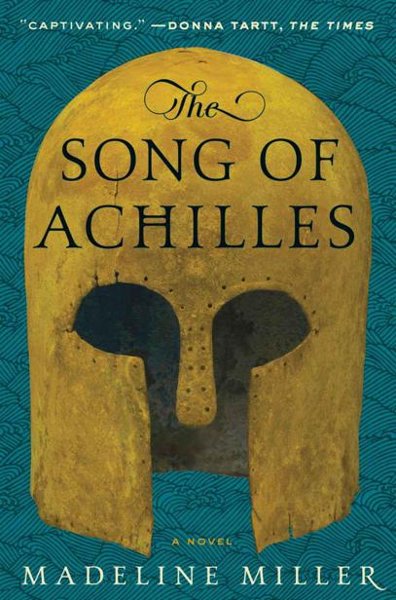
The Song of Achilles retells Homer’s Iliad, and a lot of readers want to know: how much is from the myth, and how much did Madeline Miller invent?
The short answer: the big events are ancient, and so is the golden urn. The romance comes from a long debate in ancient Greece. And some of the most memorable parts are pure Miller. Full spoilers ahead.
Were They Lovers?
Claim one: Achilles and Patroclus were lovers. Homer never says so. In the Iliad they are inseparable, and Achilles’ grief is enormous, but the text never calls it romance.
Later Greeks read it that way. The playwright Aeschylus showed them as lovers, and in Plato’s Symposium, characters argue about which of them was older. Miller makes them equals, the same age. Verdict: an ancient reading, made modern.
Who Patroclus Was
Claim two: Patroclus was gentle, and no warrior. Half true. In Homer he is known for kindness, and he does treat the wounded. He also really did kill a boy as a child, over a game, and was exiled to Peleus’s house.
But Homer’s Patroclus is older than Achilles and a fierce fighter, who kills dozens of men in his last battle. Miller makes him a healer who barely fights. Verdict: kindness is Homer, the healer is Miller.
Briseis
Claim three: Briseis loved Patroclus. There’s a seed of it in Homer. When Patroclus dies, Briseis mourns him and says he was always kind to her.
But in Homer, Achilles treats her as his partner, and Agamemnon swears he never touched her. Miller makes Patroclus her protector and friend, explains why Agamemnon left her alone, and invents her death at Pyrrhus’s hands. Verdict: mostly Miller.
The Hector Prophecy
Claim four: Achilles knew he would die soon after Hector. Homer has this. Thetis tells him his death will come soon after Hector’s.
But Miller moves the prophecy to before the war, so Achilles spends ten years avoiding Hector on purpose. It’s a clever answer to a real puzzle: why don’t they fight for nine years? Verdict: Homer’s prophecy, Miller’s plot.
Scyros And The Dress
Claim five: Achilles hid on Scyros dressed as a girl. That’s real myth, but not from Homer. It comes from later writers, especially the Roman poet Statius.
Odysseus unmasking him with weapons and a trumpet is from those sources too. Patroclus following him there is Miller’s. Verdict: later myth.
Iphigenia
Claim six: Agamemnon sacrificed his daughter at Aulis. That’s not in the Iliad, but it’s an old story, told in Greek tragedy.
In some versions, a goddess saves her at the last second, or she goes willingly. Miller chooses the darkest version: no rescue, and no consent. Verdict: ancient, with the darkest choices.
The Death Of Patroclus
Claim seven: Apollo strips Patroclus, and Hector kills him. True, almost beat for beat. In Homer, Apollo strikes him, a spear hits him from behind, and Hector finishes him.
The idea of wearing the armor came from wise old Nestor in Homer. Miller gives it to Patroclus himself. Verdict: true.
Achilles’ Heel
Claim eight: Achilles was killed by an arrow in the heel. Miller deliberately leaves the heel out. In Homer, Achilles isn’t invulnerable at all, just extraordinary.
His death, by Paris and Apollo, is ancient, from the lost poems after the Iliad. The heel story came much later. Verdict: Miller picks the older tradition.
The Golden Urn
Claim nine: their ashes were mixed in one golden urn. This is true, and it’s in Homer. In the Iliad, Patroclus’s ghost asks for their bones to lie together, and in the Odyssey, we hear they were.
The Odyssey even places them together among the dead. Verdict: true, and the most romantic part is the oldest.
What Miller Invented
And the inventions. Pyrrhus refusing to put Patroclus’s name on the tomb. Patroclus as a ghost who can’t rest. Odysseus pleading for him. And Thetis carving his name on the stone.
The whole ending is Miller’s. But it’s built to land exactly where the ancient poems do: the two of them, together.
Your Turn
If you want the source, try Emily Wilson’s translation of the Iliad, from twenty twenty three. My review and ending explained are linked below. Tell me in the comments: which change surprised you most?