Just Finished It
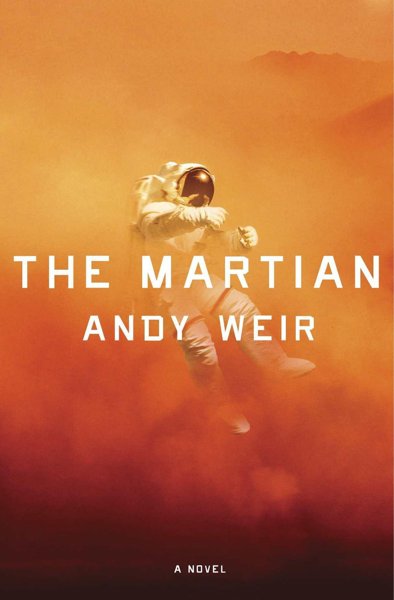
If you just finished The Martian, by Andy Weir, and you’re sitting there wishing you could be stranded with a smart, funny person for another four hundred pages, this one is for you.
These are six spoiler free books to read next. Some are fiction and some are true, and each one gets at a different reason you loved Mark Watney’s story. I’ll tell you what each one has in common with it, and where it’s different, so you can pick the one that fits your mood.
What Made It Special
First, let’s work out what we’re hunting for. For me, The Martian has three ingredients. The first is competence: a hero who thinks his way out of trouble, one step and one spreadsheet at a time. The second is humor, a voice that stays cheerful while everything goes wrong.
The third is a feeling that the science is real, and that the people in the story actually care about getting it right. A good match for the book will have at least two of these. So I’ve picked books that give you the cleverness, or the jokes, or the real space, and a few that give you all three.
Number One: Project Hail Mary
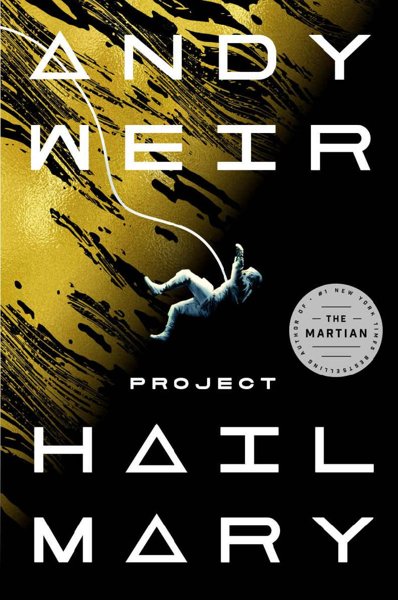
Number one is the obvious one, and the best. Project Hail Mary, also by Andy Weir, came out in twenty twenty-one. A science teacher wakes up alone on a spacecraft, with no memory of who he is or why he’s there, and slowly works out that the fate of Earth rests on him.
It has the same engine as The Martian: a smart narrator, a pile of problems, and a lot of cheerful science. It also has more heart, and a bigger sense of wonder. It became a film in March twenty twenty-six, starring Ryan Gosling. If you only read one book from this list, read this one.
The difference is the shape of the problem. Mark fights a planet, and you know exactly what he’s up against. Here, the narrator is fighting a mystery as well, so the first hundred pages are about figuring out what’s going on. My advice is to go in knowing as little as you can.
Number Two: Red Mars
Number two is Red Mars, by Kim Stanley Robinson, from nineteen ninety-two. This is the grown up, slow burn version of the Mars story. Instead of one stranded man, you get the first settlers, and the very big question of what humans should do to a planet once they arrive.
It’s more political and more serious, with a lot of characters and a lot of geology. If you loved the Mars details in The Martian, the terrain, the engineering, the sheer scale, you’ll find them here in huge doses. If you wanted the jokes, you won’t. It’s the first of a trilogy.
Be ready for a commitment, though. It’s a big, dense book, and the first of three, so it asks for more patience than The Martian ever does. My honest tip is that the Mars parts are the best parts, so if the politics drag, push through.
Number Three: Seveneves
Number three is Seveneves, by Neal Stephenson, from twenty fifteen. The Moon suddenly breaks apart, and humanity has about two years to save a piece of itself, by building a swarm of habitats around the International Space Station.
This is the pick for readers who loved the engineering. Stephenson explains orbital mechanics, propulsion and survival in loving detail, and the book is as much about how you do it as what happens. It is long, and it takes a few turns I won’t spoil, but the first act is thrilling, and the problem solving is great.
One warning. It leans serious, with a lot of technical explanation, and far fewer jokes. If you enjoyed the info dumps in The Martian, you’ll probably love this. If you skimmed them, you may want a lighter pick from this list instead.
Number Four: Lost Moon
Number four is a true story: Lost Moon, by Jim Lovell and Jeffrey Kluger, from nineteen ninety-four. Lovell commanded Apollo Thirteen in nineteen seventy, the Moon mission that nearly ended in disaster, and he tells it with the help of a journalist. It was later retitled Apollo Thirteen, after the film.
If what you liked best was the people on the ground, the engineers who had to improvise a rescue, this is the real thing. The mission was a failure, and a triumph, and the stakes were real. Same tension, same cleverness, same sense of people refusing to give up.
It reads like narrative nonfiction, so it moves like a thriller, and it adds detail from the astronauts’ side if you’ve seen the film Apollo Thirteen, which came out in nineteen ninety-five. You know how it ends, and somehow that doesn’t matter.
Number Five: Packing For Mars
Number five is Packing for Mars, by Mary Roach, from twenty ten. It is a funny nonfiction book about the human side of space travel. What do you eat, how do you wash, how do you not go mad in a small can with your colleagues for years? The subtitle calls it the curious science of life in the void.
If Mark’s most memorable moments for you were the practical, gross and hilarious ones, the toilet, the food, the boredom, then this is your book. Roach is very funny, very curious, and the research is wide. It’s easy to dip in and out of, which makes it a great palate cleanser.
There’s no single plot, since each chapter takes on a different question, so you can read it in pieces. It’s not a story about one person like Mark’s, but it will make you appreciate how much work it takes to keep one human alive in space.
Number Six: Robinson Crusoe
Number six is the grandfather of the whole genre: Robinson Crusoe, by Daniel Defoe, from seventeen nineteen. A man is shipwrecked, alone, and has to build a life out of salvage, farming and sheer persistence. Sound familiar?
Honestly, it’s the oldest book on this list, and it reads like it. It’s slower, more religious, and some of its attitudes have aged badly. But the core idea, a lone survivor making an inventory and getting to work, is exactly what Weir does in space, and seeing where it started is a treat.
It’s also free to find, since it’s long out of copyright, so it costs you nothing to try. I’d say read a few chapters, as a curiosity. It is a different kind of book, and a nice reminder that people have loved this story for three hundred years.
How To Choose
So which one should you read? If you want more of the same voice, start with Project Hail Mary. If you want the epic scale of a settled Mars, go for Red Mars. If you want engineering overload, pick Seveneves.
If you want true stories, read Lost Moon. If you want to laugh, read Packing for Mars. And if you’re curious about where the stranded hero came from, give Robinson Crusoe a try.
One More Weir
Before we wrap up, a quick bonus for completionists. If you’ve read everything by Andy Weir, there’s also Artemis, from twenty seventeen, set in a small city on the Moon. It’s a heist story with a very different narrator, a smuggler with a sharp tongue, and a plot that trades survival for crime.
I’d treat it as a side trip, not the main road. It has the same love of clever engineering, and the same obsession with how a city on another world would really work, but it doesn’t hit the same note as Mark’s log. Still, if you’re hungry for more, it’s there.
Where To Get Them
That’s six books like The Martian. Every book I mentioned, and The Martian itself, is linked in the description, along with the audiobooks.
Tell me in the comments: what is the book that made you feel smarter after you read it? Thanks for watching, and subscribe if you’d like more honest book recommendations.