Spoiler Warning
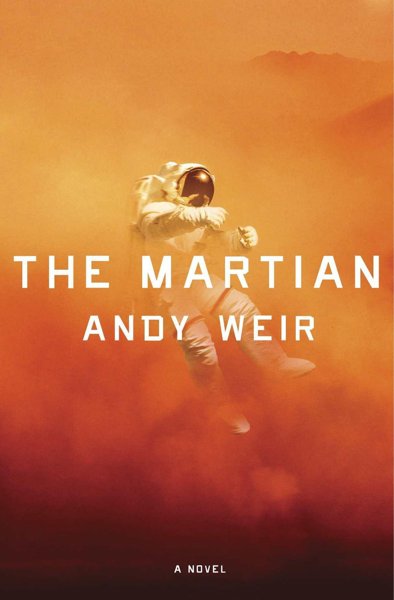
Today we’re going through the whole second half of The Martian, by Andy Weir, from the first message home to the last scene on the ship, and fair warning, this one is full of spoilers, so if you haven’t read it, come back after.
Here’s the plan. A quick recap of how Mark Watney survives alone, then how Earth finds out, then the failed supply probe, the rescue plan, the long drive, the launch that goes wrong, and the last log entry. And at the end, my honest take on whether that ending works.
How He Survives
Quick recap. Mark is stranded on Sol six with a habitat built for thirty-one days. He turns the floor into a farm, using soil from outside, human waste as fertilizer, a little Earth soil for bacteria, and the twelve Thanksgiving potatoes that NASA’s psychologists happened to pack. Cut into pieces, they become his food supply.
Then he needs water, which means breaking down rocket fuel and burning the hydrogen, on purpose, inside a pressurized tent. It goes wrong twice. First he finds the air full of unburned hydrogen, and later an explosion knocks him across the habitat. He survives both, and the water, and the farm, keep him alive for what’s next.
Earth Finds Out
Back on Earth, NASA holds a memorial and thinks Mark is dead. It is a satellite analyst named Mindy Park who figures out he’s alive. In a photo of the base, she spots two white circles by the rovers, the emergency pop tents, which the crew’s own log says they never set up. Venkat Kapoor confirms it. Now NASA has an astronaut stranded for years, and no way to talk to him.
So Mark decides to fix that himself. He drives a rover on a long road trip to dig up Pathfinder, the probe that landed in nineteen ninety-seven, and repairs it with parts from the habitat. Then he does something wonderful. He spells out messages with cards, in hexadecimal, for a camera on the lander to read.
The Worst Day
Once they can talk, NASA starts planning a resupply probe, and Mark settles into a routine. Then, on Sol one hundred nineteen, the habitat blows. A seam in the canvas near an airlock fails, and the airlock shoots him across the ground like a cannonball with the whole base deflating around him.
He survives, but he loses the farm. The soil bacteria die, the plants are gone, and he is left with the potatoes already grown and his ration packs. JPL figures a probe has to reach him by Sol five hundred eighty-four, and the plan that was meant to save him is suddenly too slow. That’s the lowest point of the book.
The Probe And The Maneuver
So JPL rushes a probe called Iris, finished in sixty-three days, and it breaks apart on launch. The whole food plan collapses with it. And then comes the book’s big act of generosity. The China National Space Administration agrees to lend a booster that was meant for a solar probe.
Meanwhile, an astrodynamicist named Rich Purnell finds a way to turn the ship Hermes around. If the crew accelerates now, uses Earth’s gravity to swing back toward Mars, and flies past it on Sol five hundred forty-nine, they could reach Mark. NASA’s chief, Teddy Sanders, says no, because it risks all six lives. Flight director Mitch Henderson is furious, and soon the plan shows up on Hermes, hidden in a file disguised as a photo.
The Crew Votes
The crew of Hermes has to make a choice that adds five hundred thirty-three days to their mission. Commander Lewis puts it to them plainly: if anything breaks, they die. Vogel says the trip is already over a thousand days of space, and that is enough for a life. The whole crew says yes, and Johanssen even disables the ship’s remote override, so Houston can’t stop them.
I love this scene. It’s the emotional center of the book, and it’s the moment the crew stops being a list of names and becomes a team. It also changes the problem. Now Mark only has to reach a rocket on the other side of the planet, in time.
The Long Drive
But first he loses Pathfinder. An electrical accident with his own drill rig kills it, so he’s alone again, communicating with Earth by laying out rocks in Morse code, which Mindy reads from orbit. Over about a year, he turns a rover and a trailer into a mobile base with life support, a canvas bedroom and a regular schedule of air days.
On Sol four hundred forty-nine, he sets out for the Ares Four landing site, thirty-two hundred kilometers away. He navigates by Phobos and a sextant. When a dust storm starts blocking his solar panels, he figures out its shape with homemade power loggers, and drives south around it, five hundred forty kilometers off course.
The Crash And The MAV
Near the end, the rover slips off a hidden powder ridge on the way into the Schiaparelli crater and rolls onto its side. He rights it, and the trailer, with a rope, a hole and a lot of digging. On Sol five hundred five, he finally reaches the Mars ascent vehicle, which was sent there years before.
NASA’s plan for the MAV is brutal. Remove the nose airlock, the windows, even Hull Panel Nineteen, and cover the hole with canvas. Dump the backups. Turn his water into extra fuel. The failure odds, according to Bruce Ng, are about four percent. Mark’s response is that he’s being sent to space in a convertible.
The Launch
On Sol five hundred forty-nine, the MAV launches, flown remotely by Martinez on Hermes, with Mark pulling about twelve g’s. The canvas rips early, the ship fights its pilot, and Mark passes out. When he wakes up, he’s in orbit, but low, and the intercept with Hermes will miss him by sixty-eight kilometers.
The crew uses the ship’s attitude thrusters to close the gap, but now they’re coming in at forty-two meters per second, way too fast to grab him. Mark offers an Iron Man plan, a hole in his glove used as a jet. Lewis dismisses it, but it gives her an idea.
The Bomb
Her idea is to use Hermes’s own air as a thruster, by blowing open the ship’s vehicle airlock. The problem is that no one can open the airlock doors remotely, so she asks Vogel to build a bomb. He mixes sugar and liquid oxygen in a beaker, and Johanssen wires it to a lighting panel.
It works. The blast pushes the ship toward Mark and cuts the relative speed to about twelve meters per second. Then Beck leaps out on his tether, grabs the torn canvas on the MAV, clips himself to Mark, and Vogel uses the line as a shock absorber to bring them in. Lewis says it on the radio: six crew safely aboard.
The Last Log
The book’s final entry is Mission Day six hundred eighty-seven. Mark has two broken ribs, a terrible smell, and the knowledge that he’s two hundred eleven days from Earth. And then he asks why anyone would spend hundreds of millions of dollars to save one botanist.
His answer is the book’s thesis. People help each other, he says, whether it’s a lost hiker or an earthquake, and billions of people were on his side. He ends by saying it’s the happiest day of his life. The book stops there. We never see him land.
What Was Set Up
What I admire is how much of the ending is built from earlier pieces. The drill. The airlock blowout that shot him across the ground, which echoes in his Iron Man idea. The hydrogen explosion in his own habitat, which Vogel turns into a bomb. Even Beck’s request to go untethered gets refused, and the tether is what saves them.
It’s a book about reusing everything, and the finale reuses its own jokes and mistakes. Every bit of scrap on that planet gets a second life, and so does every lesson he learned the hard way.
My Verdict On The Ending
So does it land? Mostly, yes. It is exciting, funny, and generous. Watching a planet of strangers cheer for one man works, and the last log is earned. My complaints are small. The launch is a long chain of lucky breaks, and no one important dies, which makes the book a little safe.
But that’s the tone the book promised. It’s a story where problems have solutions, and where people do the right thing. I wish we had one more page of him on Earth, but I understand why Weir stopped. Four and a half out of five, and a great last line.
Where To Get It
That’s the ending of The Martian. If you want to know whether the science holds up, I have a fact check video, and I also have a spoiler free review and a list of six books to read next. All of them are linked in the description, along with the book itself.
Tell me in the comments: which moment was your favorite, the potatoes, Pathfinder, or the sugar bomb? Thanks for watching, and subscribe for more book breakdowns.