Spoiler Warning
Spoiler warning first: this video gives away both the book and the film, including how Mark Watney gets off Mars. If you have not read or watched them, pause now and come back.
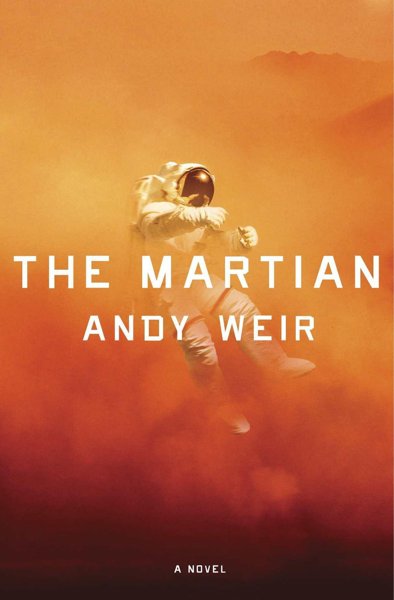
My quick answer, which is my opinion: the film is a very good version, but the book hides its best trouble in the middle, and almost all of that trouble was cut. The biggest loss is the long drive to the second landing site. I will show you a kept, cut and changed table, then the mission timeline, then the rescue.
The Film at a Glance
First, the film facts, as of October twenty twenty-six. Ridley Scott directed it, and Drew Goddard wrote the screenplay from Weir’s novel. Reported by Wikipedia, it premiered in Toronto on September eleventh, twenty fifteen, and opened in the United States on October second, twenty fifteen.
Matt Damon plays Watney. Jessica Chastain is Commander Lewis, and Jeff Daniels plays NASA’s Teddy Sanders. Wikipedia and Britannica both report seven Oscar nominations, including Best Picture. So this is not a bad film being compared to a good book. It is a good film, and the question is what it had to leave behind.
Here is how I sort the differences. Some things are kept, meaning the film and the book do the same beat. Some are cut, meaning the film drops them. And some are changed, meaning both versions have the beat but tell it differently. Every film claim I make comes from Wikipedia or a second named source, and I label it as reported. The book claims come from my own read of the novel.
Our Mission Timeline
Let me put the book on one line, because the book counts in sols, which are Martian days. On Sol six, the storm hits, the crew leaves, and Watney wakes up alone. On Sol one hundred nineteen, the habitat breaches and the potato farm dies.
On Sol one hundred ninety-six, he fries Pathfinder and loses contact with Earth. On Sol four hundred forty-nine, he leaves the Hab for the long drive. On Sol five hundred five, he reaches the ascent vehicle. The rescue is on Sol five hundred forty-nine, which Hermes calls Mission Day six hundred eighty-seven.
What the Film Kept
Now the good news. The film keeps most of the spine. Watney is a botanist who grows potatoes using waste and Martian soil, and he makes water from leftover rocket fuel. Mindy Park spots his activity in satellite photos.
It keeps Teddy hiding the news from the crew, and Mitch Henderson fighting him on it. It keeps Pathfinder and the airlock breach that destroys the garden. It keeps the supply rocket that fails, the Chinese booster, Rich Purnell’s plan and the crew voting to turn Hermes around. Those beats come from the film’s plot summary on Wikipedia, so if you only saw the movie, you got the skeleton.
The Rover Trip Crisis
Here is what the film cut: the drive. In the book, Watney sets out on Sol four forty-nine to reach the next landing site at Schiaparelli, and the road is about thirty-two hundred kilometers. He tells us himself that NASA never expected him to wander that far. The trip nearly kills him twice.
First, he is deep in Arabia Terra when he realizes he is inside a dust storm. Mindy reads his message in Morse code on a satellite photo: dust storm, making plan. NASA cannot warn him, because it cannot talk to him. He works out the storm’s edge with homemade power loggers and steers south.
Then, on Sol four ninety-seven, the rover drives off a hidden ridge into soft powder and rolls. The trailer snaps its tow clamp and flips onto its balloon roof. Reported by Bustle and Starcasm, the film drops the storm, and the trek to Schiaparelli is calm. It is the book’s biggest tension machine, left on the floor.
Where the Film Compressed
The same goes for Pathfinder. In the book, on Sol one hundred ninety-six, Watney leans a drill against a metal workbench, and nine thousand milliamps go into a probe built for fifty. Pathfinder is dead, and he writes that he has lost the ability to contact Earth. He talks to NASA with rocks and Morse code for the rest of his time on Mars.
Bustle reports that the film barely addresses that loss, and Wikipedia’s summary does not mention it. The same goes for the supply rocket. The book spends pages on that launch, down to a shimmy that turns the food cubes to sludge. In the film it happens much faster, and the point lands in a few minutes.
Cut Characters and Cut Politics
Some of the cuts are people. In the book, NASA’s media chief, Annie Montrose, tells Teddy to his face that he is a coward for refusing Rich Purnell’s plan. Starcasm lists that outburst as cut from the film.
Another cut is a quiet one. Johanssen tells her father that Commander Lewis picked her as the survivor if the supply probe fails. Everyone else would take pills, and she would live on the food. The book also has Watney tempted by the old Opportunity rover, three hundred kilometers away, because it could restore his radio. These scenes are the book showing how far people will go.
Tone and Science
The tone changed too. The book is a log, and Watney is funny all the time. By my own count, the novel uses a form of the f-word sixty times and the s-word ninety-three times in about one hundred four thousand words. The film is a polished action drama, and it cuts most of that.
The book opens with Watney saying he is pretty much in deep trouble, in much stronger words, and it shows the evacuation from the crew’s side only later. The film is linear and starts with the storm, according to Bustle and The Playlist. And the film kept the opening storm, even though our science page says Mars’s air is less than one percent as dense as Earth’s, so the wind would feel like a breeze. Wikipedia reports that a NASA adviser agreed that the real storm would be much weaker.
The Drive in Numbers
Let me count the drive. Watney leaves on Sol four forty-nine. By Sol four seventy-five he is inside the storm, and by Sol five hundred five he reaches the vehicle. That is fifty-six sols on the road, in a camper built from a rover and a trailer.
The book makes that trip a problem set, with battery charge, solar cells, air filters, a drill and a trailer on the line. The film makes the trek feel like a montage. In my view, that is the biggest single cut, because the storm and the roll are where the book shows how thin his margin is.
Voice and Order
The film also changed how we meet him. The book is mostly his logs, and the novel has him joking constantly. Bustle reports that in the film he goes quiet for minutes after the disaster, and Wikipedia notes that Scott showed his isolation, while Weir avoided writing him as lonely and depressed.
Order changed as well. The novel keeps the Sol six evacuation as a flashback told by the crew, so we learn what happened to Lewis and the others only after months of Watney’s logs. The film is linear. It opens on the storm. That is a fair choice, but it shifts the book’s mystery into plain drama.
The Rescue Swap
Now the ending, and here the film did change the book. In the novel, Watney jokes that he could poke a hole in his glove and fly like Iron Man. Commander Lewis says no. Instead, Vogel makes a bomb out of sugar and liquid oxygen, and the crew blows a hole in the airlock of Hermes to change the ship’s speed.
The blast pushes Hermes for four seconds, and it leaves Hermes passing the MAV at twelve meters per second, slow enough for Beck to try. Beck then flies out on a tether and grabs Watney, and Vogel acts as a shock absorber on the line. In the film, per Wikipedia and Bustle, Watney does puncture his suit, and Lewis catches him herself. The book also ends on Watney’s log, with no epilogue. The film adds one, with Watney teaching astronaut candidates, which Wikipedia and Bustle both report.
What Each Version Does Best
Here is my opinion on who wins each round. On the first act, the film wins, because Scott’s storm and the evacuation are tense and fast. On the middle, the book wins, because every setback comes with real numbers, such as the nine thousand milliamps that kill Pathfinder, or the six hundred twenty liters of water on his inventory list before he drives.
On the rescue, I give the book the edge for the sugar bomb, but the film’s glove trick is a big payoff for people who like to see Watney take a risk himself. On the finish, the film’s epilogue is warmer, and the book’s quiet last log is stranger and truer to Watney. Those picks are all drafts, and you may score them differently.
My Verdict
So here is my verdict, which is my opinion. If you want the cleanest two hours, watch the film. If you want the harder middle, the rover rolling, Pathfinder dying and a hero who keeps joking while it happens, you need the book. In the log, Watney even says, if this were a movie, everyone would have been in the airlock.
My pick is the book first, then the film, because the film then feels like a clean summary of a very messy, very human problem. And if you already know the film, the book still has surprises, from the pirate-ninja power unit to the way Watney nearly wrecks his only radio with a drill. If you liked this, subscribe, tap like, and read the full guide at book explained dot com. And tell me in the comments: which cut would you bring back?