The Short Version
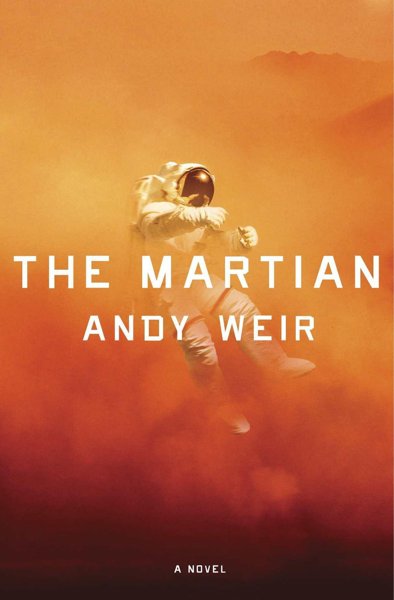
The Martian, Andy Weir’s debut novel, suits a book club because it is funny, fast and hopeful, and because a group can argue over whether Mark Watney’s plans would work. The botanist and mechanical engineer is left behind on Mars after a storm forces his crew to evacuate, with a habitat built to last about a month, and has to work out how to stay alive. It is mostly told as his log entries, counted in sols.
Below are twenty questions: ten you can use before everyone has finished the book, and ten that spoil the ending. A short section on the real science gives the group something to check. The book scores four and a half out of five in our review, with top marks for voice and problem solving.
Before You Start: Content Notes For Your Group
There is a lot of strong language. The book is cheerful in tone, but it is about isolation, starvation and being the only living person on a planet.
Spoiler-Free Questions
- Mark is the lowest ranked member of the Ares Three crew, and his crewmates leave believing he is dead. Did you blame them, or Commander Lewis, for the decision?
- After one night’s sleep Mark takes inventory like a man doing a spreadsheet: food for six people for fifty days stretches to roughly three hundred for one. Why does the book start with arithmetic instead of panic?
- The next crewed mission is about four years away, and Mark has about a year of food. How does that gap drive the whole book?
- Mark is sarcastic, stubborn and permanently unimpressed by the worst situation in human history. Does his humor make the dread bearable, or did it wear thin?
- He turns the habitat floor into a farm with soil, human waste and the twelve Thanksgiving potatoes. Which problem-solving scene did you enjoy most?
- Weir shows the math, the assumptions and the mistakes. Did you follow the science, or let the numbers wash over you?
- Mars here is not a monster; it is indifferent. How does that change the kind of tension the book creates?
- The book cuts away from Mark’s logs to Earth and to the crew in the third person. Did those scenes add to the story or interrupt it?
- Our review gives characters three out of five because the side characters are thin. Did you want more from the crew and the NASA staff?
- The pattern is a plan, a complication, a fix and another complication. Did the formula stay addictive for you?
Spoiler Questions (Finish The Book First)
- Satellite analyst Mindy Park spots two white circles by the rovers, the emergency pop tents the crew never set up. Why is it satisfying that the discovery comes from a small detail?
- Mark drives to dig up Pathfinder, repairs it and spells out messages in hexadecimal on cards. Which of his communication solutions was your favorite?
- On Sol 119 the habitat blows and he loses the farm. Was that the lowest point of the book?
- The China National Space Administration agrees to lend a booster that was meant for a solar probe. What does that act say about the book’s view of people?
- Rich Purnell finds a way to turn Hermes around, and NASA’s chief says no because it risks six lives. Who was right, Teddy Sanders or Mitch Henderson?
- Commander Lewis puts the vote to her crew, adding 533 days to their mission, and Johanssen disables the ship’s remote override. Why is this the emotional center of the book?
- Mark sets out for the Ares Four site, 3,200 kilometers away, in a rover he has turned into a mobile base. What did the long drive add that a shorter rescue would not?
- The MAV is stripped of its nose airlock, windows and even Hull Panel Nineteen, and Mark calls it being sent to space in a convertible. Did the launch stay believable?
- Vogel builds a bomb from sugar and liquid oxygen, and Beck’s tether saves them. How well did the book set these up through earlier pieces?
- The last log asks why anyone would spend hundreds of millions of dollars to save one botanist, and we never see him land. Did the ending work for you?
What Is Real On Mars
Your group may argue about the science. Our fact check found that the chemistry, the engineering and the orbital math are mostly solid. The big cheat is the opening storm: Mars has an atmosphere less than one percent as dense as Earth’s, so a strong wind would feel like a breeze. Dust storms are real, though. In 2018 a planet-wide storm blotted out the sun over the Opportunity rover. Making oxygen from Mars’s carbon dioxide has been done by the MOXIE experiment on Perseverance, but only 122 grams over sixteen runs. Pathfinder is a real probe that landed on July 4, 1997. The book skips radiation and the perchlorate found in Martian soil in 2008. The 2015 film, directed by Ridley Scott with Matt Damon, earned seven Oscar nominations, including Best Picture.
What To Read Next
If your club enjoyed it, our books-like-it list covers six more reads. For a spoiler-free start, read our review first, and use the ending explained after the discussion. Our science fact check covers the potatoes, the water and the radiation in detail.