The Short Answer
I read the book, and then I read the scientists who disagree with it.
Does the book prove that smartphones caused a teen mental health crisis? Short answer: no. Some of its claims are well supported, some are contested, and the biggest one, about cause, is still being argued over.
One promise before we start. This video is a report on a book and on published studies. It is not medical advice, and the scientific debate is ongoing. If you or a young person you know is struggling, please talk to a doctor or a mental health professional.
I will attribute every claim. When I say Haidt argues, that is his view. When I say Odgers writes, that is hers. Dates are as of October twenty twenty six.
What Haidt Argues
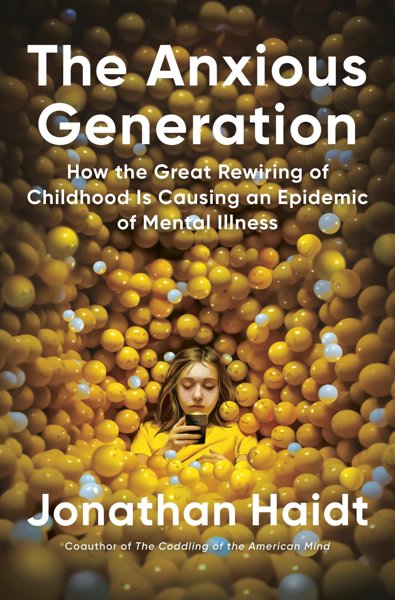
The Anxious Generation came out in March twenty twenty four. Its author is Jonathan Haidt, a social psychologist. His thesis sits right in the subtitle: the great rewiring of childhood is causing an epidemic of mental illness.
Haidt argues that childhood moved from play based to phone based, and that the most intense stretch was twenty ten to twenty fifteen. He points to the like button in two thousand nine, the front facing camera in twenty ten, and Facebook buying Instagram in twenty twelve.
His story has two halves. Kids were overprotected in the real world, he says, and underprotected online. He also tells readers that the research is complicated and that some of it is contested among researchers.
The Four Reforms
Here are the four reforms, close to his own words. One, no smartphones before high school. Two, no social media before sixteen. Three, phone free schools. Four, far more unsupervised play and independence.
Haidt predicts that a community enacting all four is likely to see substantial improvements in child and adolescent mental health within two years. Notice what kind of statement that is. It is a prediction. It is not a result.
He also asks governments to raise the age of internet adulthood from thirteen to sixteen. Thirteen comes from a nineteen ninety eight American law, and he calls it a political compromise.
Claim One: Distress Rose
The first claim is that teen distress rose sharply after about twenty twelve. Haidt reports that major depressive episodes among American teens rose roughly one hundred and fifty percent. He says emergency room visits for self harm among girls ten to fourteen nearly tripled from twenty ten to twenty twenty.
He adds that suicide among those girls rose one hundred sixty seven percent from twenty ten to twenty twenty one. Those are his numbers from American data. He also reports rises in Canada, the United Kingdom, Australia and the Nordic countries, though he says data outside the West is less clear.
A fair objection is that surveys measure what teens say, and that people may simply be more willing to report. Haidt answers with hospital and suicide records. He writes that he is not saying none of the rise is more willingness to report.
Claim Two: The Four Harms
His mechanism is four harms. Social deprivation, sleep deprivation, attention fragmentation, and addiction. These are the claims that readers remember, so let us check what he actually writes.
On friends, he reports that American teens went from one hundred twenty two minutes a day with friends in twenty twelve to sixty seven in twenty nineteen. On attention, one study found about one hundred ninety two alerts a day. On girls, a British study found girls with five or more hours of social media on a weekday were three times as likely to be depressed as girls with none.
He also cites an experiment where limiting screens after nine in the evening on school nights for two weeks improved sleep. That is the kind of evidence he means by experimental.
Notice the careful words. On addiction he writes that the great majority of teens are not addicted. And he writes that he cannot say light use harms attention.
The Case for Cause
How does Haidt get from a link to a cause? He leans on three things. Timing, experiments, and the international pattern.
On timing and place, he says similar rises appeared across several rich countries at about the same time. On experiments, he says that dozens have been collected, with Jean Twenge and Zach Rausch. In his introduction he adds that in twenty seventeen nearly all evidence was correlational, and that now there is experimental evidence too.
A footnote is careful too. He writes that there is good evidence the trends moved together across the English speaking countries. For other rich nations he only says he believes it, and that he is still collecting studies.
In his conclusion, he does not say proven. He says that until someone finds a chemical released into the water in the early twenty tens, the Great Rewiring is the leading theory.
The Critic: Candice Odgers
Now the critics. Candice Odgers, a psychologist, reviewed the book in Nature on March twenty ninth, twenty twenty four. The title asks whether social media is really behind an epidemic of teenage mental illness.
She writes that the book’s repeated suggestion that digital technology is rewiring children’s brains and causing an epidemic is not supported by science. Her second warning is that blaming social media could distract from other causes of the crisis.
In my reading, her review challenges how strong the evidence is. It does not say teens deserve less help.
Notice she is arguing about cause. Coverage of her review says she accepts that young people face real problems. The question is what is behind them.
The Potato Debate
The most famous number in this fight is the potato. In January twenty nineteen, in Nature Human Behaviour, Amy Orben and Andrew Przybylski analysed three large datasets of more than three hundred thousand teens. They found that technology use explained at most point four percent of the variation in wellbeing. They compared that with eating potatoes.
Haidt answers in the notes to his chapter six. He writes that the figure covers all digital activity and all teens. Narrow it to social media and girls, and he and Twenge find a correlation of about point two.
He adds that Orben’s twenty twenty review of social media studies found point one to point one five, and says that is not tiny in public health. Both sides use real studies. They disagree about what to count, and about whether even a real link shows cause.
Haidt Replies
Haidt answered the Nature review on April ninth, twenty twenty four, on his Substack, After Babel. He argues that Odgers is wrong that there is no causal evidence, and points to experiments. He also argues that her explanation, the twenty oh eight financial crisis, does not fit the timing.
In the book he makes a similar point. Unemployment had fallen to three point six percent in early twenty nineteen while teen depression kept rising.
But Haidt also concedes things in that reply. He says skeptics are useful. He grants that some longitudinal studies find depression predicts later social media use, and that action must be taken without full certainty.
Do The Reforms Work?
Now the practical question. Do the reforms work? Haidt describes schools that went phone free, and a South Carolina school that added play. Those are examples he reports, not controlled studies. So take phone free schools. In February twenty twenty five, Victoria Goodyear and colleagues published a study in The Lancet Regional Health Europe. It covered one thousand two hundred twenty seven students in thirty English secondary schools.
They found no difference in mental wellbeing between schools with restrictive phone rules and schools with permissive ones. Bans cut school phone use by only about forty minutes. Higher overall use still went with worse outcomes. The study was observational, so it cannot show cause. The authors say bans alone are not enough.
A single study settles little, in either direction. Haidt’s own book calls for a real test. He proposes randomising whole schools into phone free, play full, both, or neither. In just two years, he writes, we would find out.
Claim Versus Evidence
Here is my scorecard, and it is my opinion, so push back. Distress rose in the data Haidt cites. The four harms are plausible but vary in strength. That social media causes the epidemic is contested. And phone free schools remain unproven.
Haidt admits limits himself. He writes that I am surely wrong on some points. About boys, he writes that his story is more speculative than the one he told about girls.
In my view, the book is strongest as a reason to run careful tests, and weakest when its confident subtitle gets ahead of its footnotes.
Where Both Sides Meet
What do both sides seem to accept? In my reading, that something real is happening to young people, that heavy use goes with worse outcomes in many studies, and that the open questions are cause and size.
In my view, the truth sits between a headline that says phones are destroying a generation and one that says nothing is wrong. That matters, because a video like this one is only a summary, and I may have simplified. That is why I would read the originals. Odgers in Nature, Orben and Przybylski in Nature Human Behaviour, and Haidt’s notes and his Substack reply are all public. I have put the sources on the page.
If you are a parent, remember this is not advice. Talk with your doctor or your school about what fits your family.
Which claim do you find most convincing, and which one do you doubt? Tell me in the comments. If this helped, please subscribe and tap like, and the full guide is at book explained dot com.