Before We Start
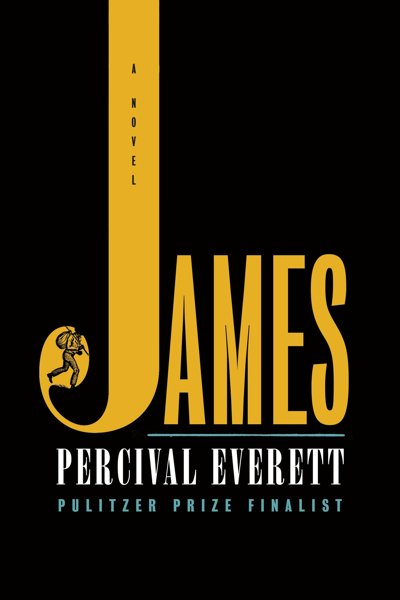
Today it’s nineteen book club questions for James by Percival Everett, grouped by theme, with the characters and the comparison to Huckleberry Finn woven in.
Fair warning: this video spoils the whole book, ending included. It also covers racist violence and sexual violence, so pause whenever you need to.
It runs about ten minutes, so pause on any question you like. Here’s my short advice for your group. Start with the comparison to Twain, because it gets everyone talking, then move to language and names, and save the ending for last. Let’s go.
A Fast Recap
A fast recap, so everyone is on the same page. Jim is enslaved in Hannibal, Missouri. He hears that he will be sold, runs to Jackson Island, and joins Huck on the river. Along the way come con men, a steamboat wreck, a minstrel troupe, a sawmill and an explosion.
By the end he has killed an overseer, held a judge at gunpoint, burned a breeder’s cornfield and led his wife Sadie and his daughter Lizzie north to Iowa. It’s fifty-three short chapters, so your group can finish it in a week.
Who Is Who
Keep this cast handy. Jim, also called James, is our narrator. Huck is the white boy who may be his son. Sadie and Lizzie are his wife and daughter. Norman is the drummer who passes as white. Easter is the blacksmith who frees him from a chain. Sammy is the girl at the sawmill. Young George steals the pencil. Daniel Emmett leads the minstrels.
On the villain side there are the Duke and the King, the farmer Wiley, the sawmill owner Henderson, the overseer Hopkins and Judge Thatcher. A good opener is to ask everyone: which character will you still be thinking about next month?
James Versus Huckleberry Finn
Let’s start with the big question: how does James differ from Huckleberry Finn? In Twain, Huck tells the story, and Jim is seen from outside. In Everett, Jim tells it, and Huck becomes a character in his story.
The events echo. In both books Miss Watson plans to sell Jim, Huck fakes his death, they meet on Jackson Island, a flood brings down a house with a dead man inside, and two con men pose as a duke and a king. The Grangerford feud and a wrecked steamboat are in both.
But Everett’s Jim reads, writes, argues with philosophers and hides it all. Question one: what changes when Jim controls the narration? Question two: which familiar scene felt most different to you?
Two Voices
Next, language. Jim runs a class in the quarters, teaching the children to speak the way white people expect, and calls it the correct incorrect grammar. Safety depends on sounding stupid.
Then we watch the cost. Huck keeps noticing when Jim’s speech slips, and Jim has to scramble to cover it. Later, when Jim finally speaks plainly to Judge Thatcher at pistol point, the judge is more frightened by his grammar than by the gun.
Question three: why do you think Everett makes us read both Jims? Question four: when does speaking plainly become dangerous, and when does it become freedom?
Names
Next, names. People keep naming Jim. Miss Watson owns him. The Duke calls him Caesar. Norman sells him as February. At the end, the sheriff asks for a runaway known by a slur attached to his first name. Jim tries on Golightly, then Faber, and finally just James.
Why does it matter? Because a name is the first thing a person is given, and the first thing taken. When the sheriff asks, Jim introduces his wife, daughter and two new friends by name before he gives his own.
Question five: what did you make of the last line, Just James? Question six: if Jim had picked a surname, would it have cheapened or strengthened the ending?
Reading And Writing
Next, literacy. Jim reads in Judge Thatcher’s library, and he sees reading as the most private freedom, because no one can tell whether you are understanding. When the robbers’ sack gives him Voltaire, Rousseau and a slave narrative, he treasures it.
Then the pencil. Young George steals it for him, and pays with a whipping, and later Easter tells him a man was hanged for a stolen pencil. Jim keeps it anyway. Writing, in this book, is proof that you exist.
Question seven: why does Everett make a pencil the most dangerous object in the book? Question eight: Jim says his story will be self-written, not self-related. What is the difference?
The Dreams
Now the philosophers. Jim argues in his dreams with Voltaire, who says all men are equal but still ranks them, and with John Locke, who helped write a slave-holding constitution and calls his views complex. Later Cunégonde, from Candide, tells him that he is mortgaged, and nobody wants him free because he is money.
These scenes can feel like lectures, but they work as pressure valves. Jim cannot say any of this to a living white person, so he says it to dead ones.
Question nine: do these dream debates strengthen the book or interrupt it? Question ten: Cunégonde says hope is a trick. Do you agree?
Passing And Performance
Next, passing and performance. Norman is a Black man who passes as white, and he says he stays Black because of his mother and wife. Easter wonders whether Huck knows. And the Virginia Minstrels paint Jim black, making him a Black man pretending to be a white man pretending to be Black.
Here the book is making a point about race as costume. Emmett wrote real songs, and the novel lets Jim sing them, then steal the notebook that holds them. A white audience laughs at a performance it thinks it understands.
Question eleven: what did the minstrel sequence reveal that a straight account of slavery could not? Question twelve: was Emmett an ally, a profiteer, or something harder to name?
Huck’s Secret
The biggest reveal comes on the shore after the steamboat explodes. Jim has to choose between Norman and Huck, picks Huck, and tells him: you are my son. Huck, who looks white and has lived as free, calls him a liar.
The book scatters hints. Huck and Jim share a hairline, Pap hated Jim in a special way, and Jim says he knew both of Huck’s parents. But the book never proves it. Jim even tells Huck that belief has nothing to do with truth.
Question thirteen: do you believe Jim? And does it matter? Question fourteen: Jim saved Huck and lost Norman. Was that a father’s choice, or a man protecting his last tie to the old world?
Anger And Violence
This is the hardest part of the discussion. Sammy, a fifteen-year-old, is sexually abused by her owner and killed by gunfire as she and Jim run. Later Jim watches an overseer assault a woman and does nothing, then kills that overseer. After that, anger becomes a tool.
The book asks whether justice is possible inside a system built on injustice, and whether a man can be good and still kill. It doesn’t answer neatly.
Question fifteen: was Jim right to kill Hopkins, and what changed in him afterwards? I’d start here only after your group has settled in.
The Ending
In the final chapters Jim frees four men, burns the cornfield at the breeding farm, shoots its owner, and runs north with Sadie and Lizzie. They reach Iowa and the book stops. Question sixteen: is this ending hopeful, tragic, or both?
Some things to weigh. Huck stays behind in Hannibal, and Norman is never seen again. The freed men scatter, and the book says outright that some will be caught or will crawl back. The family is in Iowa, in a country at war, and no one has promised them safety.
My own view, and it’s just a draft opinion, is that the ending is earned but open. It gives Jim his name and his family, and leaves the country unfixed. A neat ending would have contradicted everything the book knows.
Real History
Some background your group might want. Twain’s novel appeared in the eighteen eighties, and it was written in dialect, with Huck as narrator. Daniel Decatur Emmett was a real musician who formed the Virginia Minstrels in eighteen forty three, and he is credited with the song Dixie, though historians date it to around eighteen fifty nine.
The reading in the novel is also real. Jim finds a slave narrative by William Brown, and the pamphlet by Venture Smith. Their stories are written as autobiography, and Jim distrusts how tidy they are. That sets up the book’s central argument about who is allowed to tell a story.
Question seventeen is a bonus: do you read it as a response to Twain, a correction, or a completely separate book?
Community
One more theme for the road: solidarity. The book is full of small acts of help. Easter carries a spare key and unlocks Jim’s chain. Young George risks a flogging for a pencil. Old George, Josiah and Pierre feed a stranger. Doris and Katie hide him. Sammy finds roots to heal his back.
Each time, the cost is enormous, and Jim knows that his presence endangers them. That is part of why he keeps moving, and part of why the ending, when he frees strangers, feels like a debt paid forward.
Question eighteen: whose help mattered most to Jim? Question nineteen: Brock believes in a master and serves him gladly. Is he a warning, a victim, or both?
Wrapping Up
If your club has a favorite question, drop it in the comments, and tell me which character your group argued about the longest. I read every reply, and thank you for being such a thoughtful group. James won the National Book Award in twenty twenty four and the Pulitzer Prize for Fiction in twenty twenty five, and a film is reportedly in development. The page for James is on bookexplained.com, and my spoiler-free review is waiting too.