Spoilers Ahead
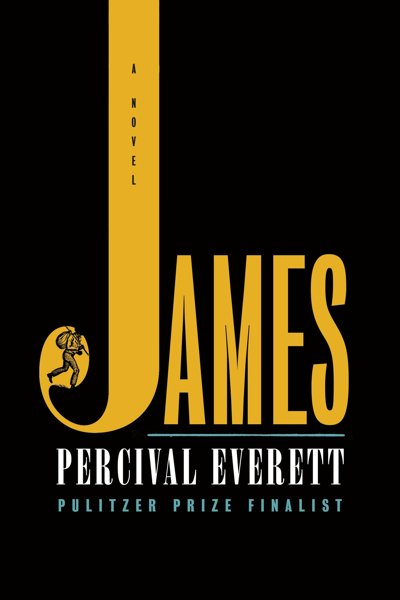
Today we’re walking through the plot of James by Percival Everett, start to finish, and fair warning: this video spoils the whole book, ending included.
Here’s the short answer. Jim, an enslaved man in Missouri, hears that he is about to be sold, runs, and spends the entire novel trying to reach his wife and daughter. He gets them out and north to a town in Iowa, after killing two men and burning a slave breeder’s cornfield. And the last line is a man refusing to answer to anything but his own name.
Three Parts
The book is fifty-three short chapters in three parts. Part One has thirty-two chapters and follows the river. Part Two has nine and follows Jim with a man named Norman. Part Three has twelve, and it is the fastest and the most violent.
Everything is told by Jim himself, in the first person, and that is the whole trick. In Mark Twain’s Huckleberry Finn, Jim is the man on the raft. Here he is the man holding the pencil, and we finally learn what he was thinking behind the voice he performed for white people.
Hannibal
We open in Hannibal, Missouri, with two white boys hiding in the grass. Huck and Tom are playing a game where Jim is the prey, so Jim gives them the dialect they expect. Later he teaches the quarter’s children the rules: don’t make eye contact, never speak first, and let white people be the ones who name the trouble.
He is also a storyteller. At the fire, he turns a prank on himself into a tale of witches carrying him to New Orleans, performed so the boys in the bushes will hear it. Another man, Luke, tells how a free Black man in St. Louis was burned alive, and how the judge, whose name was Lawless, ruled that a crowd cannot commit a crime.
His wife is Sadie and his daughter is Lizzie, who is nine. They belong to Miss Watson. Then Sadie overhears that Miss Watson has agreed to sell Jim to a man in New Orleans, and Jim runs that same afternoon, promising to come back for them.
Jackson Island
Jim crosses the Mississippi on a log and hides on Jackson Island, where he finds Huck, who has faked his own murder with pig’s blood. Now the town will suspect Jim of killing him. A flood rolls in, and the two of them climb into a drifting house and find a dead white man.
Jim knows the dead man is Huck’s father, Pap, and he lies about it. He takes paper and ink from that house. Then a rattlesnake bites him, and in his fever he argues with Voltaire in a dream. Afterward he writes his first words: I am called Jim. I have yet to choose a name.
Huck even dresses as a girl, Mary Williams, to scout the mainland, and comes back with news: a reward of three hundred dollars is out for Jim.
Down The River
They raft south by night. They escape a wrecked steamboat full of robbers, and Jim keeps a sack of books, including a novel, the first he has ever read. He loves that nobody can tell whether he is understanding the words. Under the stars he picks a last name, Golightly, and later he will find another, Faber, stamped on his pencil.
Then a steamboat wake tears their raft apart, and Jim washes up in Illinois among enslaved men who feed him. One of them, Young George, steals him a pencil, and is flogged for it. Earlier, Young George had told him how to tell his story: use your ears. Now, tied to the post, he mouths one word at Jim, who watches from the trees: run.
Jim finds Huck in the middle of a family feud, and the two of them escape on the repaired raft. In another dream, John Locke turns up to defend his work on a slave-owning constitution, and Jim needles him about hypocrisy.
The Duke And The King
Two con men climb aboard, and call themselves a duke and a king. After a revival swindle goes wrong, in which they present Jim as a savage from Borneo, they see his wanted poster and come up with a business plan: sell him, let him escape, and sell him again. When he refuses to drop his trousers for a beating, they whip him anyway.
They chain him in a livery stable, where a blacksmith named Easter quietly unlocks the shackle. The Duke whips Easter for it. A farmer named Wiley, who has no legal claim to Jim, puts him to work at the forge, and Easter teaches him blacksmithing. Easter also tells him a man upriver was hanged over a stolen pencil, and Jim feels his own pencil in his pocket.
Then Wiley sells Jim for two hundred dollars to a traveling white musician, Daniel Decatur Emmett.
The Minstrels
Emmett leads the Virginia Minstrels, and says he hired a tenor rather than bought a man. But he keeps the bill of sale, and Jim owes him two hundred performances at a dollar each. Jim is painted in blackface and sings: a Black man pretending to be a white man pretending to be Black.
Emmett was a real man, and the real Virginia Minstrels began in eighteen forty three. He is also credited with the song Dixie, which historians date to around eighteen fifty nine. The novel lets him sing it on the road, years early.
The drummer, Norman, is a Black man passing as white. He tells Jim why he stays Black: because of his mother, his wife, and because he doesn’t want to be one of them. When a stranger creeps into the tent to touch Jim’s hair, the troupe flees. At the next town Jim steals Emmett’s songbook for its blank pages and runs, and Norman follows. Jim’s plan is simple: Norman will pose as his white owner, sell him, and Jim will escape again and again until they can buy Sadie, Lizzie and Norman’s wife.
Henderson’s Sawmill
It goes wrong in Bluebird Hole. Jim is sold to Henderson as a man called February, and flogged within a day. In the mud of the pit saw he meets a girl everyone calls Sammy, fifteen years old, whom Henderson has abused since she was little.
Jim takes her and runs. Norman is waiting, they build a raft, and Henderson and two armed men catch up. They shoot into the dark water, and Sammy is killed. Jim and Norman bury her on the bank. I’ll never be a slave again, Jim says.
The Explosion
Hiding aboard a packed steamboat, Jim meets Brock, who stokes the boiler below decks and has never left the engine room. He insists on a master, Massa Corey, who may not exist. The engine screams and the boat blows apart. Jim wakes in the river, burned, with two voices calling his name: Norman’s, and Huck’s.
Huck, it turns out, was aboard with the Duke and the King. Jim swims to him. Norman is lost to the river. On the shore, Jim tells Huck the secret he has held back: you are my son. Huck, who looks white, calls him a liar. He follows him anyway, and they walk back to Hannibal through news of a coming war.
Sold Away
Jim finds strangers living in his cabin. He sends Huck to find out who bought them, and Huck, who can walk anywhere, promises to try. Sadie and Lizzie have been sold to a farm in Edina, and the overseer Hopkins took them. While hiding, Jim watches Hopkins assault a woman named Katie, and does nothing, because he can’t.
That night he dreams of Cunégonde, who tells him that he is mortgaged like a farm, and that nobody wants him free because he is money. Jim stops hoping and starts planning.
Days later he finds Hopkins drunk and alone on the island and strangles him. Then he walks into Judge Thatcher’s library with a stolen pistol, forces the judge to row him upriver, and ties him to a tree. Jim points out that the judge is now the one doing the work.
The Last Chapters
Edina is a breeding farm. Jim frees four shackled men, sets a cornfield on fire as a distraction, and finds Sadie and Lizzie. When the old owner comes out with a shotgun, Jim announces that he is the angel of death, and that his name is James. Then he shoots him dead. Everyone runs north, and the book admits that some will be caught.
Sadie, Lizzie and Jim reach Iowa with two of the freed men, Morris and Buck. A sheriff asks if any of them is named for the runaway on the posters. Jim points to each person and gives a name, then says: I am James. James what? Just James.
What It Means
So what does that ending mean? All book long, other people name him. He is Miss Watson’s Jim, the Duke’s Caesar, Norman’s February, and a poster. Along the way he tries on Golightly and Faber. The ending says that the only name that counts is the one he chose, and that his story, finally written down, belongs to him.
It also changes how we read the writing. Early on, Jim says his story will not be self-related, as Venture Smith’s was, but self-written. The pencil, stolen at such cost, becomes his proof that he exists, and each time he loses everything else, the pencil survives. By the end the book you are holding is the one he has been writing.
Notice what the book leaves open. Huck stays behind. Norman is never seen again. And Jim’s family is in Iowa, not in a safe country. That feels like the right amount of doubt for a story about hope.
Where To Go Next
James won the National Book Award for Fiction in twenty twenty four and the Pulitzer Prize for Fiction in twenty twenty five. If you’d like to compare it with Twain, my book club video does that, and the spoiler-free review is waiting too. The page for James is on bookexplained.com, with every link. Thanks for watching, and see you next time.